
What if the very thoughts meant to protect us are actually holding us back?
Experiencing worry is a common part of being human. It’s our mind’s way of preparing for future challenges. But when that worry becomes intense and constant, it can disrupt our daily rhythm.
This state of tension, often called anxiety, has two main parts. There’s the mental apprehension and the physical feeling of fear. Understanding both is key to finding balance.
Our guide is here to help. We will explore how these persistent patterns affect mental health and quality of life. You are not alone in this experience.
The way we think directly influences how we feel and act. These three elements are always connected. By learning to manage one, we can positively change all of them.
We will walk you through the science behind anxiety. You’ll learn to spot unhelpful patterns and use practical techniques. We’ll also discuss when seeking professional support is the right step.
Managing your mental state is a skill. With practice, you can improve your wellbeing and reclaim your peace.
Key Takeaways
- Occasional worry is normal, but persistent patterns can disrupt your work, relationships, and joy.
- Your thoughts, feelings, and behaviors are deeply connected and continuously affect each other.
- Anxiety often involves both mental apprehension and physical sensations of fear.
- Practical strategies for management exist and can be learned with consistent practice.
- Knowing when to seek professional help is a sign of strength and self-awareness.
- Gaining control over your mental patterns leads to improved overall wellbeing.
Understanding Anxious Thoughts
Many of us grapple with persistent mental patterns that focus on potential threats and uncertainties. These patterns, often involving excessive worry, are our mind’s way of preparing for challenges. But when they become constant, they can disrupt our daily rhythm.
It’s helpful to distinguish between normal concern and problematic worry. Adaptive anxiety helps us prepare. Excessive apprehension, however, interferes with functioning.
What Are Anxious Thoughts?
These are cognitive patterns marked by fear about future events. They include catastrophic thinking and constant “what if” scenarios. People may overestimate danger and underestimate their ability to cope.
Physical signs often accompany these patterns. They include a racing heart, rapid breathing, and muscle tension. Emotional symptoms involve restlessness, trouble concentrating, and sleep issues.
Impact on Our Mental Health
Persistent worry can significantly affect our wellbeing. It may contribute to heightened anxiety or low mood. This can reduce one’s quality of life and impair work or relationships.
The cycle is key: our patterns influence feelings, which drive behaviors. This loop can become unhelpful. Understanding this process is the first step toward positive change.
Experiencing these patterns is a common human response. It doesn’t mean something is wrong. With the right strategies, we can improve our mental health.
The Science Behind Anxiety and Mental Health
Science reveals that anxiety is not just a feeling but a complex process involving our entire nervous system. It is a biological response, deeply rooted in our brain’s design to protect us from danger.
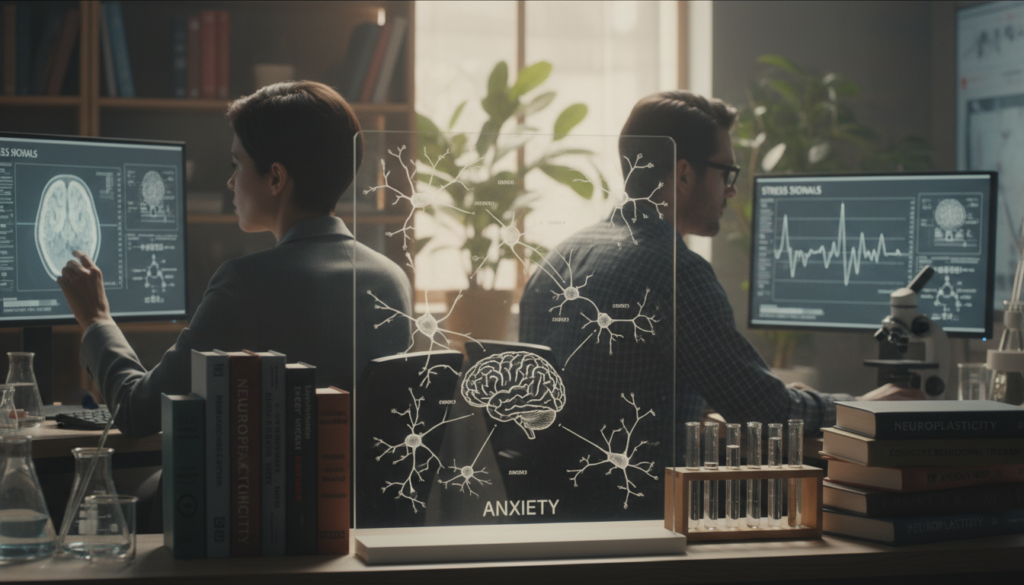
This survival mechanism becomes a problem when it’s triggered too often. Life experiences, genetics, and even physical health can all play a part.
Linking Thoughts, Feelings, and Behaviors
Our thoughts, emotions, and actions are in a constant loop. A single worried thought can activate the brain’s alarm center, the amygdala.
This triggers a flood of stress hormones. We then feel the physical rush of fear, which influences what we do next.
Through neuroplasticity, repeating this loop strengthens neural pathways. The mind learns the pattern, making it more automatic.
The good news is this works both ways. We can use the same process to build healthier pathways. Understanding the brain science demystifies the experience and empowers change.
Identifying Unhelpful Thought Patterns
We can’t change what we don’t see, which is why identifying distorted thinking is so powerful. These mental habits often feel automatic and true.
Learning to spot them is the first step toward responding differently.
Common Cognitive Distortions
These are predictable errors in our reasoning. They twist our perception of events.
Knowing their names and patterns makes them easier to catch. Here are a few frequent ones:
| Distortion | Description | Example |
|---|---|---|
| Catastrophizing | Always expecting the worst possible outcome. | “If my work presentation isn’t perfect, I’ll lose my job.” |
| Mental Filter | Focusing only on the bad while ignoring the good. | Dwelling on one critical comment after a party, forgetting all the compliments. |
| All-or-Nothing Thinking | Seeing things in black-and-white terms. | “If I’m not a total success, then I’m a complete failure.” |
| Personalization | Blaming yourself for events outside your control. | “My friend is in a bad mood; it must be because of something I did.” |
Recognizing the Vicious Cycle
A single worried thought can start a chain reaction. It sparks uncomfortable feelings, like nervousness.
This often leads to avoidance behaviors. We might skip a social event or put off a task.
That avoidance then reinforces the original thought, making it feel truer next time. This cycle pulls our attention toward threat.
Spotting this loop isn’t about self-judgment. It’s about building awareness in your own mind.
How to Catch It, Check It, Change It Technique
The ‘catch it, check it, change it’ technique provides a clear roadmap for responding to worry differently. This evidence-based method helps us identify, evaluate, and reframe unhelpful mental patterns.
It turns a reactive process into a mindful one. With practice, it can improve sleep, mood, and overall wellbeing.
Step-by-Step Explanation
Catch It: Notice the worry as it happens. Stay aware of your mental state throughout the day.
Check It: Pause and examine the thought. Ask: What’s the evidence? How likely is the feared outcome?
Change It: Reframe the situation based on your check. Create a more balanced and helpful perspective.
Real-Life Examples and Benefits
For example, if you’re worried about a work task, you might change the thought to, “I am prepared and will do my best.” This way of responding reduces stress over time.
Consistent use of this strategy offers many advantages:
| Benefit | Description | Impact |
|---|---|---|
| Reduced Worry | Breaks the cycle of repetitive negative patterns. | Creates mental space for calm. |
| Improved Mood | Balanced thinking fosters positive emotions. | Enhances daily enjoyment. |
| Better Sleep | Quiets the mind before bedtime. | Leads to more restful nights. |
| Increased Confidence | Builds trust in your ability to cope. | Empowers you in challenging situations. |
Remember, the goal isn’t always to eliminate a thought. Sometimes, just creating distance from it is a valuable win.
Practical Strategies to Reframe Unhelpful Thoughts
Writing down our worries can transform how we see challenging situations. Structured strategies like thought records provide a clear path forward.
Utilizing Thought Record Exercises
A thought record is a simple exercise. It uses prompts to guide you through examining evidence for your thoughts and feelings.
This work helps you build mental flexibility. You learn to separate unhelpful from helpful thoughts.
The goal isn’t always to force a positive thought. It’s about gaining more control over your mind.
Consistent practice makes these strategies feel more automatic. You develop new ways to view events.
For more guidance, explore self-help CBT techniques that can support this process.
Mindfulness and Relaxation Techniques for Anxiety
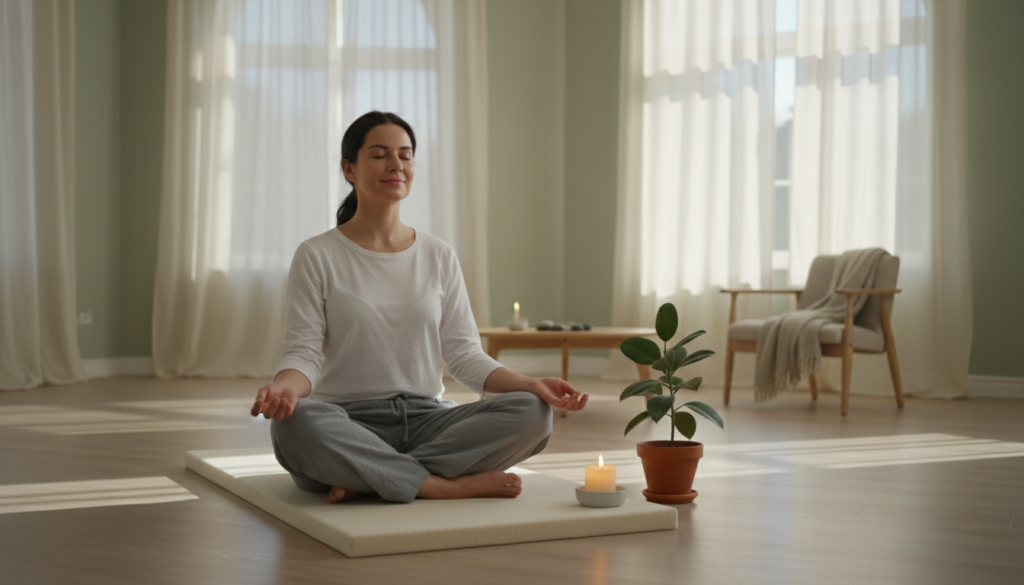
Mindfulness shifts our focus from what might happen to what is happening right now. It is the practice of bringing our attention to the present moment with openness. This helps us disengage from future-oriented worry.
By practicing proactively, we build skills during calm time. This makes them more effective when we feel tense. It’s about lowering our baseline, not fighting fear in the moment.
Breathing and Muscle Relaxation Practices
Specific exercises manage the physical aspects of anxiety. Diaphragmatic breathing and the 4-7-8 technique are powerful tools.
These methods activate the parasympathetic nervous system. This is your body’s natural relaxation response, as detailed in resources on stress physiology.
Progressive muscle relaxation is another key exercise. You tense and release muscle groups to reduce physical tension. This creates awareness of your body’s stress signals.
Incorporating Mindfulness in Daily Life
We can weave mindfulness into our regular day. Try mindful eating or taking a short pause during work.
Even routine acts like showering can become practice. The goal is to notice when your mind wanders to worry.
Gently guide your attention back. This builds a skill that benefits our mental wellbeing over time.
Regular practice changes our relationship with mental events. We see them come and go, without defining our lives.
Therapy and Professional Support: Finding a Therapist
When self-management strategies are not enough, connecting with a trained therapist offers a new path forward. Professional support provides structured treatment and expert guidance.
When to Seek Professional Guidance
Consider reaching out if worry disrupts your work, relationships, or daily tasks. It’s a sign when fear feels uncontrollable despite your best efforts.
Co-occurring issues like depression or substance use also signal a need for help. Sometimes, anxiety links to a physical health condition requiring treatment.
If you experience thoughts of self-harm, contact a provider immediately. Early intervention is key. It prevents concerns from worsening over todayme.
Common conditions include generalized anxiety disorder, social anxiety, panic disorder, and ocd. A therapist can tailor therapy to your specific needs.
Seeking help is an act of strength. To find therapist options, ask your doctor for a referral or use an online directory.
You might work with a psychologist for talk therapy or a psychiatrist for medication management. Effective treatment often combines skills like CBT with compassionate support.
Take time to review a provider’s approach. Finding the right fit is worth the effort for lasting wellbeing.
Tools and Resources for Managing Anxious Thoughts
Access to the right tools and supportive communities makes managing mental challenges more achievable. Building a personal toolkit of effective strategies is a key part of long-term wellbeing.
Self-Help CBT and Additional Techniques
Many resources teach practical ways to cope. You can find books, workbooks, and online courses based on cognitive-behavioral therapy.
These materials offer content like thought records and exposure principles for OCD. They provide a structured way to build skills on your own time.
Lifestyle factors are also powerful resources. Regular activity, social connection, and good sleep offer natural support.
If substance use worsens your anxiety, seeking help is crucial. The U.S. Preventive Services Task Force recommends screening, as many people have high anxiety without obvious signs.
Useful Online and Community Resources
Free online content is widely available. Look for YouTube channels with guided meditations or websites with downloadable worksheets.
Smartphone apps provide support anytime. They offer breathing exercises, mood tracking, and other helpful things.
Community support groups, both in-person and online, let you share experiences. You learn from others facing similar things, reducing feelings of isolation.
Pay attention to the quality of these resources. Choose content created by qualified professionals using evidence-based ways.
Experiment to find what support works for you. Bookmark helpful things and create a personal list of strategies. Revisit them often to reinforce skills.
For ongoing guidance, explore the Workshift Anxiety community. Different tools help at different times, and that’s a normal part of the process.
Conclusion
Remember, the goal isn’t a life without worry, but a life where worry doesn’t steer the ship. Managing anxious thoughts is about building skills, not achieving perfect control over your mind.
With consistent practice, the strategies you learn create positive ripples. They improve your relationships, work, and overall mental health. This is the best way to enhance your quality of life.
If some days feel harder, that’s normal. Reaching out for support is a sign of strength. Taking one small step today connects you with others on a similar path to managing anxiety.
You have the power to build resilience. Your journey leads to a future defined by your actions, not your fears.