
What if everything you thought about managing worry was actually making it worse?
Living with constant fear can feel overwhelming. It touches every part of your daily life and can block the peace you deserve. We understand that struggle.
This guide is here to help. We will walk you through proven strategies and practical techniques. These methods have helped countless people regain control over anxious thoughts.
Our approach blends solid science with real-world use. You will get information that is both credible and ready to use. This starts your journey toward better mental health.
Every person’s experience is unique. That’s why we offer multiple paths for symptom management. You can customize your approach based on your specific needs.
By the end, you’ll have a clear roadmap. It covers everything from how worry affects your body to daily coping tools. Our goal is to empower you with knowledge.
Key Takeaways
- Persistent worry can deeply impact your daily life and overall well-being.
- Evidence-based strategies exist to help you regain a sense of control.
- Combining scientific research with practical steps makes management more effective.
- Personalized approaches are vital because everyone’s journey is different.
- Understanding the mind-body connection is a crucial part of the process.
- Simple, daily coping mechanisms can build long-term resilience.
- Empowerment through knowledge is the first step toward lasting change.
Understanding r anxiety: Definition and Symptoms
When does everyday nervousness cross the line into a condition that needs attention? We begin by clarifying that persistent worry is more than just typical stress. It’s a condition that can significantly interfere with your daily life.
What is Generalized Anxiety Disorder?
Generalized Anxiety Disorder (GAD) involves a constant feeling of dread. For many people, these feelings last for months or even years. It develops gradually and often starts in early adulthood.
Women are more likely than men to experience this condition. It is not the same as occasional worry from stressful events. The apprehension persists even without an immediate threat.
Recognizing Physical and Mental Signs
Physical symptoms can include trembling, excessive sweating, and shortness of breath. Many experience headaches, muscle aches, and frequent stomach discomfort.
Mental and emotional signs are crucial to spot. They involve excessive worry about everyday things. Trouble controlling nervous feelings and irritability are common.
Restlessness, difficulty concentrating, and sleep problems are also key indicators. Recognizing these signs is a vital first step for your mental health.
| Aspect | Normal Stress | Generalized Anxiety Disorder |
|---|---|---|
| Primary Cause | External stressor (e.g., work deadline) | Persistent worry without clear threat |
| Duration | Short-term; resolves with stressor | Long-term (months or years) |
| Impact on Daily Life | Temporary disruption | Significant interference in work, relationships |
| Physical Symptoms | May include tension, headaches | Chronic trembling, sweating, stomachaches |
| Mental & Emotional Signs | Concern focused on stressor | Excessive, uncontrollable worry about everyday things |
Understanding this distinction helps you know when to seek help. Experiencing occasional worry is a normal part of life. When it becomes excessive and uncontrollable, it may be a disorder.
The Science Behind Anxiety, Stress, and Mental Disorders
The experience of persistent worry is not just in your mind; it has a clear biological basis. We now understand these conditions through the lens of neurobiology and genetics.
This knowledge helps us see them as legitimate medical issues. It also guides the creation of more effective treatments.
Neurobiological and Genetic Perspectives
Research shows that conditions like GAD arise from a mix of factors. Genetics, brain chemistry, and environment all play a part in their development.
For instance, the serotonin system is crucial for mood regulation. Studies find reduced serotonin-1A receptor binding in some mental disorders.
Genetic variations in this receptor gene are linked to a higher risk. They can connect generalized anxiety with depression.
The pineal gland also has a role. It produces melatonin to regulate sleep.
New research finds that elevated worry is tied to a larger pineal volume. This links directly to sleep problems like taking longer to fall asleep.
| Biological Factor | Primary Function | Link to Anxiety & Stress |
|---|---|---|
| Serotonin System | Mood and emotion regulation | Reduced receptor activity is associated with heightened anxiety and social fear. |
| Genetic Variations | Inherited blueprint for brain chemistry | Specific gene changes can increase susceptibility to anxiety and co-occurring depression. |
| Pineal Gland | Produces melatonin for sleep cycles | Larger volume correlates with elevated anxiety and measurable sleep disturbances. |
| Stress Response System | Activates the body’s “fight or flight” mode | Chronic activation alters brain pathways, making the anxiety response more persistent. |
Understanding these mechanisms is powerful. It moves us past stigma and toward solutions that target the root causes of the disorder.
Identifying Common Triggers and Risk Factors
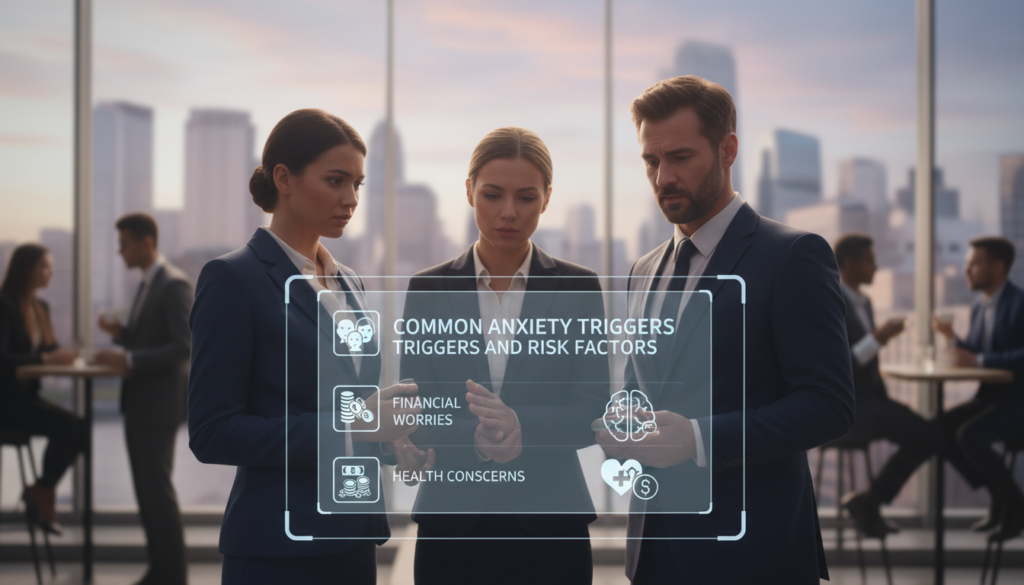
Your surroundings and social interactions can act as powerful catalysts for persistent nervousness. Pinpointing these specific risk factors is a vital step toward effective management.
External causes, like traumatic events or a chronically stressful environment, significantly increase your likelihood of developing ongoing worry.
Environmental and Social Factors
Several key factors in your daily life can provoke or worsen symptoms. For adults, common triggers center on job security, financial pressures, and family well-being.
Everyday concerns about health, punctuality, and household duties also create significant stress. The work setting itself is a major source of these environmental pressures.
For younger people, triggers often involve school performance and social dynamics. Peer relationships and future uncertainties are frequent focal points for their worry.
| Group | Common Triggers |
|---|---|
| Adults | Job performance, finances, family health, daily responsibilities |
| Children & Teens | School, friendships, extracurricular activities, future plans |
Recognizing your personal risk factors allows for a targeted management plan. This understanding is the foundation for building stronger coping skills.
Step-by-Step Guide to Managing r anxiety
Taking control of persistent worry begins with a clear, actionable plan tailored just for you. We guide you through a process that moves from insight to daily practice.
Developing a Personalized Action Plan
Start with an honest assessment of your patterns. Note when symptoms peak, what triggers them, and how they affect your daily life.
Set clear, measurable goals. Aim to improve sleep quality or reduce the frequency of intense worry episodes. This gives your management efforts a clear target.
Your plan must include contingency strategies. Prepare specific responses for high-stress moments at work or home. This prevents feeling overwhelmed.
Implementing Daily Coping Practices
Build structure into your routine. Consistent wake times, meals, and relaxation periods create predictability that soothes nervousness.
Integrate simple practices like deep breathing or scheduled worry time. Consistency is key—benefits grow with regular effort.
Track your progress in a journal. Documenting triggers and what helps provides valuable information for refining your approach over time.
Strategies for Overcoming Anxiety Through Lifestyle Changes
The power to soothe your nervous system often lies in the lifestyle decisions you make each day. Research confirms that specific health choices significantly reduce symptoms when paired with standard care.
These modifications serve as powerful tools. They enhance the effects of professional treatment rather than replacing it.
Mindfulness, Meditation, and Exercise
Mindfulness teaches you to observe worried thoughts without judgment. This creates distance, reducing their control over your emotions.
Regular meditation, even briefly, lowers stress hormones. It improves emotional regulation and fosters lasting calm.
Physical exercise is a top natural reducer. It releases mood-boosting endorphins and improves sleep quality.
We recommend cutting caffeine, as it can worsen jitteriness. Consistent sleep hygiene also strengthens emotional resilience.
Other beneficial techniques include a balanced diet and time in nature. Cultivating social support is equally vital for coping with anxiety.
These techniques build a strong foundation for health. They work best as part of a comprehensive plan for managing stress.
Integrating Mental Health and Support Systems
Healing often happens not in isolation, but within a community of shared experiences and mutual support. We recognize that effective anxiety management extends beyond individual efforts.

Connecting with others facing similar challenges reduces isolation. Support groups, available in-person and online, offer this valuable connection.
Sharing struggles and achievements provides validation and practical strategies. It strengthens your commitment to ongoing wellness efforts.
We encourage building a personal network. This includes family members, friends, and trusted colleagues who understand your condition.
Open communication with loved ones helps them understand your needs. It reduces misunderstandings in relationships and enlists their support.
Professional mental health care forms the foundation of comprehensive treatment. Therapists provide evidence-based interventions that peers cannot replace.
Use caution with advice from group members. Always consult qualified health care providers for treatment decisions.
Integrating professional treatment, peer support, and family involvement creates the strongest foundation for long-term mental health.
Cognitive Behavioral Therapy and Psychotherapeutic Approaches
What if the key to managing worry lies not in fighting thoughts, but in changing your relationship with them? Psychotherapy offers this powerful shift. It is a core treatment for persistent nervousness.
How CBT Addresses Anxiety Symptoms
Cognitive behavioral therapy is the gold standard. It helps you spot automatic negative thoughts. You learn to question their accuracy instead of accepting them as facts.
This process reveals how thoughts drive feelings and behaviors. By changing distorted thinking, you directly reduce distressing symptoms. Behavioral exercises build confidence through gradual exposure.
Acceptance and commitment therapy is another effective type. ACT encourages nonjudgmental acceptance of internal experiences. It focuses on living by your values even with discomfort.
Both treatments have strong research support. The best choice depends on your personal symptoms and preferences. A therapist can provide a concrete example of how each approach works.
Medication and Advanced Treatment Options
Pharmacological options offer a scientifically-backed path to symptom relief when other methods need support. These treatments are often part of a complete plan developed with your doctor.
Understanding Antidepressants and Anti-Anxiety Medications
Selective serotonin reuptake inhibitors (SSRIs) are common first choices. They help regulate brain chemistry to ease both depression and anxious symptoms.
Serotonin-norepinephrine reuptake inhibitors (SNRIs) work similarly. Both types may take several weeks to show full effects. Mild side effects like headaches can occur initially.
Benzodiazepines provide fast relief for intense moments. Due to risks of tolerance, they are typically prescribed for brief periods only.
Buspirone is a different anti-anxiety option with lower addiction potential. It requires consistent use for 3-4 weeks to be fully effective.
| Medication Class | Primary Use | Onset of Action | Key Considerations |
|---|---|---|---|
| SSRIs / SNRIs | Long-term management of anxiety & depression symptoms | Several weeks | First-line treatment; side effects often mild and temporary. |
| Benzodiazepines | Rapid relief of acute anxiety symptoms | Minutes to hours | Risk of dependence; recommended for short-term use only. |
| Buspirone | Generalized anxiety disorder treatment | 3-4 weeks | Non-sedating; lower potential for abuse compared to benzodiazepines. |
Working closely with your healthcare provider is essential. They help find the right medication and dose for your unique needs. Never stop a medication suddenly without medical guidance.
For persistent symptoms, advanced treatment strategies or clinical trials may be explored. Combining medication with therapy often yields the best results for long-term health.
For more resources on building a complete wellness plan, visit our dedicated support platform.
The Role of Sleep and Daily Habits in Managing Anxiety
The connection between your bedtime routine and daytime calm is stronger than you might think. Research confirms a powerful two-way link where poor sleep worsens nervousness, and worry disrupts rest.
This cycle can be tough to break without a focused plan. Common problems include taking longer to fall asleep and waking up often at night.
Studies show these issues reduce the deep, restorative stages of sleep your body needs. The impact is clear: how well you sleep tonight can predict your mood tomorrow.
Improving your sleep quality is a primary goal. Start with a consistent schedule, even on weekends. Make your bedroom cool, dark, and quiet.
Avoid screens for an hour before bed. Establish a relaxing pre-sleep routine like reading or gentle stretching.
Daily habits beyond bedtime also matter. Watch your caffeine and alcohol intake. Regular physical activity and morning sunlight help regulate your body’s clock.
If racing thoughts keep you up, try writing worries down earlier in the evening. Progressive muscle relaxation or a guided meditation can also quiet your mind.
Prioritizing good sleep strengthens your emotional resilience. It’s a cornerstone of overall health and a powerful tool for managing symptoms.
Exploring Research and Emerging Treatments for Anxiety Disorders
How is the future of mental health care being shaped by today’s scientific discoveries? We explore cutting-edge research that is advancing our understanding of these conditions. Ongoing studies investigate neurobiological mechanisms and novel treatment approaches.
Clinical trials are essential for this progress. They evaluate new interventions for safety and effectiveness. The National Institute of Mental Health supports numerous trials across the United States.
Recent research has examined specific biological factors. One study linked pineal gland volume to symptom severity in adolescents. This morphology may contribute to sleep problems during this critical development period.
Scientists continue to investigate the complex mechanisms behind these disorders. This includes serotonin pathways, fear circuitry in the brain, and genetic variations. Understanding these details is key to better care.
Emerging approaches being studied are exciting. They include novel medications, advanced psychotherapy forms, and neurostimulation techniques. Digital therapeutic tools delivered via apps are also promising.
Staying informed is vital. Interventions that are experimental today may become standard care within a few years. This shift towards personalized medicine aims to match treatments to individual profiles for improved outcomes.
Practical Techniques and Tools for Daily Management of r anxiety
Imagine having a set of reliable tools at your fingertips to calm your mind whenever worry strikes. We provide practical, immediately actionable methods you can implement today. These strategies focus on proven behavioral exercises and stress reduction.
Behavioral Techniques and Stress Reduction Exercises
Deep breathing is one of the simplest yet most powerful ways to interrupt the body’s stress response. It activates your parasympathetic nervous system to create calm within minutes. Progressive muscle relaxation is another effective method.
This exercise involves tensing and releasing muscle groups throughout your body. It helps you recognize and release physical tension that accompanies nervous thoughts. This practice can improve your overall mood significantly.
The 5-4-3-2-1 grounding technique helps during acute moments. You redirect attention by identifying five things you see, four you can touch, three you hear, two you smell, and one you taste. It anchors you in the present.
We recommend creating a personal coping toolkit. Fill it with items that reliably reduce your symptoms, like calming music or a stress ball. Behavioral activation schedules pleasurable activities even when you don’t feel like it.
Engaging in valued behaviors can improve your mood rather than waiting for discomfort to lift first. Thought-stopping techniques interrupt rumination by mentally saying “STOP!” and redirecting focus. Keeping a worry journal externalizes thoughts and tracks patterns.
This provides concrete examples of what works for you. Consistency matters more than perfection with these techniques. Practicing them regularly builds skill for high-stress moments, reducing their long-term impact.
Personal Experiences and Success Stories in Overcoming Anxiety
The most powerful lessons often come not from textbooks, but from the lived experiences of people who’ve been there. We share inspiring examples to show you are not alone.
Many describe a journey spanning years. These people emphasize persistence, even when initial strategies don’t bring quick relief.
A common theme is learning to change one’s relationship with worry. Success in managing anxiety isn’t about elimination, but preventing it from controlling decisions.
Some rebuilt their work lives by setting boundaries. Others found that managing symptoms deepened connections.
“I learned my worth wasn’t tied to my productivity on difficult days.”
Comparing your progress to others can be counterproductive. Every person’s path is unique.
These stories demonstrate that while worry may be part of life, it doesn’t have to define your identity. You can still pursue happiness and a full life.
Conclusion
Your journey toward a calmer mind doesn’t have to be a solitary struggle. We’ve shared information on many aspects of these disorders, from biological factors to daily ways to cope.
If you notice persistent symptoms, talk to a provider. Early treatment can limit the problem and its impact over the years. A combined approach often works best.
Managing your mental health is an ongoing process. What works may change, requiring periodic review. Show compassion to yourself and others.
This condition affects thoughts, mood, and physical health. It is a common part of life for many people. You can still build a full life with the right support.
Take that first step. You have the power to reduce these issues and improve your well-being.