

What if the feeling of a heart attack wasn’t a cardiac issue, but your brain’s alarm system misfiring?
We begin by exploring a common yet misunderstood anxiety condition. It involves recurring, unexpected episodes of intense fear and physical distress. These attacks can strike without warning, even in safe situations.
This guide focuses on a specific mental health challenge. It often starts in late teens or early adulthood. People experiencing it may feel trembling, a rapid heart rate, or a sense of losing control.
Recognizing the signs early is crucial for proper management. Many have isolated episodes without developing the full condition. Understanding this difference is key.
We will walk you through identifying specific signs, exploring emotional and physical effects, and learning about diagnosis. This is a treatable condition. With the right strategies, individuals can regain control of their lives.
Key Takeaways
- Panic disorder is an anxiety condition marked by sudden, intense episodes of fear.
- These attacks often involve physical sensations that mimic serious health issues.
- Early recognition of the symptoms is vital for getting an accurate diagnosis.
- The condition commonly begins in late adolescence or early adulthood.
- It is a treatable mental health issue with effective management options available.
- Understanding the difference between occasional panic and a disorder is important.
- This guide provides comprehensive information on symptoms and coping strategies.
Overview of Panic Disorder
The brain can sometimes signal danger when none is present, leading to profound distress. This is at the core of a specific anxiety condition.
We are discussing a recognized mental health challenge. It involves repeated, sudden surges of intense fear.
Understanding the Disorder
This condition is defined by recurrent, unexpected panic attacks. These episodes create ongoing worry and changes in behavior.
It is not simply a natural response to stress. The feelings of terror can occur regularly, often without a clear reason.
This is a legitimate medical issue. Understanding this fact is the first step toward effective management and recovery.
How It Develops
Several factors contribute to its development. A genetic link means it sometimes runs in the family.
Traumatic life events or high stress can play a role. Imbalances in brain chemistry are also involved.
While it often begins in late adolescence, it can start at any age. Certain people, including women, may have a higher risk.
Panic Disorder Symptoms
Many individuals experience a single, intense episode of fear, but for some, these moments become a recurring pattern that reshapes daily life. The symptoms of this condition involve much more than the acute episodes themselves.
Common Warning Signs
A primary warning sign is persistent anxiety about having another episode. This leads to avoidance of places or situations linked to past feelings of distress.
Daily routines often change to accommodate this worry. The ongoing concern about what these episodes mean can be exhausting.

The Difference Between Panic Attacks and Panic Disorder
A panic attack is a one-time event with intense physical and emotional symptoms. Panic disorder is diagnosed when a person has recurrent unexpected panic attacks.
It also requires at least one month of persistent worry or behavioral changes due to the fear of future attacks. This cycle can significantly interfere with daily life.
Most individual episodes last between 5 and 20 minutes. Their frequency varies; some people have them weekly, others much less often.
Recognizing this pattern is crucial for seeking the right help and breaking the cycle.
Exploring the Emotional Impact of Panic Attacks
Beyond the immediate physical distress, these episodes cast a long shadow on a person’s emotional world. The psychological toll extends far beyond the minutes of an acute episode.
We explore the chronic distress that can develop. It involves intense feelings of worry and a pervasive sense of uncertainty.
Anxiety, Fear, and Uncertainty
The fear isn’t limited to the panic attack itself. Many individuals develop anticipatory anxiety, constantly scanning for signs of the next episode.
This creates a cycle often called “fear of fear.” The dread of the experience can increase overall stress levels. Ironically, this makes future panic attacks more likely.
Avoidance and Behavioral Changes
To cope, people often start avoiding specific places or situations. They link these to past attacks. This avoidance can shrink one’s life and lead to isolation.
In some cases, this pattern escalates into agoraphobia. There is an intense fear of situations where escape feels difficult. This can severely restrict daily activities.
| Common Emotional State | Impact of Recurrent Episodes | Resulting Behavioral Change |
|---|---|---|
| General Confidence | Eroded by unpredictable panic attacks | Avoidance of triggers or crowded places |
| Calm Anticipation | Replaced by constant anxiety and fear | Over-planning escape routes from events |
| Social Engagement | Diminished by worry about having an attack | Declining invitations and staying home |
Physical Symptoms: What to Watch For
A sudden surge of terror doesn’t just affect the mind; it launches a full-scale physical response. The body’s fight-or-flight system activates, producing a range of intense and convincing sensations.
Recognizing these physical symptoms can help you understand what is happening during an episode.
Heart Racing and Sweating
Cardiovascular reactions are often the most prominent. You may feel your heart pounding, racing, or skipping beats. This can be accompanied by chest pain or discomfort.
Your autonomic nervous system also responds. Profuse sweating, hot flushes, or sudden chills are common. Trembling or shaking throughout the body is another frequent sign.
Other Bodily Reactions
Many other systems are involved. The full set of symptoms can include:
- Respiratory: Shortness of breath, a smothering feeling, or a choking sensation.
- Neurological: Dizziness, lightheadedness, numbness, or tingling in the hands.
- Gastrointestinal: Nausea, stomach pain, or a churning feeling.
These physical symptoms feel very real and frightening. It’s crucial to remember they typically peak within minutes and then fade.
While a panic attack is distressing, the symptoms themselves are not dangerous. Understanding this can reduce the fear that fuels future attacks.
Diagnosis and Tests: Understanding Your Condition
Getting a clear answer about what you’re experiencing is the first step toward taking back control. A formal diagnosis provides clarity and validates your experiences as a legitimate health concern.
We outline the standard process used to identify panic disorder. Professionals follow established criteria to ensure accuracy.
Medical History and Symptom Evaluation
Your doctor or mental health specialist will conduct a thorough interview. They will ask you to describe your symptoms in detail, including their frequency and duration.
Key questions explore when they began and how they impact your daily life. Many people find this detailed review helpful.
The criteria require recurrent, unexpected panic attacks. There must also be at least one month of persistent worry about future attacks.
Conducting Physical Examinations
A physical exam is a common next step. It helps rule out other medical conditions that can cause similar physical sensations.
For example, thyroid problems or heart issues might be investigated. This process takes time but is essential.
Receiving an accurate diagnosis is crucial. It opens the door to tailored treatment and effective management strategies for your mental health.
Available Treatments and Therapies
Effective management of this condition is built on a foundation of evidence-based psychotherapy and, when needed, supportive medication. The primary goal of any treatment plan is to reduce the frequency of intense episodes and ease the associated challenges.
Most people find the best results with a tailored combination of these approaches. A healthcare provider can help design the right strategy.
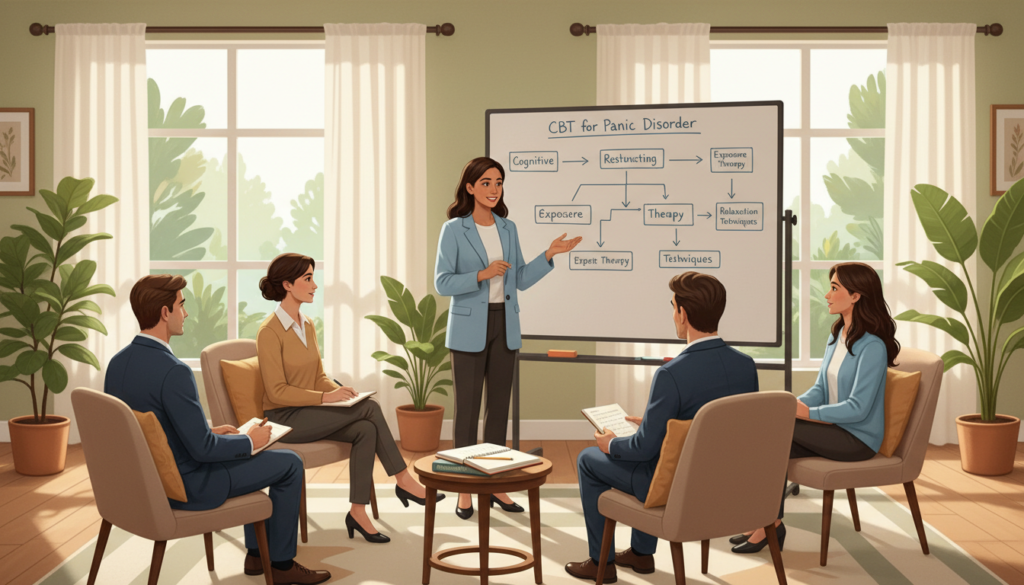
Cognitive Behavioral Therapy (CBT) and Exposure Techniques
Cognitive behavioral therapy is considered the gold-standard psychotherapy for this challenge. This therapy teaches different ways of thinking, behaving, and reacting to the feelings that arise.
Exposure therapy is a common CBT method. It focuses on confronting fears in a controlled, safe setting. This process gradually helps individuals reclaim activities they’ve been avoiding.
Medication Options and Their Benefits
Medications are another cornerstone of treatment. Antidepressants like SSRIs and SNRIs are commonly prescribed for panic disorder.
These treatments may also take several weeks to become fully effective. Other options include beta-blockers for physical sensations and benzodiazepines for short-term relief.
All medications require close supervision from a mental health professional. Consistent follow-up ensures safety and optimizes the treatment benefit over time.
Self-Help Strategies and Lifestyle Adjustments
Empowering yourself with daily practices builds a foundation of resilience against sudden surges of anxiety. These ways to help yourself put control back in your hands.
They complement professional care beautifully. We focus on tools you can use anywhere.
Breathing Techniques and Relaxation Exercises
When fear rises, your breathing often becomes quick and shallow. This fuels the physical response.
Simple techniques can reverse this cycle. Diaphragmatic breathing encourages deep, slow breaths from your belly.
The 4-7-8 method is another powerful tool. Inhale for 4 counts, hold for 7, exhale for 8.
Controlled breathing is the fastest way to influence your autonomic nervous system.
These practices activate your body’s natural relaxation system. They may also shorten the duration of an attack.
Diet, Exercise, and Stress Management
Your daily life choices have a direct impact. Regular physical activity is a cornerstone for managing stress.
Aerobic exercise reduces tension and improves mood. It builds resilience over time.
What you consume matters greatly. We recommend limiting caffeine, alcohol, and sugary foods.
These can trigger or worsen physical sensations. Prioritizing sleep and engaging in hobbies are other key ways to manage stress.
| Lifestyle Factor | Primary Benefit | Recommended Action |
|---|---|---|
| Regular Exercise | Lowers overall stress and releases endorphins | Aim for 30 minutes of moderate activity most days |
| Balanced Diet | Stabilizes energy and mood | Avoid stimulants like caffeine and nicotine |
| Consistent Sleep | Improves emotional regulation | Maintain a regular bedtime schedule |
| Mindfulness Practice | Reduces frequency of worried thoughts | Try 10 minutes of meditation daily |
Combining these strategies creates a powerful, holistic approach. Support from loved ones further strengthens your journey.
Avoiding and Managing Trigger Situations
Tracking the patterns behind intense moments of distress can turn bewildering fear into manageable information. Many people start avoiding certain situations because they worry it will spark another episode.
This creates a cycle of living “in fear of fear.” Ironically, this avoidance can make future attacks more likely.
While these episodes can seem random, identifying personal triggers is a powerful step. It helps you move from reaction to proactive management.
Identifying Personal Triggers
Keeping a simple diary is a great tool. Note the time, place, and your feelings before an attack.
Over time, hidden patterns often emerge. Common catalysts include crowded spaces, high stress periods, or even lack of sleep.
Your triggers are as unique as you are. What unsettles one person may not affect another.
Recognizing these patterns provides clarity. It turns vague anxiety into specific, addressable factors.
Preventative Measures for Unexpected Attacks
Balance is key. Total avoidance strengthens fear, but smart precautions build confidence.
Maintain regular sleep, practice daily relaxation, and stay active. Limit known triggers like caffeine when reasonable.
Even with care, breakthrough episodes may happen. This isn’t failure.
View it as a chance to use your coping skills. Consistent treatment and a strong support network are your best allies for long-term management.
Navigating Support and Professional Guidance
Seeking help from a healthcare provider opens the door to proven treatments and personalized strategies. You do not have to manage this challenge alone.
Effective support is available. It combines professional help with community resources.
When to Consult Our Doctor
Consult a doctor if you have recurring intense episodes. Persistent worry about future events or major life changes are key signs.
Many people feel embarrassed discussing emotions. Remember, mental health professionals are trained to listen with care.
The evaluation involves questions about your experiences. This leads to a clear treatment plan, which may also include referral to a specialist.
Connecting with Support Groups and Resources
Peer support reduces isolation. Groups provide practical coping information and hope.
Organizations like Anxiety UK and Mind offer valuable resources. Connecting with others who understand is powerful.
Some people with this condition have co-occurring health conditions. For example, agoraphobia or other anxiety disorders can develop.
A comprehensive approach addresses all mental health needs. This ensures the best outcome.
| Type of Support | Primary Benefit | Example Resource/Action |
|---|---|---|
| Professional Therapy | Structured, evidence-based treatment for panic disorder | Cognitive Behavioral Therapy (CBT) with a licensed therapist |
| Peer Support Networks | Reduces stigma and provides shared experiences | Local or online groups through charities like No Panic |
| Educational Materials | Empowers with knowledge and self-help strategies | Guides on understanding anxiety from Mind |
Reaching out is a sign of strength. With the right support, managing your health is entirely possible.
Moving Forward with Confidence and Support
Embracing the journey ahead means recognizing that this challenge is a chapter, not the whole story of your life. With consistent treatment and support, most individuals see major improvement.
Setbacks may occur, but they don’t erase your progress. Building resilience and a strong network helps you move ahead with less fear.
Remember practical steps, like discussing your condition with the DMV if it affects driving. Staying on your care plan prevents relapse.
Without help, this condition can worsen and lead to other anxiety issues. You are more than your panic disorder. You can reclaim your goals and help others too.