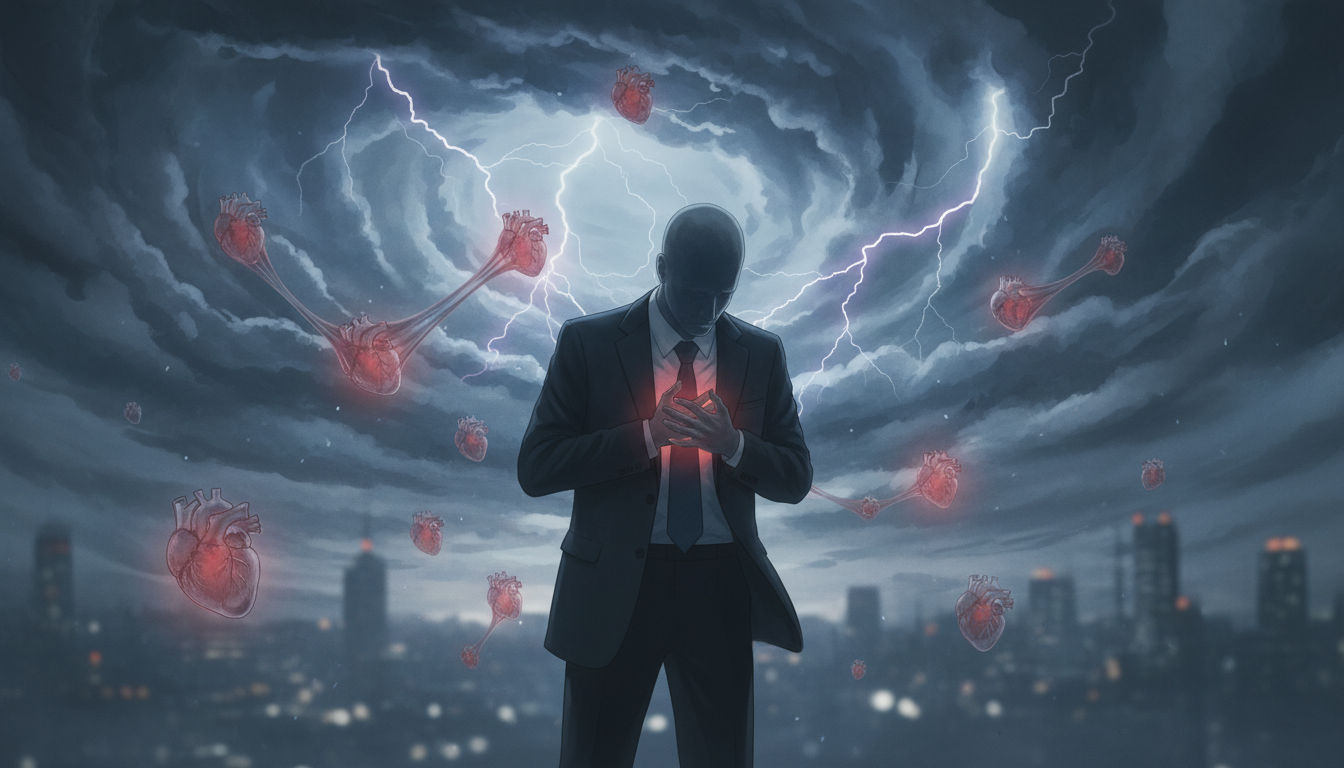
What if the pounding in your chest isn’t a sign of danger, but your body’s misunderstood alarm system? This experience, where stress triggers physical sensations that mimic cardiac issues, is incredibly common.
We begin by exploring a widespread condition that affects millions. It involves both the physical rush of palpitations and the persistent worry about our health, even when tests show everything is fine.
This confusion can create a exhausting cycle of fear and physical response. The good news is that understanding this phenomenon is the first, most powerful step toward managing it effectively.
Our comprehensive guide will walk you through the nature of these symptoms, how to differentiate them from genuine emergencies, and practical strategies for both immediate relief and long-term well-being. Remember, you are not alone, and effective tools exist to help you regain a sense of control.
Key Takeaways
- This condition is a widespread experience, affecting a significant portion of the population at some point in their lives.
- It encompasses both tangible physical sensations and the psychological fear surrounding cardiac health.
- The symptoms are often mistaken for more serious cardiac events, which can intensify the cycle of worry.
- Knowledge and understanding are foundational to breaking the cycle and managing the physical responses.
- Practical strategies for immediate calming and long-term management are available and can be highly effective.
- This guide provides a roadmap for differentiating between anxiety-driven sensations and symptoms requiring medical attention.
- Seeking support, including professional help for managing these emotions, is a sign of strength.
Understanding Heart Anxiety and Its Impact
The experience of fearing for one’s cardiac well-being, despite medical reassurance, is a challenging reality for countless people. This condition involves excessive worry about cardiovascular health.
It often comes with physical sensations that mimic serious problems.
Defining Heart Anxiety
We define this as a state where individuals experience persistent concern about their cardiac function. This worry typically follows a diagnosed condition or a traumatic event.
A more intense form, known as cardiophobia, is a specific anxiety disorder. Here, the fear of a heart attack remains intense even after doctors confirm health.
| Aspect | General Cardiac Anxiety | Cardiophobia |
|---|---|---|
| Primary Cause | Often follows a cardiac event or diagnosis | Can develop without prior heart issues |
| Level of Fear | Significant worry about health | Intense, persistent dread of a heart attack |
| Response to Medical Reassurance | Concern may lessen with clear tests | Fear persists despite normal results |
Effects on Physical and Mental Well-Being
Our brain’s stress response system releases hormones like cortisol. This prepares the body for action by increasing pulse and blood flow.
In those with this condition, this system can act like a faulty alarm. It triggers distress when no real threat exists.
Many people check their pulse repeatedly throughout the day. They mistake normal variations for danger signs.
This creates a exhausting cycle. Worry sparks physical symptoms, which then fuel more fear. It can lead to avoiding exercise or stressful situations, limiting daily life. Ongoing research on how anxiety affects heart highlights the importance of addressing both physical and mental health together.
Recognizing Common Symptoms and Warning Signs
A sudden flutter in the chest or a sharp intake of breath can instantly trigger fears of a serious medical event. Learning to identify these signals is a powerful step toward managing your response.
Physical Indicators: Palpitations, Chest Pain, and Shortness of Breath
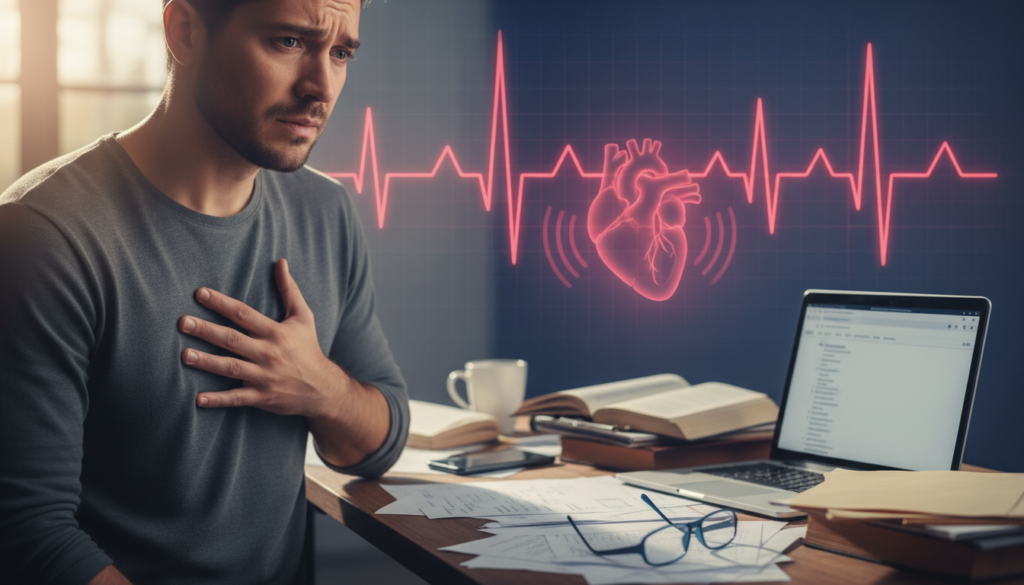
Many people report sensations like pounding, fluttering, or a racing pulse. These heart palpitations can last from seconds to hours but are typically harmless when linked to stress.
Other common symptoms include tightness or discomfort in the chest, shortness of breath, and rapid breathing. You might also experience sweating, dry mouth, nausea, or dizziness.
These feelings arise from your body‘s natural alarm system activating. Even at rest, your pulse or heart rate may feel elevated.
Behavioral Responses and Anxiety Triggers
It’s common to check your pulse dozens of times a day for reassurance. Others avoid exercise or certain situations that might increase their rate.
Triggers can be a physical sensation, a stressful environment, or a worried thought pattern. Recognizing these patterns helps you and your doctor tell the difference between a stress response and an emergency.
Differentiating Heart Attack from Panic Attack
The line between a life-threatening cardiac event and an intense stress response is frighteningly thin, marked by shared physical signals. This similarity makes self-diagnosis in the moment nearly impossible and potentially dangerous.
If you are ever uncertain, the rule is absolute: call 911 immediately. It is always better to seek medical help than to guess.
Overlapping Signs and Critical Distinctions
Both a heart attack and a panic attack can cause chest tightness, shortness of breath, sweating, and a racing pulse. The overwhelming feeling of dread is common to both situations.
Key distinctions lie in the pattern and progression:
- Timing: Panic attacks often peak within minutes and subside relatively quickly. Cardiac event symptoms typically build more gradually and persist.
- Pain Location: Pain from a cardiovascular issue may radiate to the arm, jaw, or back. Discomfort from a stress response is usually centered in the chest.
- Associated Signs: Nausea, cold sweats, and lightheadedness are more strongly linked to cardiac problems.
Over time, many people learn their personal symptom patterns with a doctor’s guidance. This builds confidence in recognizing what is normal for their body.
Never dismiss chest pain or other concerning symptoms, even if you have a history of panic attacks. When in doubt, get help.
Managing Acute Stress and Anxiety Episodes
Acute episodes of distress demand immediate, practical responses that ground you back in the present moment. We can use simple tools to interrupt the cycle of worry and physical symptoms.
These methods engage your senses and breathing to signal safety to your nervous system.
Grounding Techniques and Sensory Engagement
When feeling overwhelmed, the 5-4-3-2-1 technique helps. Name five things you see, four you can touch, three you hear, two you smell, and one you taste.
This directs focus outward, away from internal anxiety. Physical grounding, like pressing your feet firmly down, also creates strong sensory input.
The “dropping anchor” method has three parts. Acknowledge your feelings, connect with your body, and engage with your surroundings.

Different approaches work for different people and situations. The table below compares two common methods.
| Technique | Primary Focus | Ideal For |
|---|---|---|
| 5-4-3-2-1 Sensory Scan | External Environment | Quick mental distraction, anywhere |
| Physical Grounding (e.g., cold object) | Bodily Sensation | Intense physical panic symptoms |
Calming Breathwork Practices
Diaphragmatic breathing is foundational. Place one hand on your chest and one on your belly.
Breathe in slowly, letting your belly rise. Hold for a few seconds, then exhale fully. Imagine your stomach is a balloon.
Box breathing is another powerful rhythm. Inhale for four counts, hold for four, exhale for four, and hold again for four.
This pattern can calm your system in minutes. Practice these during calm time so they’re easier to use when stress hits.
Mastering your breath is mastering your state. It’s a direct line to calming your physiology.
For a deeper toolkit of strategies, explore the resources at Workshift Anxiety. Consistent practice builds confidence.
Practical Approaches to Managing Heart Anxiety
Practical, on-the-spot strategies exist to soothe the body’s alarm system and quiet worried thoughts. We can use simple ways to find relief when symptoms feel overwhelming.
Immediate Strategies for Relief
Distraction offers powerful help. Calling a friend or taking a short walk shifts focus. This breaks unhelpful thought patterns quickly.
Progressive muscle relaxation reduces physical tension. Tense muscles from toes to face for ten seconds, then release. This practice lowers stress and awareness of blood pressure sensations.
| Technique | Primary Action | Best For |
|---|---|---|
| Distraction (e.g., music, walk) | Redirects mental focus | Quick relief in any setting |
| Progressive Muscle Relaxation | Releases physical tension | Reducing bodily stress and blood pressure awareness |
Monitor device use with care. Fitness trackers can worsen anxiety by encouraging constant checks.
If you check your pulse many times a day, track it. Set a weekly goal to reduce this frequency. Lasting changes take time and self-compassion.
Write your favorite techniques on a card for quick reference. This supports your long-term health and heart care journey.
Long-Term Lifestyle Changes for Better Heart Health
The journey toward sustained calm and cardiovascular resilience is paved with small, intentional choices repeated over time. Lasting management requires sustainable lifestyle changes that support both physical health and mental well-being.
Incorporating Regular Exercise and Balanced Diet
Regular physical activity is a cornerstone. While fear may arise, appropriate exercise strengthens the heart and reduces stress hormones.
Starting safely is key. Consult a provider, begin with gentle walks, and increase intensity gradually.
| Approach | Focus | Benefit |
|---|---|---|
| Gentle Start | Low-impact movement like walking | Builds confidence without overwhelm |
| Gradual Progression | Slowly increasing duration and effort | Improves cardiovascular health safely |
A balanced diet rich in whole foods supports your heart and stabilizes blood sugar. Reducing caffeine and alcohol also helps minimize triggers.
Improving Sleep and Stress Management Habits
Quality sleep profoundly impacts blood pressure and emotional resilience. Poor rest increases stress hormones and vulnerability to worry.
Build helpful habits into your daily life. Set aside “worry time,” enjoy hobbies, and connect with friends.
Spending time in nature and laughter are powerful tools. When anxiety goes unaddressed, the repeated stress response can elevate blood sugar and cholesterol over time.
This chronic state may increase the risk of disease. Consistent, positive activity and rest form a protective foundation.
Professional Support: Therapy, Medication, and Cardiac Rehab
When self-management tools aren’t enough, professional guidance offers a structured path to reclaiming peace of mind and physical confidence.
This support is crucial when distress significantly interferes with daily life.
Exploring Cognitive Behavioral Therapy and Talk Therapy
Cognitive Behavioral Therapy (CBT) is a gold-standard treatment. It helps people identify and change unhelpful thought patterns.
This therapy teaches skills to distinguish realistic concerns from irrational fears. Talk therapy also provides a safe space to process traumatic experiences, like a cardiac event.
For more severe anxiety disorder, a combination of therapy and medication is often recommended.
Decisions about medication should always involve a doctor who understands both mental and physical health.
| Treatment Option | Primary Focus | Key Benefit |
|---|---|---|
| Cognitive Behavioral Therapy | Changing thought & behavior patterns | Builds long-term coping skills |
| Medication (e.g., SSRIs) | Regulating brain chemistry | Can reduce severe symptoms quickly |
| Cardiac Rehabilitation | Integrated physical & emotional recovery | Supervised return to activity with peer support |
Benefits of Cardiac Rehabilitation and Regular Medical Checkups
Cardiac rehab is a medically supervised program. It includes exercise, counseling, and mental health screening.
This care helps people safely return to physical activity. It builds confidence and provides continuous monitoring.
Up to half of people hospitalized for a heart attack report significant emotional distress. Depression after a heart attack is linked to a greater risk of another event.
Regular checkups with your care team provide reassurance. They allow for early detection and adjustment of your treatment plan over time.
This ongoing support is vital for long-term health and reducing future risk.
Integrating Personal Experiences and Survivor Insights
Survivor experiences reveal not just the challenge of physical healing, but the critical journey of mental and emotional recovery.
Julie Iacovelli’s story powerfully illustrates this. At 31, she suffered a heart attack despite being active and healthy.
She initially mistook her symptoms for a panic attack. This confusion is a common and frightening reality.
Learning from Real-Life Stories and Recovery Journeys
The trauma didn’t end at the hospital. Her brain replayed the event constantly, triggering severe anxiety.
Every minor pain felt like another cardiac emergency. She became isolated, describing herself as “one with her couch.”
Recovery began with structured support. Cardiac rehab provided monitored exercise and connection with other people in similar situations.
This peer support was vital. She felt less alone.
Ongoing therapy with grounding techniques and medication formed her treatment plan. These tools helped manage the fear.
I have more good days than bad days, but man, when those bad days hit, they hit like they never went away.
Julie speaks openly about her experience. Sharing stories helps others and reinforces our own heart health journey.
Progress isn’t linear, but understanding this brings hope. Many people find their path with time and the right support.
Embracing a Healthier Future Together
A healthier future is built on the foundation of understanding your body’s signals and responding with compassion. While challenging, this condition is a manageable one with the right knowledge and support.
Asking for help can feel scary at first, but it is a powerful step toward your well-being. It’s completely normal for worry to be higher after a cardiac event. For many people, these feelings lessen over time.
If distress persists and interferes with daily life, seeking professional support is crucial. The comprehensive toolkit we’ve discussed—from grounding to lifestyle changes—offers many effective ways forward.
Be patient and compassionate with yourself. Setbacks are a normal part of the journey. With proper support, you can rebuild confidence in your body and engage fully in a healthier future.