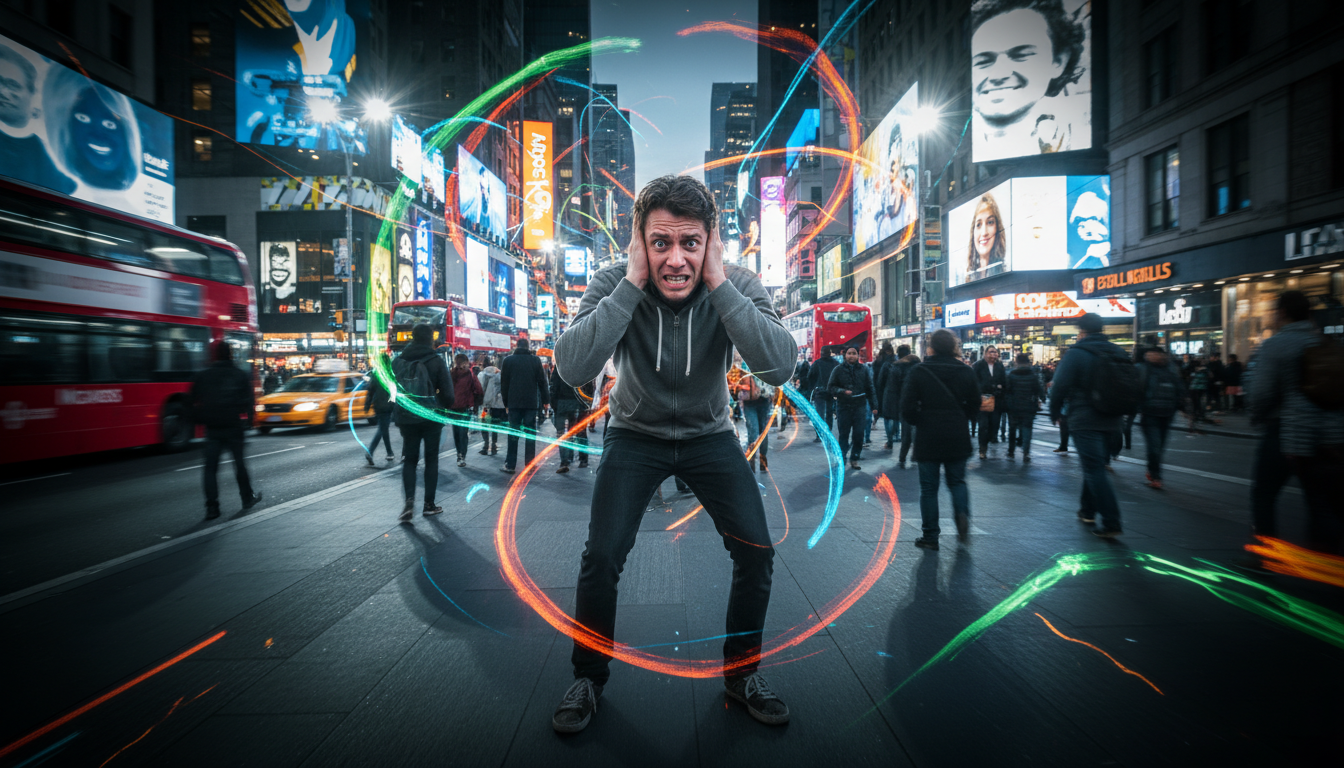
We live in a world full of things trying to get our attention. Our senses pick up information from everywhere. When too much comes in, we feel overstimulation anxiety.
This feeling comes from sensory overload. It happens when our senses get too much information at once. We might feel like our brain is crashing from too much noise or light.
When we face too much, our brain thinks it’s a big crisis. We might feel like fighting, running, or freezing. Knowing this helps us find peace and focus again.
Key Takeaways
- Sensory overload occurs when our five senses collect more data than the brain can process.
- High levels of input can trigger a natural fight, flight, or freeze response.
- The brain perceives excessive sensory data as a physical crisis or threat.
- Recognizing these environmental triggers is the first step toward managing our mental health.
- Common triggers include loud noises, bright lights, and crowded spaces in our daily lives.
1. What Is Overstimulation Anxiety
Too much stuff around us can make us feel anxious. This is called overstimulation anxiety. It happens when we get too much information at once. This can make our body and mind feel stressed.
1.1. Defining Overstimulation and Its Connection to Anxiety
Too many things around us can be hard to handle. This includes loud sounds, bright lights, and strong smells. Our brain tries to sort it all out, but it can get too much.
People who are very sensitive to these things might find it especially hard. When we feel too much, our body gets ready to either fight or run away. WebMD says this can make us feel very anxious.
1.2. How Sensory Overload Affects Our Nervous System
Our nervous system is meant to help us react to danger. But too much stuff can make it get overwhelmed. This can make us feel stressed for a long time.
Our body has two parts to its nervous system. One helps us relax, and the other gets us ready to react. When we’re too stressed, the relaxing part can’t work as well. This makes us feel anxious and tense.
1.3. The Difference Between Regular Stress and Overstimulation Anxiety
Regular stress comes from things like work or money problems. But overstimulation anxiety is about too much stuff around us. It’s about how our body handles all the sights, sounds, and smells.
Knowing the difference helps us find better ways to deal with stress. It’s important to understand what’s causing our anxiety.
| Characteristics | Regular Stress | Overstimulation Anxiety |
|---|---|---|
| Primary Cause | External pressures (work, finances) | Sensory overload (noise, light, smells) |
| Trigger | Specific events or situations | Intensity and volume of sensory inputs |
| Response | Activation of stress response | Overactivation of sensory processing |
By knowing the difference, we can tackle our anxiety better. We can find ways to handle too much stuff around us.
2. Recognizing the Signs and Symptoms
Overstimulation anxiety shows up in many ways. We see physical, emotional, and behavioral signs. These signs tell us our body and mind are trying to say something.
2.1. Physical Symptoms We Experience
Our bodies show clear signs when we’re too much in our environment. These signs can be uncomfortable and even hurt if we don’t do anything.
2.1.1. Body Tension and Headaches
Body tension is a common sign. It can cause headaches. Relaxation techniques can help relax our muscles.
2.1.2. Rapid Heartbeat and Breathing Changes
A fast heartbeat and breathing changes are signs too. Our heart beats faster and we breathe shallower. For more info, check Healthline’s article on signs of overstimulation in adults.
2.2. Emotional and Mental Indicators
Overstimulation anxiety also affects how we feel and think. It’s important to know these signs to understand the full effect of too much stimulation.
2.2.1. Irritability and Mood Swings
Irritability and mood swings are common. We might get angry or feel our mood change suddenly. Using emotional regulation techniques can help.
2.2.2. Difficulty Concentrating and Brain Fog
It’s hard to focus and think clearly when we’re overwhelmed. This makes it tough to do things or make decisions.
2.3. Behavioral Warning Signs
Our actions can also show we’re feeling overwhelmed. Knowing these signs helps us act fast.
Signs include feeling restless, wanting to get away, and feeling stressed. We might want to cover our ears or eyes. Spotting these signs early helps us handle too much stimulation better.

3. Understanding the Root Causes and Triggers
Overstimulation anxiety comes from many places. We need to look at both outside and inside factors. Knowing what causes it helps us deal with it better.
3.1. Environmental Factors That Contribute to Sensory Overload
Our environment can make us feel anxious. Things like too much noise or crowded places can upset us.
3.1.1. Noise Pollution and Crowded Spaces
Too much noise from cars or music can stress us out. Places full of people, like malls, can also be overwhelming.
Studies show that too much noise makes people feel stressed and anxious.
3.1.2. Digital Overstimulation and Screen Time
The digital world adds new challenges. Too much screen time and constant alerts can make us feel too full.
Less screen time and digital breaks can help us feel better.
3.2. Internal Factors and Personal Sensitivities
Our own feelings and how we react to things can also cause anxiety. Some people are more sensitive than others.
| Internal Factor | Description | Impact on Overstimulation Anxiety |
|---|---|---|
| Sensory Processing Disorder | A condition where the brain has difficulty processing sensory information | Increased sensitivity to sensory stimuli |
| Emotional Sensitivity | Heightened emotional responsiveness | Greater emotional reactivity to triggers |
| Personality Traits | Traits such as introversion or high sensitivity | Increased vulnerability to overstimulation |
3.3. Common Situations That Trigger Overstimulation Anxiety
Some situations can make us feel anxious. Loud places, crowded areas, or intense talks can be hard to handle.

Going to loud concerts or busy streets can be tough. So can intense talks. Knowing these can help us prepare and cope.
4. Effective Coping Strategies for Managing Overstimulation Anxiety
Managing overstimulation anxiety needs many strategies. We can use different techniques to handle our anxiety better. This helps us feel better overall.
Immediate Relief Techniques When We Feel Overwhelmed
When we feel too much, we need quick help. These techniques calm us down. They stop the feeling of being overwhelmed from getting worse.
Deep Breathing Exercises for Quick Calm
Deep breathing is a simple way to calm down. Try the 3-3-3 breathing. Breathe in for three counts, hold for three, and breathe out for three. It slows your heart and reduces stress.
Grounding Methods to Reconnect with Our Senses
Grounding helps us stay in the moment. It distracts us from too much. Focus on your senses, like feeling your feet or listening to sounds. It makes us feel less anxious.
Creating a Quiet Space for Recovery
A quiet place to go is very helpful. It should be calm and free from distractions. This lets us relax and recharge.
Mindfulness Practices for Emotional Regulation
Mindfulness helps us manage our feelings. It makes us more aware of our thoughts and body. This is key for handling overstimulation anxiety.
Body Scan Meditation Techniques
Body scan meditation focuses on our body. Start from your toes and go up to your head. It helps release tension and makes us more aware of our body.
Present-Moment Awareness Exercises
These exercises help us stay in the moment. They can be done through meditation or just by paying attention to what’s around us. This helps us not judge the present.
Long-Term Stress Management Strategies
Managing stress long-term is as important as quick fixes. These strategies help us be stronger and less likely to feel overwhelmed.
Setting Healthy Boundaries with Technology
Too much tech can be overwhelming. Setting limits or taking breaks from it helps. This reduces the stress from too much stimulation.
Developing a Sensory-Friendly Routine
A daily routine that’s easy on our senses helps. Avoid busy places, use headphones, or add relaxing activities. This makes life easier.
Building Rest and Recovery into Our Schedule
Rest is key for managing anxiety. Make time to relax and let your nervous system heal. This helps us deal with daily stress better.
| Coping Strategy | Description | Benefits |
|---|---|---|
| Deep Breathing Exercises | Techniques like 3-3-3 breathing to calm the mind and body | Reduces stress, slows down heart rate |
| Grounding Methods | Focusing on the five senses to stay present | Reduces feelings of anxiety and disconnection |
| Mindfulness Practices | Body scan meditation and present-moment awareness | Improves emotional regulation, reduces stress |
Self-Care Tips for Prevention
Self-care is vital for managing anxiety. Taking care of ourselves reduces our chance of feeling overwhelmed.
Sleep Hygiene and Adequate Rest
Good sleep is crucial for managing stress. Keep a regular sleep schedule and have a calming bedtime routine. This helps a lot.
Nutrition and Physical Activity
Eating well and staying active reduces stress. A healthy lifestyle boosts our mental health and makes us stronger.
When to Seek Professional Support
Self-help is great, but sometimes we need a professional. If anxiety is really affecting your life, get help from a mental health expert.
Using these strategies can help us handle overstimulation anxiety better. This improves our life quality a lot.
5. Conclusion
Understanding and managing overstimulation anxiety is key for good mental health. We’ve seen how too much sensory input can cause feelings of overwhelm and anxiety.
By knowing the signs of overstimulation anxiety, we can start managing it. We’ve talked about many ways to cope, from quick fixes to long-term strategies. These help people live healthy lives even when they feel overwhelmed.
It’s very important to look after our mental health. Taking steps to avoid overstimulation anxiety helps us feel better. This way, we can stay healthy and avoid other mental health problems.
With the right steps and support, we can handle overstimulation anxiety well. By focusing on our mental health and controlling our senses, we can live a balanced and happy life.
# overstimulation anxiety
In our world, we face a lot of information and noise. This can make us feel overwhelmed. Our brains get too much input, leading to a “fight or flight” response.
This reaction can make our heart rate go up and our focus fade. Understanding this helps us find calm again.
## 1. What Is Overstimulation Anxiety
Overstimulation anxiety is feeling scared and panicked when there’s too much around us. It’s linked to anxiety disorders. Our brain sees too much as a threat.
## 2. Recognizing the Signs and Symptoms
We might feel our body react before we even notice. Signs include headaches, tight muscles, and being very sensitive to sounds.
Emotionally, we could feel very irritable or want to cry. Mentally, we might struggle to make decisions or follow conversations.
## 3. Understanding the Root Causes and Triggers
Our surroundings play a big role. Busy places, bright lights, and constant notifications can overwhelm us.
Internal factors like sleep, nutrition, and conditions like ADHD also play a part. Knowing these helps us prepare for overstimulation.
## 4. Effective Coping Strategies for Managing Overstimulation Anxiety
When feeling overwhelmed, try the “5-4-3-2-1” method. Tools like Bose headphones can also help reset our senses.
Mindfulness practices help us stay calm. Deep breathing signals to our body that we’re safe.
Creating a calm lifestyle is key. This includes quiet hours and apps like Headspace. It helps us deal with chaos better.
## 5. Conclusion
Living in a busy world can be hard. But we can protect our peace. By knowing what triggers us and using coping strategies, we can manage anxiety.
Remember, taking care of our mental health is essential. It’s not a luxury, but a necessity for a balanced life.
## FAQ
### Q: How can we distinguish overstimulation anxiety from a typical panic attack?
Both can make us feel scared. But overstimulation anxiety is caused by too much around us. A panic attack can happen without a reason. Removing ourselves from the source and using relaxation techniques helps with overstimulation anxiety.
### Q: What are some effective self-care tips for preventing sensory overload at work?
At work, use dim lamps and noise-canceling tech. Short breaks in a quiet spot can also help. This prevents feeling overwhelmed all day.
### Q: Which mindfulness practices are best for immediate emotional regulation?
Box breathing and “body scanning” are great. They help us focus on our breath or body, away from the chaos. This promotes calm.
### Q: Are there specific relaxation techniques that help with long-term stress management?
Yes, Progressive Muscle Relaxation (PMR) and yoga are effective. They lower our stress levels, making us less reactive to daily triggers.
### Q: How does anxiety relief through professional therapy differ from self-help methods?
Therapy, like CBT at the Mayo Clinic, offers a structured way to deal with triggers. Self-care tips help daily, but therapy helps us find deep triggers and strategies for lasting relief.
### Q: Can adjusting our diet and sleep improve our mental health resilience against overstimulation?
Yes. A well-rested body can handle more. Good sleep and stable blood sugar improve our stress management. This makes us less likely to feel overwhelmed.