

When we see danger, a small part of our brain starts a big alarm. This part, called the hypothalamus, sends signals to the adrenal glands. These glands release strong chemicals like adrenaline and the main stress hormone.
This response makes more sugar in our blood and helps our brain use energy better. It also helps fix body tissues in emergencies. Studies show that morning levels are linked to these feelings.
Understanding this helps us handle our daily reactions better. Our body gets ready for action by focusing on what’s important. It makes us sharp and gives us energy for our muscles. This is clear when we look at how our body and mind are connected.
Key Takeaways
- Hypothalamus acts as a main control hub for stress.
- Adrenal glands produce adrenaline plus glucose-regulating chemicals.
- Energy moves to the brain with tissues for quick repair.
- Morning levels often link directly to nervous feelings.
- Managing these biological signals supports overall mental well-being.
- Maintaining balance prevents long-term physical strain.
1. Understanding Cortisol and Anxiety: The Science Behind the Connection
It’s important to know how cortisol and anxiety work together. They affect our health in a big way. High cortisol can make us feel more anxious. At the same time, feeling anxious can make cortisol go up.
What Is Cortisol and Why Does It Matter?
Cortisol is a hormone that helps us deal with stress. It keeps our blood sugar right and helps us use fat and carbs. It’s key for our “fight or flight” response.
The Cleveland Clinic says cortisol levels change throughout the day. They’re highest in the morning and lowest at night.
But, too much stress can mess with this rhythm. This can hurt our health. High cortisol levels are linked to anxiety. Cortisol is important for keeping our body balanced.
How Cortisol Triggers Anxiety Responses in Our Bodies
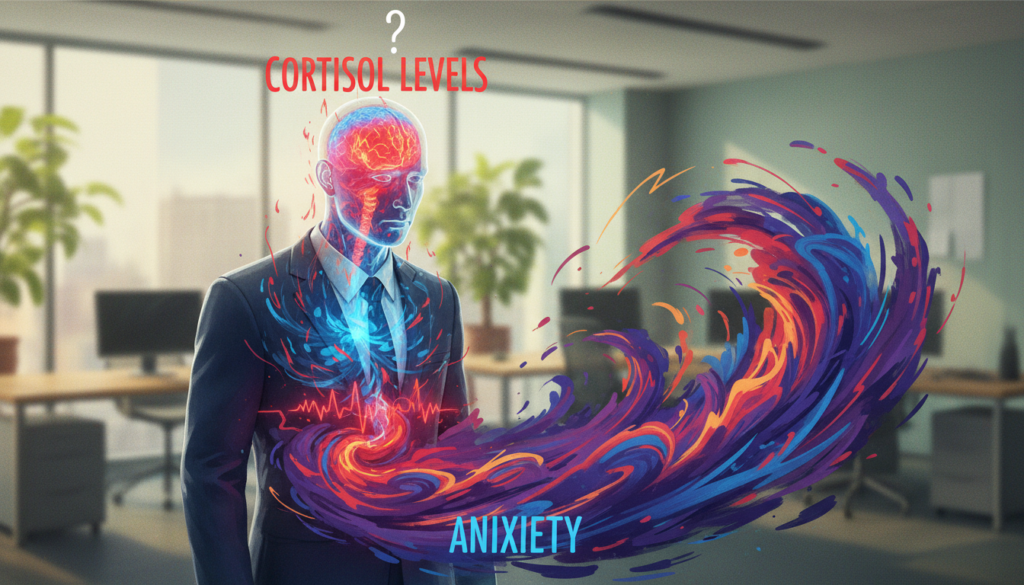
Cortisol makes us ready to face danger. It makes our heart beat faster and our blood pressure go up. But, too much cortisol can make us too anxious.
Experts say stress can change our brain’s chemistry. This can lead to anxiety. This shows how cortisol and anxiety are connected.
| Cortisol Effect | Impact on Anxiety |
|---|---|
| Increased Alertness | Heightened Sense of Anxiety |
| Disrupted Sleep Patterns | Increased Anxiety Symptoms |
| Metabolic Changes | Potential for Increased Anxiety Due to Physical Symptoms |
The Cortisol-Anxiety Feedback Loop
Cortisol and anxiety feed into each other. High cortisol can make us more anxious. This can make cortisol levels go up even more. It’s important to break this cycle.
“The interplay between cortisol and anxiety is a vicious cycle that can be challenging to break, but understanding this relationship is the first step towards managing it.”
Knowing when cortisol and anxiety are high is a start. We can change our lives to feel better. This includes making lifestyle changes and finding ways to manage stress.
2. How Elevated Cortisol Levels Affect Your Mental Health
Cortisol imbalances can really hurt our mental health. They cause many physical and mental problems. High cortisol levels can make us feel very unwell.
Physical Symptoms of High Cortisol
High cortisol can make us feel sick in many ways. It can mess with our body’s systems.
Sleep Disruptions and Fatigue
High cortisol can mess up our sleep. This can make us tired all the time. We might find it hard to do simple things.
Weight Gain and Metabolism Changes
Cortisol can also change how we store fat. This can make us gain weight, especially around our belly. It can change how we look.
Digestive Issues and Immune System Suppression
Cortisol can hurt our stomach and make us more sick. It can make us get sick easier. This is because it weakens our immune system.
Emotional and Psychological Anxiety Symptoms
High cortisol can also hurt our feelings and mind. These problems can be hard to deal with. Sometimes, we need help from others.
Persistent Worry and Racing Thoughts
High cortisol can make us worry a lot. It can make our mind race. This can make it hard to focus and make choices.
Mood Swings and Irritability
Cortisol imbalances can make us feel moody and short-tempered. This can hurt our relationships. It can make life harder to enjoy.
Difficulty Concentrating and Memory Problems
High cortisol can make it hard to focus and remember things. This can hurt our work and school. It can make us feel like we’re not doing well.
| Symptom Category | Specific Symptoms | Impact on Mental Health |
|---|---|---|
| Physical Symptoms | Sleep disruptions, weight gain, digestive issues | Increased fatigue, decreased motivation |
| Emotional and Psychological Symptoms | Anxiety, mood swings, difficulty concentrating | Reduced emotional stability, impaired cognitive function |
3. Recognizing Cortisol Imbalances in Your Daily Life
Knowing the signs of cortisol imbalance is key to managing stress and anxiety. Cortisol is called the “stress hormone.” It helps our body deal with stress. But, when it’s out of balance, it can harm our health.
Common Signs of Chronic Stress and Elevated Cortisol
Chronic stress and high cortisol show in many ways. Some common signs are:
- Increased heart rate and blood pressure: High cortisol can make your heart rate and blood pressure go up. This is bad for your heart.
- Sleep disturbances: Too much cortisol can mess up your sleep. You might have trouble sleeping or feel restless.
- Weight gain: Cortisol helps your body store fat, especially around your belly. This can make you gain weight.
- Mood changes: High cortisol can make you feel anxious, irritable, and moody.

How to Monitor Your Own Stress Patterns
It’s important to watch your stress levels. Here are ways to do that:
- Keep a stress journal: Write down how stressed you feel and what makes you stressed each day.
- Track your sleep: Watch your sleep to see if it’s being affected.
- Practice self-assessment: Check your mood, energy, and how you feel overall regularly.
When to Seek Professional Help for Cortisol Testing
If you keep feeling symptoms of cortisol imbalance, you might need to see a doctor. A doctor can test your cortisol levels to see if they’re okay.
Signs you should see a doctor include:
- Persistent fatigue or insomnia
- Unexplained weight gain or loss
- Chronic anxiety or depression
By spotting cortisol imbalance signs and managing stress, you can avoid serious health problems. This can make your life better.
4. Proven Cortisol Reduction Techniques for Anxiety Relief
We can feel better by using special ways to lower cortisol. These methods help us manage our stress and anxiety.
Step 1: Establish Foundational Lifestyle Changes
First, we need to make some basic changes in our lives. These changes help us get ready for more ways to handle stress.
Creating a Consistent Sleep Schedule
It’s important to sleep the same amount every night. Try to sleep 7-9 hours each night. This helps our body deal with stress better. Not sleeping the same every night can make us feel more anxious.
Nutrition Strategies to Balance the Stress Hormone
Eating right is key to managing cortisol. Eat foods with omega-3 fatty acids like salmon and walnuts. They help fight inflammation and keep our stress response healthy. Also, eating complex carbs like whole grains helps keep our blood sugar stable and lowers cortisol.
| Food Group | Examples | Benefits |
|---|---|---|
| Omega-3 Rich Foods | Salmon, Walnuts, Chia Seeds | Reduces inflammation, supports brain health |
| Complex Carbohydrates | Whole Grains, Sweet Potatoes, Fruits | Stabilizes blood sugar, reduces cortisol |
| Antioxidant-Rich Foods | Berries, Leafy Greens, Nuts | Combats oxidative stress, supports overall health |
Incorporating Regular Physical Exercise
Exercise is great for lowering cortisol and anxiety. Try aerobic activities like walking, cycling, or swimming. It’s important to find the right amount of exercise, too much can be bad.
Step 2: Implement Daily Mind-Body Practices
Adding mind-body practices to our daily routine can also help. These practices help us relax and manage stress better.
Deep Breathing Exercises for Immediate Relief
Deep breathing can help us feel better right away. Try diaphragmatic breathing to calm your nervous system and lower stress hormones.
Meditation and Mindfulness Techniques
Meditation and mindfulness can lower cortisol and improve our mood. Regular mindfulness practice makes us stronger against stress and calmer.
Progressive Muscle Relaxation Methods
Progressive muscle relaxation helps release tension. This method can lower cortisol and make us feel relaxed.
Step 3: Build Long-Term Stress Resilience and Cortisol Management
Building stress resilience is key for managing cortisol and anxiety long-term. We need strategies that help us stay well and handle stress better.
Setting Boundaries and Time Management
Setting boundaries and managing time well can reduce stress and cortisol. Focus on important tasks and learn to say “no” when needed. This helps us not feel overwhelmed.
Social Connection and Support Systems
Keeping strong social connections is important for stress and cortisol management. Stay connected with friends, family, or support groups. They offer emotional support and make us feel less alone.
5. Conclusion
We looked at how cortisol and anxiety are connected. We saw how high cortisol levels affect our body and mind. Managing cortisol is key to feeling better and reducing anxiety.
Knowing how cortisol and anxiety work together helps us deal with mental health issues. We need a mix of therapy, medicine, and ways to handle stress. This helps fix cortisol problems and lessens anxiety.
Working with doctors to make a plan that fits you is important. This way, you get the right help for your specific situation. It leads to better cortisol control and less anxiety.