
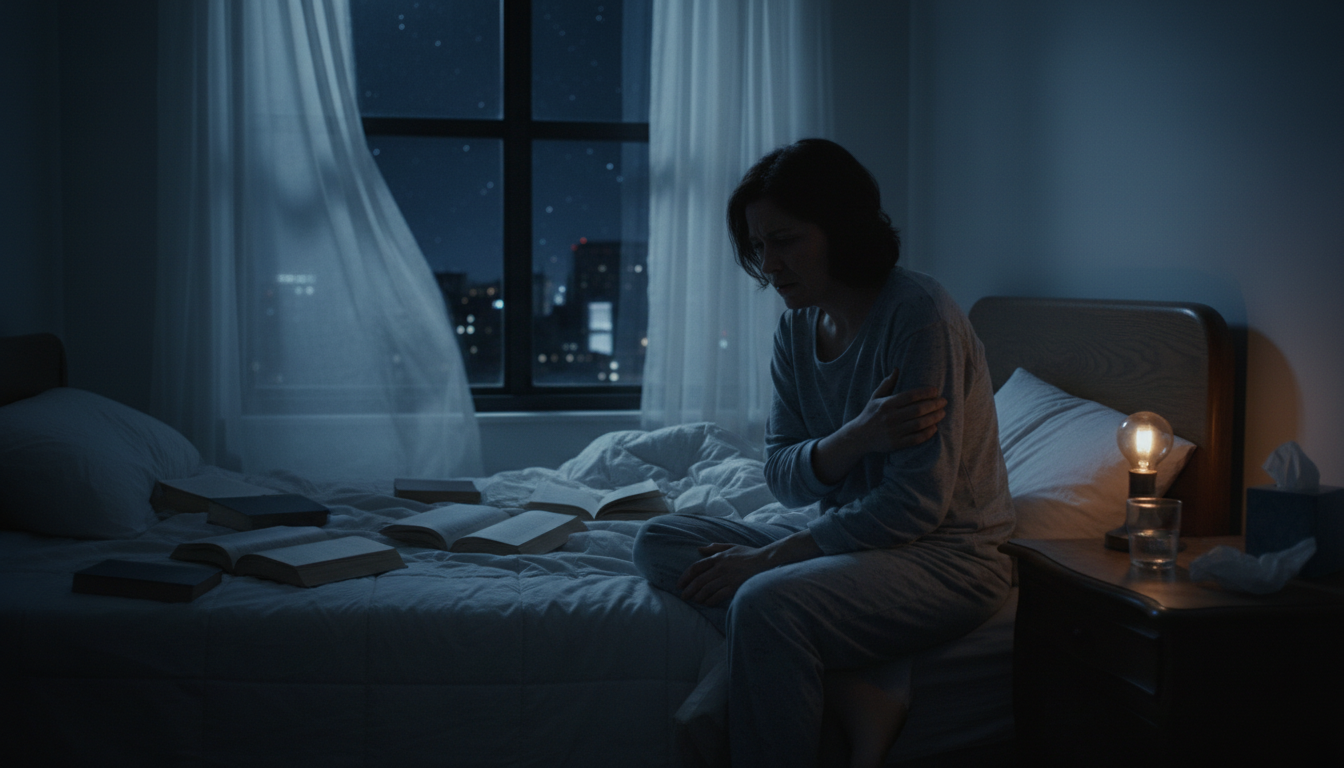
Many of us have trouble sleeping at night. Our minds can get really busy and keep us awake. This is a big problem for many people in the United States.
Studies show that many people struggle with mental health issues. These problems can make it hard to sleep well. Things like stress or scary experiences can make it hard to relax at night.
It’s really tiring when you can’t sleep, even when you’re really tired. Our guide will help you find ways to calm your mind at night. We want to help you feel better and sleep better.
Key Takeaways
- Nightly worry affects millions of adults in the United States.
- Stress and trauma often serve as primary triggers for restlessness.
- A strong link exists between mental health conditions and nighttime comfort.
- Constant racing thoughts create a cycle preventing physical recovery.
- We provide effective techniques for calming a busy mind.
- Improving rest quality supports better daily functioning and health.
Understanding Why We Experience Anxiety When Trying to Sleep
Many of us feel anxious when we try to sleep. This feeling is common and puzzling. It’s important to know why it happens to fix it.
Sleep anxiety happens when we’re stressed or feel threatened. At night, without distractions, our worries grow. Our minds focus more on thoughts and feelings, making us anxious.
What Sleep Anxiety Really Means
Sleep anxiety is feeling worried, nervous, and scared when we try to sleep. It’s not just about not sleeping. It’s about feeling anxious and unable to relax.
Experts say, “Sleep anxiety is a cycle. The more we worry, the less we sleep. And the less we sleep, the more we worry.” Breaking this cycle is hard, but knowing it helps.
The Connection Between Our Mind and Sleeplessness
Our minds play a big part in sleep anxiety. Stress and anxiety trigger our brain’s stress response. This releases hormones that keep us awake.
Our minds also wander to stressful thoughts and memories. This makes sleep harder.
- The brain’s stress response is triggered, releasing stress hormones.
- Stressful thoughts and memories can keep us awake.
- The lack of distractions at night can make us more aware of our anxiety.
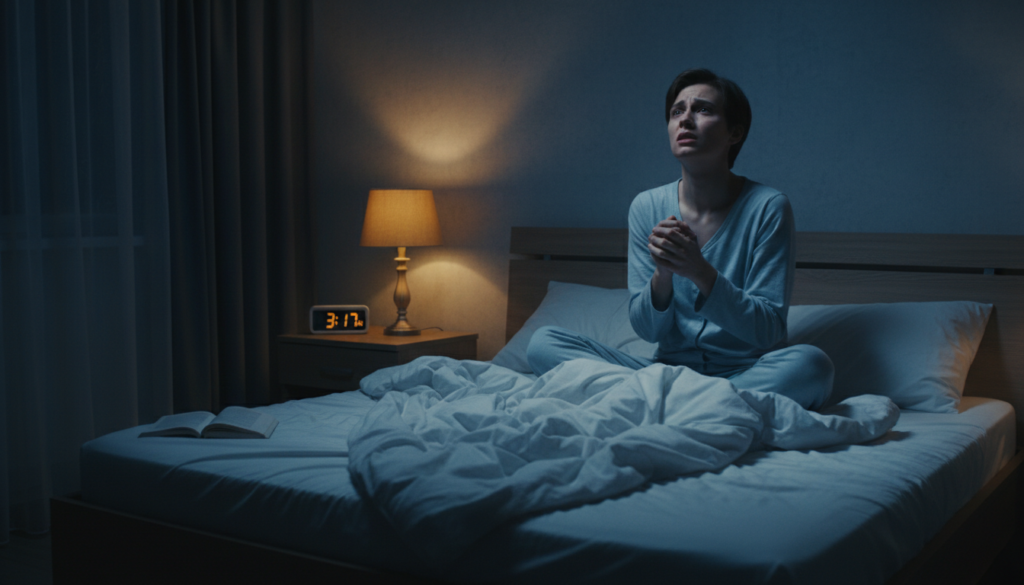
Why Anxiety Gets Worse at Night
Anxiety gets worse at night for a few reasons. One is the lack of distractions. During the day, we’re busy and our minds are elsewhere. At night, we’re left with our thoughts.
The quiet and darkness also make our worries seem bigger. It’s key to know these patterns and find ways to manage our anxiety.
By understanding sleep anxiety, we can start to fix it. Next, we’ll look at ways to manage it and improve our sleep.
Identifying Our Sleep Anxiety Triggers and Symptoms
To tackle sleep anxiety, we first need to identify its causes and symptoms. Sleep anxiety shows up differently in everyone. It’s key to know what triggers it and how it shows up for us.
Physical Signs of Trouble Sleeping From Anxiety
Anxiety can really affect our body, especially when it comes to sleep. Some common signs of trouble sleeping anxiety include:
- Tension headaches
- Muscle strain
- Rapid heartbeat
- Sweating
- Nausea
These signs can be scary and make anxiety worse. This can start a cycle that messes with our sleep.
Racing Thoughts and Mental Symptoms
Mental symptoms are a big part of sleep anxiety. Racing thoughts and trouble calming the mind are common. Other mental signs include:
- Increased worry
- Fear of not sleeping
- Restlessness
- Irritability
For more info on managing anxiety, check out https://workshiftanxiety.com/.
Recognizing Patterns in Our Sleep Disturbances
Understanding our sleep patterns is crucial for dealing with sleep disturbances anxiety. Keeping a sleep diary can help spot:
| Pattern | Description |
|---|---|
| Time of onset | When the anxiety or sleep disturbance starts |
| Triggers | Events or activities that lead to anxiety or sleep issues |
| Relief factors | Actions or situations that help with anxiety or better sleep |
By spotting these patterns, we can start to find ways to fight our sleep anxiety.
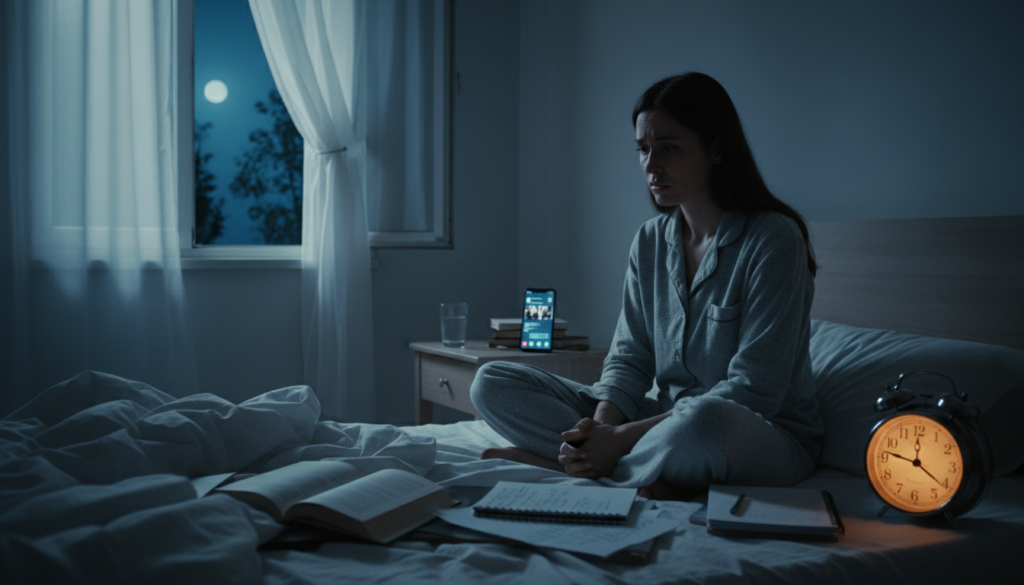
Setting Up Our Bedroom for Anxiety-Free Sleep
Our bedroom should be a calm place for sleep. It helps us relax and feel calm. A few simple changes can make it better for sleep.
Optimizing Temperature, Lighting, and Sound
Temperature, lighting, and sound are key for sleep. A cool room, 60-67 degrees, is best. We can use a fan or adjust the thermostat.
Lighting is important too. Dim red lights help us sleep. Bright lights can make it hard to sleep. We can use curtains to block light.
Sound should be quiet for sleep. We can use earplugs or white noise. Soothing sounds like rain can also help.
Removing Technology and Distractions
Technology can distract us in bed. We should turn off TVs, computers, and phones. Blue light from screens can also mess with sleep.
Make our bedroom a tech-free zone. Avoid TV, phone, or laptop use in bed.
Creating a Calming Sensory Environment
Our senses affect how we feel in our bedroom. Calming scents, plants, or a weighted blanket can help. They make us feel relaxed and calm.
By improving our bedroom, we can sleep better. This helps us feel less anxious before bed.
Mental Strategies to Stop Anxious Thoughts at Bedtime
Anxious thoughts at night can really mess with us. But, we can calm our minds with the right tricks. When we’re anxious, it’s hard to sleep, making us even more tired and anxious.
There are ways to handle these thoughts and sleep better. Let’s look at some of these methods.
Using the Cognitive Shuffle Technique
The cognitive shuffle is a simple trick to calm down before bed. It’s about thinking of a random word and then finding a word that starts with the last letter of the first word. For example, “cloud” leads to “dream” because “dream” starts with “D.”
This trick distracts us from worries and helps us relax. By focusing on words, we quiet our minds and get ready for sleep.
Practicing the Worry Dump Method
The worry dump method is another good strategy. It’s about writing down all our worries before bed. This clears our minds and helps us process our feelings.
Benefits of the Worry Dump Method:
| Benefit | Description |
|---|---|
| Reduces Mental Clutter | Writing down worries helps clear our minds. |
| Processes Emotions | Reflecting on our worries can help us understand and manage our emotions better. |
| Prepares for Sleep | By dealing with our worries before bed, we can relax and fall asleep more easily. |
Applying Mindfulness Meditation for Sleep
Mindfulness meditation is great for managing anxiety and relaxing. It’s about focusing on the now and letting go of thoughts.
To meditate for sleep, find a comfy spot and close your eyes. Focus on your breath, feeling the air move in and out. If your mind wanders, gently bring it back to your breath.
Redirecting Our Thoughts With Guided Imagery
Guided imagery is another way to calm our thoughts. It’s about imagining a peaceful place.
Imagine yourself on a calm beach at sunset. Feel the sand and the breeze. This imaginary scene can calm your mind and body, helping you sleep.
By using these mental tricks before bed, we can manage anxious thoughts and sleep better.
Physical Relaxation Techniques We Can Use Tonight
We can fight sleep anxiety with physical relaxation techniques. These methods calm our bodies and minds. They are simple and fit well into our bedtime routine, making sleep easier.
Step-by-Step Progressive Muscle Relaxation
Progressive muscle relaxation is a method to release tension. We tense and relax muscles in our body. Starting with our toes, we move up to our head, tensing and then relaxing each area.
This step-by-step process helps us feel our body’s tension and relaxation.
The 4-7-8 Breathing Method for Instant Calm
The 4-7-8 breathing method calms our nervous system. We breathe in for 4 counts, hold for 7, and breathe out for 8. This controlled breathing pattern slows our heart rate and helps us relax.
Box Breathing to Lower Our Heart Rate
Box breathing reduces stress and anxiety. We breathe in for 4 counts, hold for 4, breathe out for 4, and hold again for 4. This “box” shape breath helps us feel balanced and calm.
By practicing box breathing, we can lower our heart rate and get ready for sleep.
Body Scan Meditation Before Sleep
Body scan meditation is a mindfulness practice. We lie down and focus on our body parts, starting at our toes. We notice any tension or discomfort.
By acknowledging and releasing these areas, we relax deeply. This prepares our body for a good night’s sleep. For more help with insomnia, check out Sleep Foundation.
Building Daily Habits That Reduce Anxiety Before Bed
Our daily routines greatly affect how we relax and sleep. Adding healthy habits to our day can lessen sleep anxiety. As “The way we spend our days is, of course, the way we spend our lives.” This shows daily habits shape our well-being, including sleep.
Establishing a Consistent Sleep-Wake Schedule
Setting a regular sleep schedule improves sleep quality. Going to bed and waking up at the same time every day helps our body’s clock. This routine reduces sleep anxiety by making our sleep cycle predictable.
To do this, pick a realistic bedtime and wake-up time. Stick to it every day, including weekends. Also, create a bedtime routine to tell our body it’s time to sleep.
Timing Our Caffeine, Meals, and Exercise
When we do things like drink caffeine, eat, and exercise affects our sleep. Drinking caffeine in the afternoon or evening can mess up our sleep. Eating a big meal before bed can also cause discomfort and make it hard to sleep.
Try to finish exercising a few hours before bed. This helps our body relax. By planning our activities right, we make our sleep better.
Creating a 60-Minute Wind-Down Routine
A calming pre-sleep routine tells our brain it’s time to relax. A 60-minute routine can include reading, meditation, or a warm bath. This helps us relax and get ready for sleep.
Start by making the room darker and quieter. Do relaxing things. Avoid screens because they can mess with our sleep.
Managing Stress Throughout Our Day
Handling stress during the day is key to less sleep anxiety. Adding stress-reducing activities like meditation or deep breathing helps. This way, we can deal with stress and sleep better.
Also, take breaks during the day to relax. This makes our daily life more balanced and peaceful. It helps us sleep better at night.
Conclusion
We’ve looked into why we get anxious when we try to sleep. We found out what makes it hard to sleep well. By knowing these things, we can make our sleep better.
Using relaxation methods like muscle relaxation and meditation helps calm us down. Going to bed and waking up at the same time is also key. Managing stress during the day helps too.
By tackling sleep anxiety in a big way, we can stop feeling anxious at night. With time and the right steps, we can sleep better. We’ll wake up feeling new and ready to go.