

Have you ever felt like your mind is racing in two different directions at once? Imagine being stuck in a loop while also craving a fresh distraction. Many people face this exact internal battle every single day.
We are here to explore the complex meeting point of ocd and adhd. Through our collective experiences, we seek to shed light on how these two states interact within the mind.
Research reveals that these conditions often appear together. Studies suggest that up to 30% of people diagnosed with repetitive habits also experience focus struggles (Abramovitch et al., 2015). Navigating these neurodevelopmental disorders requires a unique approach plus deep knowledge.
Within this guide, we will examine how these symptoms overlap. We aim to provide clear thoughts on treatment options plus effective ways to help. Clarity is our primary goal.
Join us as we uncover the nuances of living with these dual challenges today. Our goal involves helping you find balance within the chaos of these combined traits. We are in this together.
Key Takeaways
- Understanding high co-occurrence rates between conditions.
- Identifying how overlapping symptoms impact daily life.
- Evaluating clinical treatment paths for dual diagnoses.
- Gaining effective ways to help manage symptoms daily.
- Accessing helpful professional resources in the United States.
- Navigating dual challenges plus common cognitive hurdles.
What Are OCD and ADHD?
OCD and ADHD are two brain disorders. They can really affect how someone lives their life every day.
Defining Obsessive-Compulsive Disorder
OCD makes people have thoughts they don’t want. These thoughts make them feel scared or worried. They try to make these feelings go away by doing the same thing over and over.
For example, someone with OCD might wash their hands a lot because they’re scared of germs.
Key characteristics of OCD include:
- Recurring, intrusive thoughts or urges
- Repetitive behaviors or mental acts
- Significant distress or impairment in social, occupational, or other areas of functioning
Defining Attention-Deficit/Hyperactivity Disorder
ADHD makes people have trouble focusing and staying still. They might find it hard to follow instructions or finish tasks. They might also be too active or interrupt others.
Key characteristics of ADHD include:
- Symptoms of inattention (e.g., difficulty sustaining focus, following instructions)
- Symptoms of hyperactivity (e.g., fidgeting, restlessness)
- Symptoms of impulsivity (e.g., interrupting others, blurting out answers)
Key Differences Between OCD and ADHD
OCD and ADHD are two different brain disorders. OCD is about unwanted thoughts and actions. ADHD is about trouble focusing, being too active, and acting without thinking.
| Characteristics | OCD | ADHD |
|---|---|---|
| Primary Symptoms | Obsessions and compulsions | Inattention, hyperactivity, impulsivity |
| Nature of Symptoms | Intrusive thoughts and repetitive behaviors | Difficulty sustaining focus, restlessness, impulsive actions |
| Impact on Daily Life | Significant distress or impairment due to obsessions and compulsions | Difficulty with task completion, social interactions due to inattention, hyperactivity, and impulsivity |
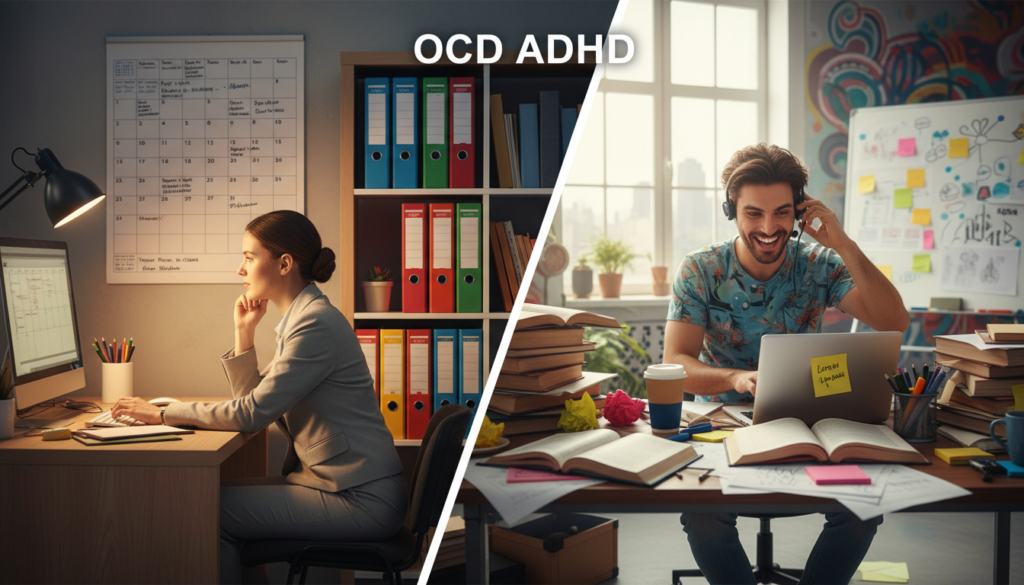
Common Symptoms We Experience
We will look at the common symptoms of OCD and ADHD. These conditions can make planning and decision-making hard. They also affect impulse control.
This makes it hard to tell them apart, especially when they happen together. Knowing about these symptoms helps us understand and treat them better.
Symptoms of OCD
OCD makes people have unwanted thoughts (obsessions) and do the same things over and over (compulsions). They feel they must do these things.
- Common obsessions: fear of getting sick, fear of harm, and unwanted thoughts about sex or violence.
- Common compulsions: cleaning too much, checking things, and arranging things in a certain way.
Symptoms of ADHD
ADHD is about not paying attention, being too active, and acting on impulse.
- Symptoms of inattention: trouble focusing, following instructions, and finishing tasks.
- Symptoms of hyperactivity: fidgeting, feeling restless, and always moving.
- Symptoms of impulsivity: interrupting, blurting out answers, and not waiting your turn.
Overlapping Symptoms Between OCD and ADHD
When OCD and ADHD happen together, it gets harder to diagnose and treat.
- Difficulty with executive functioning: both can make planning, organizing, and controlling oneself hard.
- Impulsivity: ADHD is known for impulsivity, but OCD can also cause impulsive actions, especially because of obsessive thoughts.
Co-occurrence: Why OCD and ADHD Often Go Hand in Hand
OCD and ADHD are linked by many factors. These include genetics, environment, and brain biology. Together, they can really affect someone’s life and happiness.
Comorbid conditions like OCD and ADHD need a full treatment plan. One condition can make the other worse, making things more complicated.
The Connection Between OCD and ADHD
Research shows OCD and ADHD often happen together. This is more than just chance. It points to common causes.
People with OCD are more likely to also have ADHD. And the other way around. This is because they share some genetic and brain links.

Common Behavioral Patterns
When OCD and ADHD are together, ADHD’s impulsiveness can mess with OCD’s rituals. This can make things harder and more stressful.
OCD’s obsessive thoughts and compulsive actions can also take up a lot of time. This can make ADHD’s problems with focus and organization even worse.
- Increased anxiety and stress
- Difficulty in completing tasks due to distractibility
- Enhanced impulsivity that may worsen OCD symptoms
Implications for Treatment
Treating OCD and ADHD together is key. A good plan must tackle both at once.
Therapies like Cognitive-Behavioral Therapy (CBT) can help a lot. Medication might also be needed, but it should be used carefully because of possible side effects.
Understanding how OCD and ADHD work together helps us find better treatments. This can greatly improve the lives of those with these conditions.
Treatment Options Available for OCD and ADHD
People with OCD and ADHD can find many treatment options. A good plan might include therapy, lifestyle changes, and sometimes medicine.
Behavioral Therapies
Behavioral therapies are key for OCD and ADHD. Cognitive-Behavioral Therapy (CBT), especially Exposure and Response Prevention (ERP), helps with OCD. It helps people face their fears and not do compulsive actions.
CBT also helps with ADHD. It teaches strategies to manage symptoms, get organized, and focus better. We can work with a therapist to make a plan just for us.
Medication Options
Medicines are also part of the treatment. Selective Serotonin Reuptake Inhibitors (SSRIs) are used for OCD. Stimulants help with ADHD. Finding the right medicine is important, as everyone reacts differently. For more info, check Additude Magazine.
| Medication Type | Primary Use | Examples |
|---|---|---|
| SSRIs | OCD, Anxiety | Fluoxetine, Sertraline |
| Stimulants | ADHD | Methylphenidate, Amphetamine |
Holistic Approaches
There are also holistic ways to help. Mindfulness practices like meditation and yoga can reduce stress. Eating right and exercising can also help manage symptoms.
By mixing these methods, we can make a treatment plan that works for us. It can improve our life a lot.
Strategies for Managing Our Symptoms
Living with OCD and ADHD can be tough. Finding good ways to cope is key to feeling better. Using different therapy methods every day can help us handle our symptoms better.
Effective Daily Routines
Having set routines is helpful. Using visual schedules and breaking tasks into smaller steps works well. These habits keep us organized and focused, making us feel less stressed.
Empowering Support Systems
Support groups and learning materials help families get the right care. They build a strong support network. This network makes us feel understood and supported.
Mindfulness and Relaxation
Mindfulness and relaxation, like meditation and deep breathing, are also important. Adding these to our daily life reduces stress and anxiety. It helps us live a more balanced life.