Have you ever wondered why some people get better faster than others? We all want to feel our best every day. Finding the right healthcare solutions is a big journey.
Having many options is key for wellness. From doctors to special therapy tools, each helps us get better. Using the right healthcare solutions can really help us feel better and live better.
New therapies are changing how we heal. These treatments & tools help us reach our health goals faster. By trying these new options, we can build a strong health foundation.
Key Takeaways
- Access to diverse medical options improves overall patient recovery rates.
- Modern therapy equipment provides essential support for physical rehabilitation.
- Innovative therapies are transforming traditional approaches to wellness.
- Personalized care plans often combine multiple types of healing methods.
- Early intervention remains a critical factor in successful health outcomes.
- Staying informed about new options empowers us to make better choices.
Understanding Medical Treatments: A Comprehensive Overview
Medical treatments have changed a lot over time. They now use new technologies and evidence-based practices. This change has brought many treatment options for patients and doctors. Knowing about these treatments helps us make better health choices.
What Are Medical Treatments?
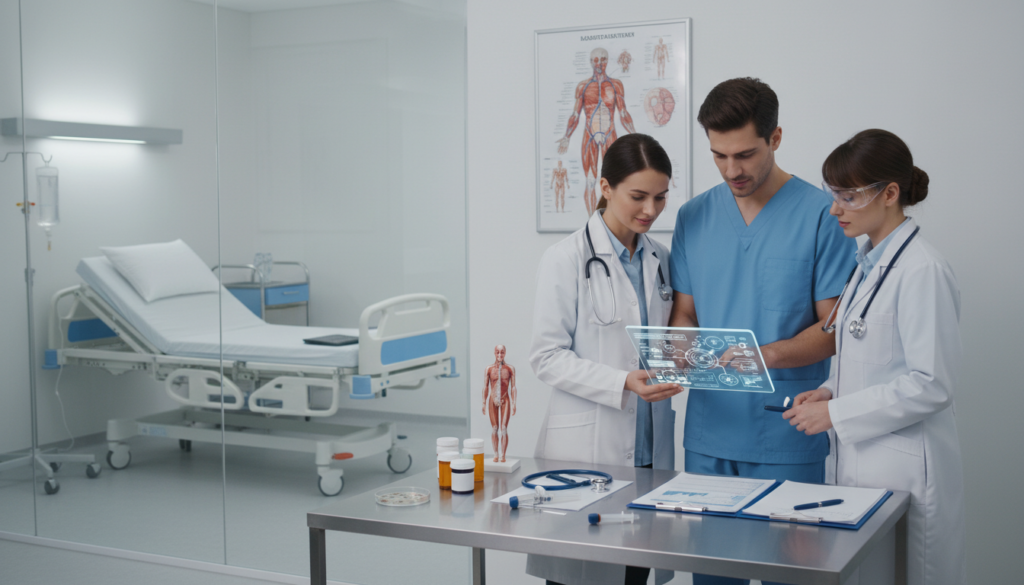
Medical treatments are ways to stop, find, and fix diseases and problems. They can be medicines, surgeries, or other therapies. The main goal is to help patients feel better, get cured, or live better lives.
Some treatments, like microcurrent therapy, help cells heal. Others, like LED light therapy, help the skin and fix skin problems.
Types of Medical Treatments
Medical treatments fall into several categories:
- Pharmacological treatments: These use medicines to treat diseases.
- Surgical treatments: Surgery helps find and fix many health issues.
- Alternative therapies: These are not usual medicine, like acupuncture and herbs.
- Physical therapies: These help people get better from injuries or manage long-term problems.
For more info on medical treatments, check out the National Center for Biotechnology Information.
The Importance of Evidence-Based Practices
Evidence-based practices are key to making sure treatments work well and are safe. They use the latest research to decide on patient care. This mix of experience, patient values, and research helps make better choices.
Following evidence-based practices helps doctors give treatments backed by science. This leads to better results for patients and fewer bad side effects.
Tools for Diagnosis: Enhancing Accuracy in Healthcare
Diagnostic tools are changing fast. They help doctors find diseases early and treat them right. This makes care better.
Diagnostic Imaging Technologies
Imaging tools like X-rays and MRI machines have changed medicine. They let us see inside the body. Each tool is good for different things.
MRI machines show soft tissues clearly. They’re great for looking at the brain and spine. CT scans are fast for emergency checks. They show internal injuries well.
| Imaging Technology | Primary Use | Benefits |
|---|---|---|
| MRI | Soft tissue imaging | High-resolution images, non-invasive |
| CT Scan | Emergency diagnostics, internal injuries | Quick, detailed images |
| X-ray | Bone fractures, lung conditions | Fast, widely available |
Lab Tests and Biomarkers
Lab tests and biomarkers are key for finding diseases. Biomarkers show if a disease is present. Blood sugar levels show diabetes.
Lab tests can be simple or complex. They help doctors find what’s wrong and treat it right.
“The use of lab tests and biomarkers has made diagnosing diseases better.”
Emerging Tools in Diagnostics
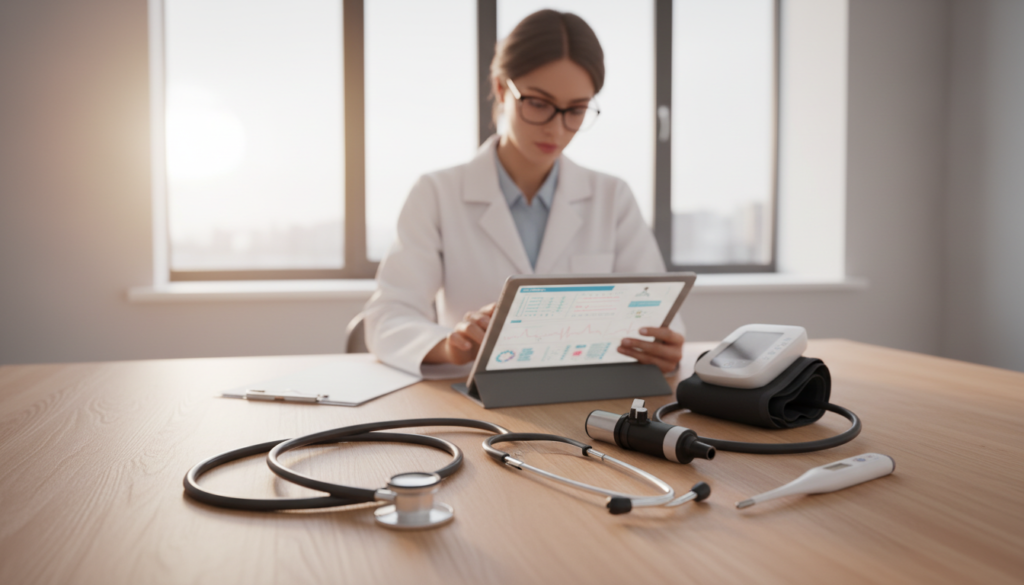
New tools are coming to help diagnose better. Wearable health devices and AI tools are some examples.
Wearable devices track health in real-time. AI tools look at big data to find patterns. This helps find diseases early.
With new tools, we can diagnose and treat better. This improves how well patients do.
Therapeutic Tools: Approaches to Improve Patient Outcomes
Therapeutic tools help doctors give better care. They help patients get better, move better, and feel better.
Rehabilitation Equipment
Rehab equipment is key for patients to get strong and move again after being sick or hurt. Examples include:
- Physical therapy equipment such as exercise machines and balance training devices
- Occupational therapy tools like adaptive utensils and ergonomic furniture
- Microcurrent devices that aid in pain management and tissue repair
Assistive Devices for Daily Living
Assistive devices make daily tasks easier for people. They include:
- Walking aids like canes and walkers
- Bathroom safety equipment such as grab bars and non-slip mats
- Gua sha tools that promote healing and relaxation
These devices help patients live better lives and support their caregivers too.
Technological Innovations in Therapy
Technology is changing therapy in big ways. Some cool new things include:
- Vibration plates that enhance muscle strength and circulation
- Virtual reality systems used for rehabilitation and pain management
- Telehealth platforms that expand access to therapy services
With new tech, we can help patients even more.
Alternative Treatments: Exploring Complementary Options
We need to look at alternative treatments in healthcare. They can work with regular medicine for better care.
Many people and doctors want to try alternative medicine. They want to help patients feel better in a new way.
Overview of Alternative Medicine
Alternative medicine includes many things not in regular medicine. This includes herbs, acupuncture, and yoga. For more info, check the National Cancer Institute’s page on complementary and alternative.
People choose alternative medicine for personal care. They think it helps with treatment side effects.
Popular Alternative Therapies
Some popular alternative therapies are LED light and microcurrent therapy. They help regular treatments work better.
- LED light therapy helps with wounds and pain.
- Microcurrent therapy helps cells heal.
The Role of Integrative Approaches
Integrative approaches mix regular medicine with special therapies. This way, we treat the whole person, not just the sickness.
Using integrative approaches, doctors can give care that fits each person. This makes patients happier and do better.
The Future of Treatments and Tools in Healthcare
New technologies are changing healthcare. They make treatments more precise and personal. This is bringing new hope for better health.
AI and Machine Learning in Medicine
Artificial intelligence (AI) and machine learning are becoming big in healthcare. They help doctors make better diagnoses and treatments. These tools can look at lots of data fast, finding things humans might miss.
Key Applications of AI in Healthcare:
- Predictive analytics for patient outcomes
- Personalized medicine through genetic analysis
- Streamlining clinical workflows
Personalized Treatment Plans
Personalized treatment plans are getting more common. This is because of new genetic sequencing and data analysis. It lets doctors make treatments that fit each patient’s needs.
| Aspect | Traditional Approach | Personalized Approach |
|---|---|---|
| Treatment Planning | One-size-fits-all | Tailored to individual genetic profiles |
| Medication | Standard dosages | Dosages adjusted based on genetic factors |
| Outcome Prediction | Based on average patient responses | Predictions made using individual patient data |
Wearable Health Technologies
Wearable health tech lets patients help their own health. Smartwatches and fitness trackers can track health signs and find problems. This helps doctors a lot.
The future of healthcare is not just about treating illnesses but also about preventing them. Wearable tech helps people make choices to stay healthy. This can lower the chance of getting sick.
Conclusion: The Impact of Treatments and Tools on Quality of Care
Treatments and tools in healthcare have a big impact. They help make care better. By using the right tools and new healthcare ideas, we can make patients healthier.
Enhancing Care through Continuous Improvement
We always try to get better in healthcare. We use new tech and improve our ways. This helps us meet our patients’ changing needs.
Empowering Patients through Education
Teaching patients is key to good care. When we teach them about their health, they can help themselves. This makes them healthier.
Fostering Collaborative Healthcare
Working together in healthcare is important. Doctors, patients, and families make plans together. This way, care is better and more personal.