
Have you ever wondered why your brain stays alert even when you’re safe at home? This is our body’s way of saying, “I’m stressed too much.” It happens when life gets too busy.
When feeling always on alert becomes constant, we need help. It’s like always waiting for a storm that never comes. This stress can make us tired and less happy every day.
Mindfulness meditation for anxiety is growing to help us deal with stress. We can use these practices to stay in the present. This way, we learn to watch our thoughts without getting lost in them.
It’s important to know that emotional balance is possible with practice. Our path to clear thinking starts with simple steps. We all deserve to feel calm and centered every day.
Key Takeaways
- Stress signals act as a natural warning system within our bodies.
- Persistent alertness often indicates a need to seek professional support.
- Modern mental health fields provide tools to manage complex worries.
- Staying present reduces the power of overwhelming or intrusive thoughts.
- Regular practice builds a foundation regarding long-term emotional peace.
- We can reclaim our focus by utilizing specific mental exercises.
Understanding Anxiety and Its Impact on Our Lives
It’s important to know about anxiety to manage it well. Anxiety is our body’s way to react to stress. It shows up in different ways for everyone. Learning about anxiety helps us find anxiety relief through mindfulness.
The Nature of Anxiety
Anxiety makes us feel worried, nervous, and scared a lot. It’s our body’s way to protect us from danger. But, when it lasts too long, it can really hurt us.
Studies show that taking a step back from our feelings can help. Mindfulness is great for this. It lets us watch our thoughts and feelings without getting too caught up.
Symptoms We Experience
Anxiety symptoms can be different for everyone. But, common ones include:
- Feeling restless and on edge
- Having trouble focusing
- Being easily irritated
- Not sleeping well
- Physical signs like a fast heartbeat and shaking
These symptoms can make daily life hard. Knowing them is the first step to getting help. Learning mindfulness meditation can help manage them.
Long-Term Effects of Anxiety
Long-term anxiety can hurt our mental and physical health a lot. It can cause depression, anxiety disorders, and heart disease. It also makes us tired and stressed out.
Understanding anxiety’s long-term effects shows why we need good ways to manage it. Mindfulness helps right away and keeps us well in the long run. It makes anxiety’s impact smaller on our lives.
What is Mindfulness Meditation?
Mindfulness meditation is a way to handle anxiety. It helps us be fully present and aware. We focus on what we’re doing without getting too stressed.
It’s about paying attention on purpose, in the now, without judging. Jon Kabat-Zinn explains it well.
Definition and Origins
Mindfulness meditation comes from ancient Buddhism. It was used to notice the present moment. People used it to focus on breath, body, or feelings.
Now, it’s used to help with anxiety. Jon Kabat-Zinn made it popular. He worked at the University of Massachusetts Medical School.
Key Principles of Mindfulness
The main ideas of mindfulness meditation are:
- Paying attention to the present moment
- Cultivating awareness without judgment
- Embracing acceptance of the current experience
- Developing compassion towards oneself and others
These ideas help us stay in the now. They keep us from worrying about the past or future.
| Principle | Description |
|---|---|
| Present Moment Awareness | Focusing on the current moment, without dwelling on the past or worrying about the future. |
| Non-Judgmental Acceptance | Observing experiences without evaluating them as good or bad. |
| Compassion | Cultivating kindness and understanding towards oneself and others. |
How Mindfulness Differs from Other Meditations
Mindfulness meditation is special because it focuses on the now. It doesn’t judge. It’s different from other meditations that focus on one thing.
Knowing what mindfulness meditation is helps us see its benefits. It’s great for managing anxiety and improving our lives.
The Science Behind Mindfulness and Anxiety
Mindfulness meditation is a strong tool against anxiety. Many studies back it up. It’s good to know how it helps.
Psychological Benefits of Practicing Mindfulness
Mindfulness makes us feel better mentally and emotionally. It helps us stay in the present. This stops worries about the past or future.
Mindfulness practices for anxiety teach us to notice our thoughts and feelings without judging. This makes anxiety less intense and less often.
It also helps us control our emotions better. Knowing our feelings helps us handle stress. This makes us feel less anxious and improves our mental health.
Research Studies Supporting Mindfulness for Anxiety
Many studies show mindfulness works against anxiety. Programs like Mindfulness-Based Stress Reduction (MBSR) and Mindfulness-Based Cognitive Therapy (MBCT) are very helpful. They mix mindfulness with other strategies to fight anxiety and depression.
A study on PubMed Central shows MBSR and MBCT work well. They help reduce anxiety and stop depression from coming back. This shows mindfulness can be a great help for anxiety.
| Study | Intervention | Outcome |
|---|---|---|
| MBSR Study | Mindfulness-Based Stress Reduction | Reduced anxiety symptoms |
| MBCT Study | Mindfulness-Based Cognitive Therapy | Lower depression relapse rates |
The table shows important findings from mindfulness studies. As more research comes in, it’s clear mindfulness is very helpful for anxiety.
How Mindfulness Meditation Can Help Us
Mindfulness meditation makes us feel better in our minds and hearts. It helps us deal with hard feelings without getting caught up in them. When we let ourselves feel our worries and pains, they often go away.
Reducing Acute Anxiety Symptoms
Mindfulness meditation is great for lessening anxiety. It helps us stay in the now, stopping worries and fears. Doing mindfulness exercises for anxiety relief often makes anxiety symptoms go down a lot.
Promoting Emotional Regulation
Mindfulness also helps us control our emotions better. It makes us more aware of our feelings and thoughts. This helps us react better to tough situations, making our relationships and lives better.
Enhancing Overall Well-Being
Mindfulness meditation also boosts our overall happiness. It makes us more aware and accepting, making us stronger inside. This leads to a more joyful and meaningful life.
Getting Started with Mindfulness Meditation
Mindfulness meditation is a great way to handle anxiety. The first step is to know how to start. It’s a journey that can change how we feel.
Recommended Techniques
Start with a few minutes of focused breathing each day. This means watching your breath and bringing your mind back when it strays. Focused breathing helps calm your mind and lowers anxiety.
When you get better at meditation, try other things too. Like:
- Body scan meditation, where you focus on your body, letting go of tension.
- Mindful walking, paying attention to each step to feel calm.
- Guided meditations, which use pictures or stories to guide you.
Creating a Dedicated Space for Practice
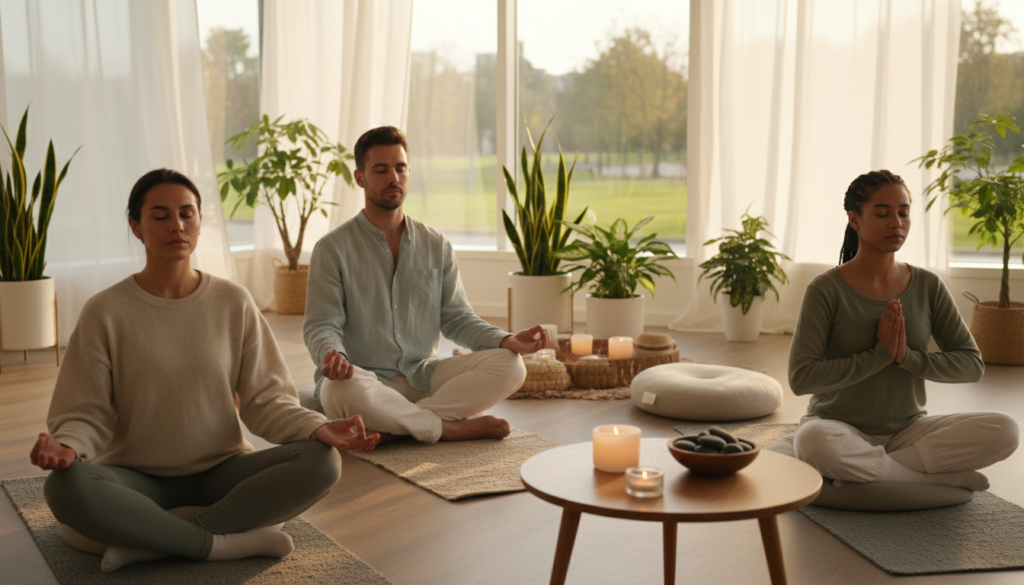
Having a special place for meditation helps a lot. It should be quiet, comfy, and free from distractions. Add things that make you relax, like soft colors or a nice smell.
This special space tells your mind it’s time to meditate. It makes it easier to meditate every day.
Establishing a Regular Practice Schedule
Being regular is important for meditation benefits. Try to meditate at the same time every day. It becomes a habit this way.
Start small and be regular, not trying to meditate for hours sometimes. Here are some tips:
- Start with 5-10 minutes a day.
- Choose a time that fits your schedule, like morning or night.
- If you miss a day, don’t worry. Just move on to the next day.
Adding mindfulness meditation to your daily life can be a big help. It can make you feel better and manage anxiety.
Mindfulness Meditation Techniques for Anxiety
Mindfulness meditation teaches us to focus on now. It helps us feel calm and less anxious. We can use these techniques every day.
Body Scan Meditation
Body scan meditation is lying down or sitting. We focus on our body, starting from toes to head. It helps us relax and release tension.
To start, find a quiet place to relax. Close your eyes and breathe deeply. Focus on your toes, noticing any feelings or thoughts. Move up your body, spending time on each area.
Breathing Exercises for Calmness
Breathing exercises calm our minds and reduce anxiety. We focus on our breath, letting it move freely. This helps us feel less overwhelmed.
Try the “4-7-8” breathing. Breathe in for 4 counts, hold for 7, and out for 8. This slows your heart and relaxes you.
Guided Visualizations
Guided visualizations use our imagination to create calm scenes. We can use a guide or imagine ourselves in a peaceful place. The goal is to feel calm and relaxed.
Imagine yourself on a quiet beach at sunset. Notice the sounds, smells, and feelings. Make it as real as you can.
Using these techniques daily can help us handle anxiety better. They improve our overall well-being.
| Technique | Description | Benefits |
|---|---|---|
| Body Scan Meditation | Involves bringing awareness to different parts of the body to release tension. | Reduces physical tension, promotes relaxation. |
| Breathing Exercises | Focuses on the breath to calm the mind and body. | Calms the mind, reduces feelings of overwhelm. |
| Guided Visualizations | Uses imagination to create a peaceful scene or scenario. | Reduces anxiety and stress, promotes relaxation. |
Overcoming Common Barriers to Practice
Starting mindfulness meditation can be hard. It’s good to do it every day to feel its benefits. But, even a little mindfulness can help.
We need to find out what stops us. Then, we can find ways to get past these obstacles.
Addressing Time Constraints
Many think they don’t have time for meditation. But, mindfulness can fit into busy lives. Start with a few minutes a day and grow from there.
Try to be mindful while doing daily things. This saves time and helps us stay focused.
| Time-Saving Tips | Description |
|---|---|
| Start Small | Begin with short mindfulness sessions of 2-5 minutes. |
| Mindful Moments | Practice mindfulness during daily activities like eating or walking. |
| Schedule It | Treat mindfulness practice as a non-negotiable part of your daily schedule. |
Coping with Initial Discomfort
It’s normal to feel uneasy or have a racing mind at first. Be kind to yourself. It’s okay if your mind wanders. Just gently bring it back to your breath.
Guided meditations can help. They guide you and keep you focused. As you get better, you can meditate on your own.
Navigating Our Expectations
Having too high hopes can stop us. We might want to stop thoughts and anxiety right away. But, mindfulness isn’t about stopping thoughts. It’s about being aware and accepting now.
Drop your expectations. Enjoy the journey to being more mindful and less anxious.
Integrating Mindfulness into Daily Life
Mindfulness meditation helps a lot with anxiety. It makes us feel better by being mindful every day. This way, we can handle anxiety better and feel happier.
Mindful Moments
We can be mindful anywhere, inside or outside. Being outside makes it even better because it wakes up our senses. Taking short breaks to be mindful helps us stay calm and focused.
Developing a Consistent Practice
Being mindful every day is key to feeling good. We can set aside time each day for meditation. Or we can be mindful while doing things we already do. For more tips, check out the National Center for Biotechnology Information website.
Sharing Mindfulness with Others
When we share mindfulness with friends, it makes us more committed. It also helps others feel better and creates a kinder world.