
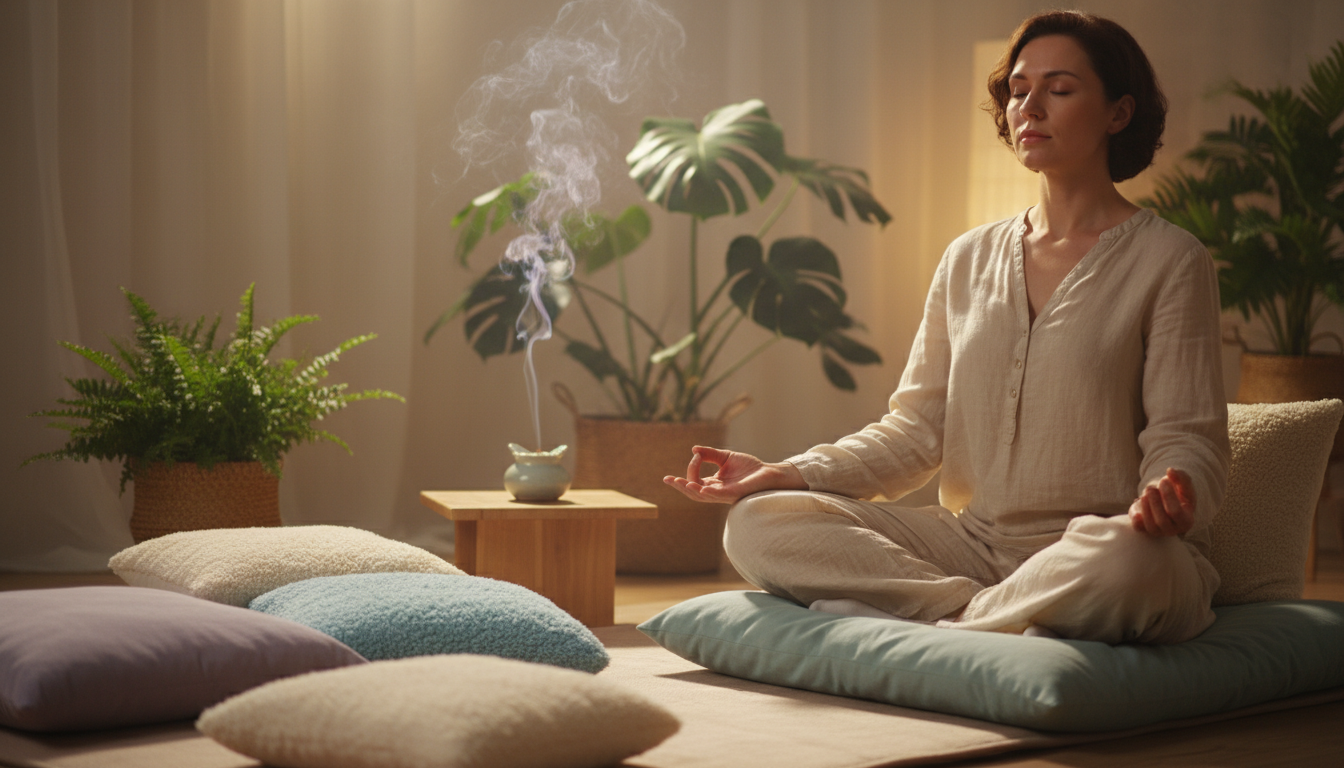
Have you ever wondered why the quiet of the night feels so loud? We often stare at the ceiling, wanting a pause from our thoughts. Many of us face these invisible challenges when it’s dark.
Starting a calming routine gets our bodies and minds ready for sleep. It helps us relax and release the day’s worries. We can teach our brains to calm down and find peace.
This calming practice is a valuable tool for those with restless nights. It lets us finally relax and enjoy the stillness we need. By using this method, we wake up feeling refreshed and ready for the day.
Key Takeaways
- Quietens a racing mind before bed.
- Prepares the physical system during restful hours.
- Encourages the release of heavy daily stress.
- Supports falling into deep rest quickly.
- Improves overall nighttime tranquility and focus.
- Provides a sustainable method to ensure nightly peace.
What is Sleep Meditation?
Sleep meditation is a great tool for dealing with anxiety and getting better sleep. It helps us understand what sleep meditation is and how it can help us relax.
Definition and Purpose
Sleep meditation mixes meditation and relaxation to help us sleep better. It aims to calm our minds and bodies, making it easier to fall and stay asleep.
This practice is meant to reduce stress and anxiety. It uses guided or unguided meditation to quiet our minds and relax our muscles. This helps us get ready for sleep.
Benefits for Anxiety Relief
Sleep meditation is great for anxiety relief through sleep meditation. It teaches us to handle our anxiety better. It helps us see anxious thoughts in a new light, encouraging a more mindful way to deal with them.
Some key benefits include:
- Reduced racing thoughts that often keep one awake
- Lowered heart rate and blood pressure
- Increased sense of calm and relaxation
- Improved sleep quality
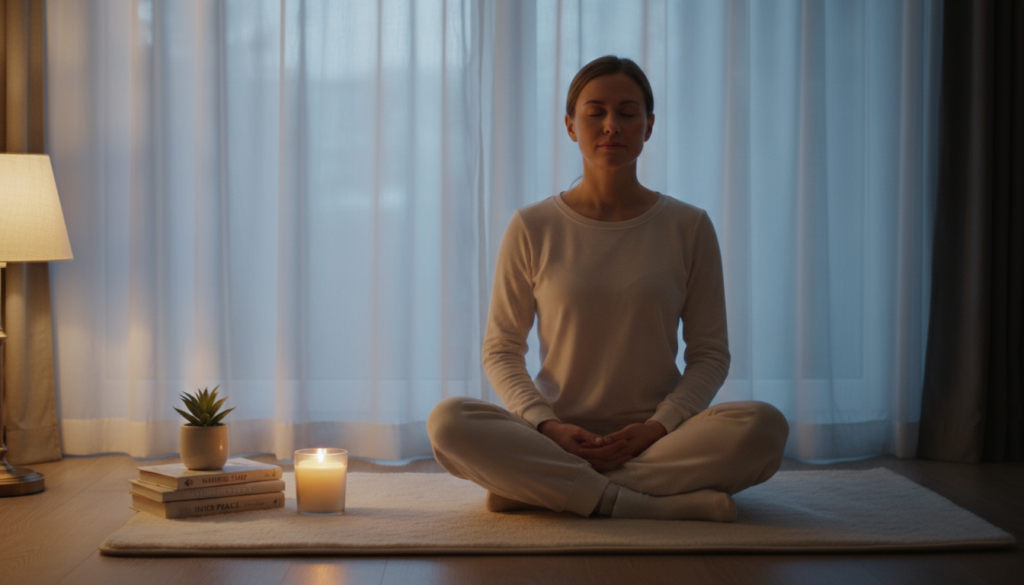
Guided meditation for anxiety and sleep is very helpful. It offers a clear path, making it simpler for newbies to relax and follow along.
How Sleep Meditation Works
Let’s look at how sleep meditation helps with anxiety. It’s known to improve sleep and lower anxiety. We’ll explore the brain’s role in this.
The Science Behind Meditation
Meditation changes the brain a lot. It affects a brain network called the default mode network (DMN). This network is active when we daydream.
People with anxiety have a too-active DMN. But, meditators show less DMN activity. This means they daydream less and worry less.
Experts say, “Regular meditation changes the brain. It makes us less anxious and sleep better.”
“Meditation can rewire the brain, making it less prone to anxiety and stress,” says Dr. [Last Name], a renowned expert in the field of meditation and anxiety relief.
The Role of Relaxation Techniques
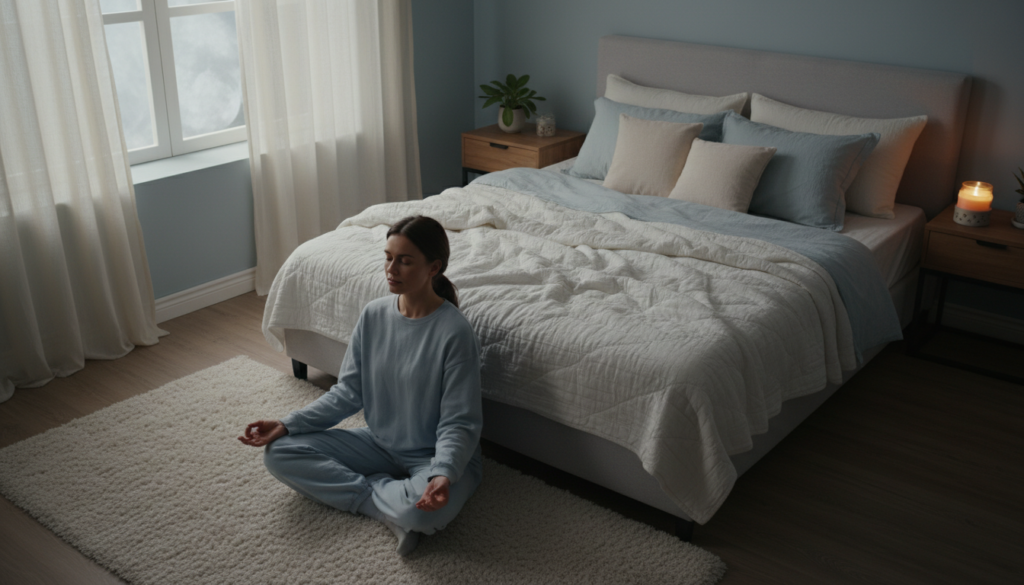
Relaxation is key in sleep meditation. It includes muscle relaxation, mindfulness, and deep breathing. These calm the body and mind, helping us sleep.
For better sleep and less anxiety, try these techniques daily. Mindfulness meditation is especially good at reducing anxiety and improving sleep.
| Relaxation Technique | Effect on Anxiety | Effect on Sleep Quality |
|---|---|---|
| Progressive Muscle Relaxation | Reduces physical tension | Improves sleep onset |
| Mindfulness Meditation | Decreases rumination and worry | Enhances deep sleep |
| Deep Breathing Exercises | Calms the nervous system | Promotes relaxation |
Learn more about sleep meditation at Cleveland Clinic’s sleep meditation page. It helps manage anxiety and improves sleep.
Techniques for Effective Sleep Meditation
Sleep meditation is a great way to manage anxiety. There are many methods to choose from. Find what works best for you.
Guided Meditations
Guided meditations have a soothing voice guiding you. They’re great for beginners or those with anxiety.
They often use visualization or body scans. For example, Yoga Nidra leads to deep relaxation.
Mindfulness Practices
Mindfulness helps you stay in the moment. It teaches you to observe thoughts without judgment. This can lower anxiety.
Mindfulness is very effective. It focuses on the now. Mindfulness meditation involves noticing breath, body, or emotions without judgment.
Breathing Exercises
Breathing exercises are key in sleep meditation. Diaphragmatic breathing calms the nervous system. It prepares your body for sleep.
Techniques like progressive muscle relaxation and cognitive shuffling are backed by science. They calm the mind and body.
| Technique | Description | Benefits |
|---|---|---|
| Guided Meditations | Involves listening to a guiding voice | Reduces anxiety, improves sleep quality |
| Mindfulness Practices | Focuses on being present | Decreases stress, enhances mindfulness |
| Breathing Exercises | Conscious breathing techniques | Calms the nervous system, aids relaxation |
Adding these techniques to your daily routine can greatly improve sleep and well-being.
Creating a Sleep Meditation Routine
Creating a sleep meditation routine can really help with anxiety and sleep. We need to find the best time and the right place to meditate.
Finding the Best Time to Meditate
Finding the right time for sleep meditation is important. Start with a daily practice, even if it’s just 10 minutes. Studies show that being consistent is more important than how long you meditate.
For those who are anxious, start with guided meditations for the first month. Then, move to longer silences and finally, unguided meditation. You can always go back to guided meditation when you’re stressed.
For many, meditating before bed is the best. But, the best time is different for everyone. Find a time that fits your schedule and feels right to you.
Key Considerations for Timing:
- Consistency is key; choose a time that you can commit to daily.
- Experiment with different times to find what works best for your body and schedule.
- Consider meditating at the same time you plan to sleep to enhance the sleep-wake cycle.
Setting the Right Environment
The place where you meditate is very important. Make it calm and quiet. Dim the lights, keep it quiet, and keep the temperature right.
If it’s hard to find quiet or if you’re new to meditation, try guided meditations. You can find guided meditation for sleep online to start.
- Ensure the space is quiet and free from distractions.
- Adjust the lighting to a comfortable level; dimming the lights can help create a relaxing atmosphere.
- Consider using a meditation cushion or chair for support.
Tools and Resources for Sleep Meditation
Using the right tools and resources can make sleep meditation better. We have many options for different tastes and needs. This makes it easy to find what works for you.
Recommended Apps and Podcasts
Many apps and podcasts help with sleep meditation. Free options like YouTube guided Yoga Nidra and PMR recordings work well. The mySleepButton app, made at Simon Fraser University, uses special techniques.
Many meditation apps have free versions. They are great for beginners.
Some popular meditation apps offer guided meditations and music to help you sleep. They have features like customizable sessions and sleep tracking.
Books and Audio Guides
Books and audio guides are good for those who like traditional methods. They give detailed instructions and techniques for better sleep. Audio guides help guide you into a calm state.
Exploring these tools and resources helps find the best methods for sleep meditation. This improves sleep and anxiety management.
Common Challenges in Sleep Meditation
Starting a sleep meditation journey can be tough. But knowing the challenges helps us get past them. When we talk about sleep meditation for anxiety, we see some big hurdles.
Dealing with a Wandering Mind
One big challenge is a mind that wanders. Trying to “clear your mind” can actually make anxiety worse. This is because you start to worry if you’re doing it right.
But, there are ways to fight this. Cognitive shuffling and Yoga Nidra help by focusing your mind on something specific.
For example, cognitive shuffling makes you think of random words or pictures. This keeps your mind busy and away from worries. Yoga Nidra is a guided meditation that helps you relax deeply while staying awake.
| Technique | Description | Benefits |
|---|---|---|
| Cognitive Shuffling | Visualizing random words or images | Reduces anxious thoughts |
| Yoga Nidra | Guided deep relaxation meditation | Enhances relaxation and awareness |
| Mindfulness Practices | Focusing on the present moment | Decreases mind wandering |
Managing Expectations
Another challenge is managing what we expect. Many people want quick results from sleep meditation for anxiety. But, it’s a practice that takes time to grow.
We need to be patient and keep trying. The benefits of anxiety relief through sleep meditation will come with time. By being realistic and sticking with it, we can get better sleep and feel less anxious.
By facing and solving these common problems, we can make our sleep meditation better. This helps us feel better overall.
Incorporating Sleep Meditation into Daily Life
To add sleep meditation to our daily routine, we need to relax our mind and body. Guided meditation helps calm our mind and gets our body ready for sleep.
Consistency Tips
Make sleep meditation a regular part of your day. Pick a time and place for it every night. This makes it easier to relax and sleep better.
Combining with Other Methods
Using sleep meditation with other relaxation methods is key. Keep your sleep area comfy, relax before bed, and avoid things that keep you awake. Adding meditation to your routine can make you feel better overall.