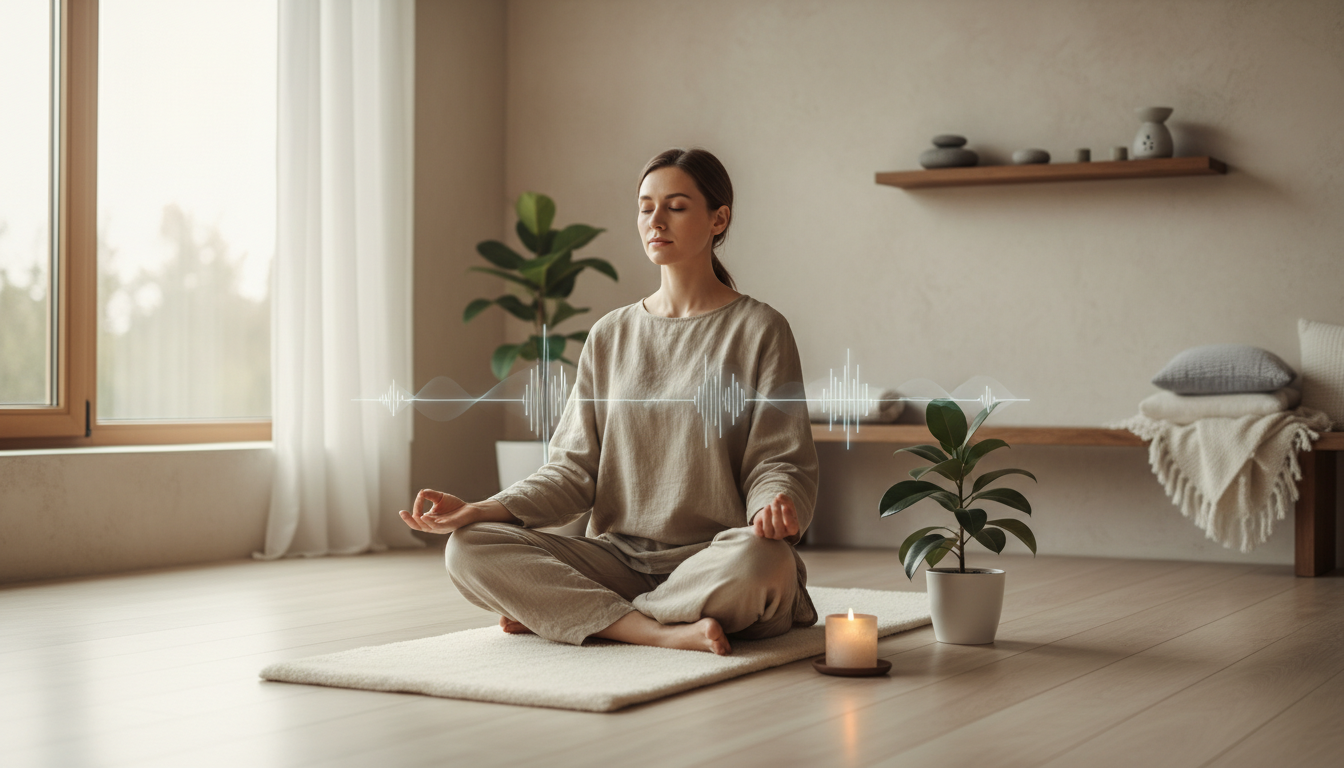
Ever feel like your mind is racing and you can’t stop it? It’s hard to find peace when life gets too busy.
This short practice is for anyone needing calm. It’s great for both newbies and pros. It offers quick anxiety relief to help you find peace again.
We use simple steps like breathing and body scans. These help relax your jaw and neck. You can try this guided session to re-centre and find peace. It uses pictures in your mind to deepen your relaxation.
By staying in the now, we can keep calm all day. Just a few minutes can make a big difference in how we feel.
Key Takeaways
- Learn a simple breathing cycle to calm the nervous system.
- Discover how to soften physical tension through effective body scans.
- Use visualization to visit a peaceful and safe mental sanctuary.
- Master grounding steps to stay present during stressful moments.
- Practice quick re-entry techniques to return to your day refreshed.
- Carry a lasting sense of calm into your daily routine.
Understanding Anxiety and Its Effects
As we go about our day, it’s key to grasp anxiety’s complex nature. Anxiety is more than just feeling worried or scared. It’s a deep emotional state that shows up in many ways.
What is Anxiety?
Anxiety is our body’s way of reacting to threats or stress. It makes us feel scared or worried a lot. Mindfulness exercises help us notice our anxiety and what causes it.
When we feel anxious, our body gets ready to fight or run away. This makes our heart race, our hands sweat, and our body shake.
Symptoms and Triggers
Anxiety’s signs can differ for everyone. But common ones are feeling restless, irritable, and having trouble focusing. Stress management techniques can lessen these symptoms and lower anxiety risks.
What makes us anxious can vary a lot. It might be big life changes or everyday stress like work or money worries. Knowing what triggers our anxiety is key to handling it well.
The Impact on Daily Life
Anxiety can really affect our daily lives. It can mess with our relationships, work, and how we feel overall. If we don’t manage it, anxiety can make us avoid things, stay alone, and not be as productive.
Understanding anxiety and its effects is the first step to managing it. We can do this by using stress management techniques and mindfulness exercises every day.
The Benefits of Meditation for Anxiety
Meditation helps with anxiety in many ways. It can calm your mind and make you feel clearer. Doing calming meditation for anxiety can really help your well-being.
Deep breathing helps you feel connected to your body. As you breathe deeply, your mind and body calm down. This simple relaxation technique can lead to peace.
How Meditation Can Help
Meditation teaches you to stay in the present. It helps you not worry about the past or future. It lowers stress hormones, making you feel calmer.
Meditation helps you understand your thoughts and feelings better. This way, you can handle anxiety better. You can spot anxiety early and use relaxation techniques to fight it.
Scientific Studies Supporting Meditation
Many studies show meditation helps with anxiety. They found that regular meditation lowers anxiety. It changes the brain, especially in emotional areas.
Meditation also calms the amygdala, the brain’s stress center. This is good for people with anxiety. Meditation is a great tool for managing anxiety.
Short-Term vs Long-Term Effects
Meditation gives quick relief from anxiety. Even 5 minutes a day can help. You’ll notice your anxiety go down.
Long-term, meditation changes your brain and nervous system. It makes you more resilient to anxiety. Regular meditation leads to a more balanced life.
How to Get Started with 5-Minute Meditation
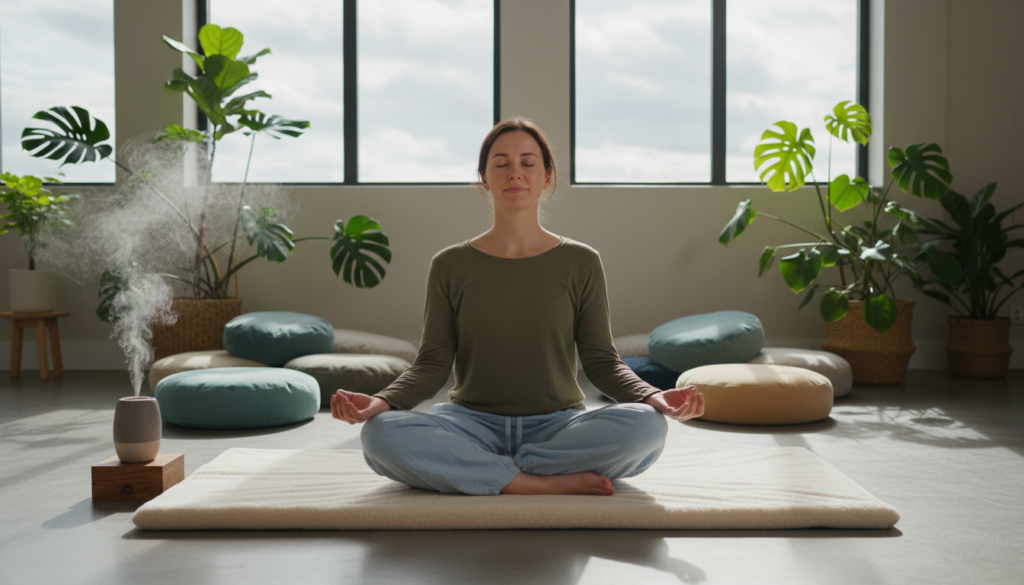
Starting your meditation journey is easy. Just spend 5 minutes a day on guided anxiety meditation. It’s good for your mind and body. First, get ready and make your space right for meditation.
Choosing a Quiet Space
Find a quiet, comfy spot for meditation. It could be your bedroom, garden, or office. As “The power of meditation is not just in the act itself, but in creating an environment conducive to inner peace.”
Make sure it’s clean and quiet. This helps you focus on your meditation.
Finding the Right Position
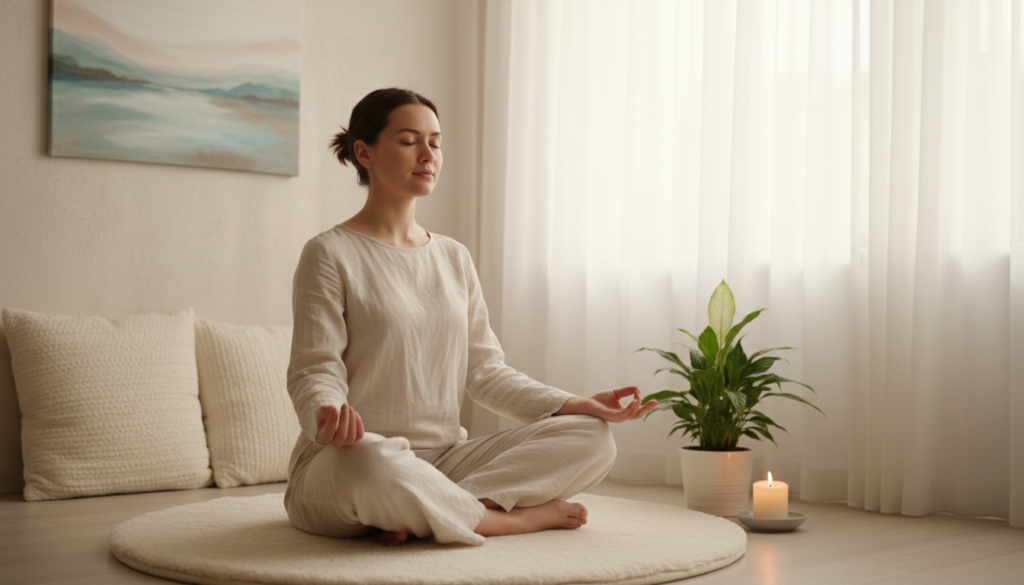
After picking your spot, find a comfy sitting position. You can sit in a chair, on a cushion, or on your bed’s edge. The goal is to sit upright but relaxed, so you can breathe well. As one guide says,
“Sit comfortably upright, with your back straight and your body relaxed.”
Try different sits until you find one that feels right. Make sure you can stay in it for your meditation time.
Setting a Timer
Set a timer to keep your meditation right. Start with 5 minutes if you’re new. Use a kitchen timer, app, or smart speaker. This helps you stay focused on your guided anxiety meditation without worrying about time.
By following these steps, you can start a meditation habit. It will help you feel less anxious and better overall.
Guided Steps for a 5-Minute Meditation
Meditation can really help us feel less anxious and more relaxed. Just a few minutes each day can make a big difference in how we feel.
Breathing Techniques
Start by focusing on your breath. Breathe in slowly through your nose, filling your lungs. Hold it for a few seconds.
Then, breathe out slowly through your mouth. Let go of any tension you feel. This breathing exercise for anxiety calms your mind and body.
Next, try a special breathing pattern. Breathe in for four counts, hold for four, and breathe out for four. This can slow your heart and make you feel calm.
Visualizing Calmness
Now, imagine a peaceful place. It could be a beach at sunset or a quiet forest. Use your senses to make it real.
As you imagine, let go of any stress. Feel it melt away with each breath. This makes you feel more relaxed and centered.
Staying Present in the Moment
Stay in the now. Notice your feet on the ground, the sounds, and the air on your skin. Being mindful keeps you grounded and aware.
If your mind wanders, bring it back. With practice, staying present becomes easier. It helps you face daily challenges calmly.
Creating a Routine for Meditation
Starting a regular meditation habit can change your life. It helps you feel less anxious and improves your health.
Selecting the Best Time of Day
Finding the right time to meditate is important. Think about your day and what feels right for you. Some like to meditate in the morning. Others prefer lunchtime or before bed.
Try different times to find what works best. Being consistent is key to feeling better through meditation.
Incorporating Meditation into Our Lives
Making meditation a part of your day is easy. Pick a quiet spot, like a corner in your room or outside. This spot should be free from distractions.
Link meditation to something you already do, like waking up or exercising. This makes it a regular part of your day.
Tracking Progress and Benefits
Keeping track of how meditation helps you can be inspiring. Use a journal to write about how you feel before and after. This shows how meditation lowers your anxiety.
| Benefits | Pre-Meditation | Post-Meditation |
|---|---|---|
| Anxiety Level | High | Low |
| Mood | Stressed | Calm |
| Focus | Distracted | Clear |
Watching your progress shows meditation’s positive effects. This motivates you to keep meditating.
Overcoming Challenges with Meditation
As we keep going on our meditation path, we hit bumps that test our will. Meditation helps with anxiety, but it takes work and smart strategies to beat the hurdles.
One good stress management technique is to know and face common meditation challenges. Knowing these obstacles helps us get ready to beat them.
Common Obstacles We Face
Many of us have trouble with a restless mind during meditation. Seeing anxiety as a dark cloud helps us feel less tied to it. This makes the feeling less intense.
Other big challenges include finding quiet spots, dealing with physical issues, and keeping up a regular practice. Knowing these problems is the first step to solving them.
Tips for Staying Focused
To stay sharp, try different mindfulness exercises like focusing on your breath. Having a set time and place for meditation helps too.
If your mind drifts off, just notice it and bring your focus back. Being kind to yourself and knowing meditation takes time helps a lot.
When to Seek Additional Help
If your anxiety is really bad or meditation isn’t helping, it’s time to look for more help. This could mean talking to a mental health expert or trying other stress management techniques.
Being open to help and keeping up with meditation can really boost your ability to handle anxiety. It also improves your overall health and happiness.
Conclusion: Embracing 5 Minutes of Calm
As we end our 5-minute meditation, remember the peace we found. This calm is always with us, ready to help when we’re stressed.
Let’s make meditation a part of our daily life. Using relaxation techniques helps us stay calm and focused.
Practicing Consistency
Being consistent is important. Regular meditation helps us feel better and stay well.
Sharing the Benefits
Let’s share our meditation stories with friends. This builds a supportive group and encourages others to try meditation.
Continuing the Journey
Keep the calm and peace with you always. Use what you learned from meditation in your daily life. With more practice, you’ll handle anxiety better.