
Could your everyday worries be silently straining your heart? This question touches a nerve for millions who feel the physical toll of mental stress.
We see a powerful link between persistent worry and cardiovascular health. Understanding this connection is crucial for overall well-being.
Research shows about 31% of American adults will face significant worry in their lives. This makes the topic urgent and highly relevant.
While stress can cause temporary spikes, ongoing tension might lead to long-term hypertension. This happens through hormones and certain lifestyle choices.
Our guide breaks down the science behind this link. We explore how your body reacts and what the data says.
We also provide clear, actionable strategies for management. Our goal is to empower you with knowledge for better heart and mind health.
This information is vital for anyone dealing with chronic stress. Taking proactive steps starts with understanding the risks.
Key Takeaways
- Mental stress and physical health are deeply connected, impacting your heart.
- Short-term worry can cause immediate changes in your cardiovascular system.
- Long-term, unmanaged stress is a potential contributor to sustained high blood pressure.
- Recognizing your personal symptoms and risk factors is the first step toward control.
- Effective management combines lifestyle adjustments with informed awareness.
- This guide is based on medical research and expert recommendations for your benefit.
- Protecting your cardiovascular health involves caring for your mental state.
Introduction: Understanding the Connection Between Anxiety and High Blood Pressure
Two of the most common conditions in modern society, anxiety disorders and high blood pressure, share a deeper connection than many realize.
We explore the fundamental definitions of these prevalent issues. They affect millions across the United States and globally.
Overview of Anxiety and Hypertension
Chronic worry includes various disorders like generalized anxiety, panic disorder, and social anxiety.
These are marked by persistent feelings of fear and physical symptoms such as muscle tension.
Hypertension happens when blood pushes against artery walls at a higher-than-normal rate.
This increased cardiovascular strain frequently presents no noticeable signs.
Epidemiological data shows both represent major public health challenges.
Why This Topic Matters for Our Health
Grasping this link is vital for overall well-being. Coexisting conditions raise the risk of heart attack and stroke.
People with long-term mental stress may have an elevated risk for sustained high readings.
Conversely, those with hypertension often experience higher rates of worry.
Early detection and management of both can prevent serious consequences.
Addressing them together leads to more effective treatment and better health management.
The Physiology of Anxiety and Its Impact on Blood Pressure
Our body’s primal alarm system, known as the fight-or-flight response, kicks into gear the moment we sense a threat. This automatic reaction prepares us for immediate action.
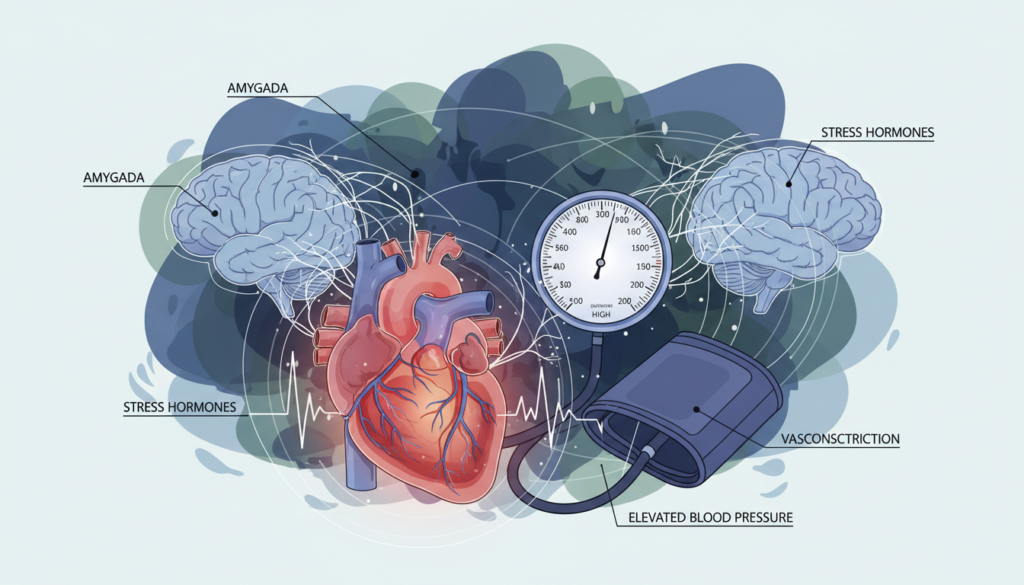
The sympathetic nervous system activates. It triggers a powerful hormonal cascade.
How the Body Reacts: Adrenaline, Cortisol, and Heart Rate
The brain releases adrenaline and cortisol. These are key stress hormones.
Adrenaline makes your heart beat faster. It also narrows your blood vessels. This pushes your readings higher for a short time.
Cortitol raises blood sugar. It adjusts how your body uses energy. This supports the immediate need to respond.
The Role of Blood Vessels and Stress Responses
Constricted vessels increase resistance in your circulatory system. This is a normal part of the acute stress reaction.
When the danger passes, your body should return to normal. Your heart rate slows and pressure drops.
Problems arise with repeated or constant mental stress. The alarm system stays switched on.
Sustained high hormone levels can contribute to long-term hypertension. This is a key risk factor for heart disease.
Understanding this process shows why managing our stress is crucial for cardiovascular health.
Epidemiological Evidence Linking Anxiety and Hypertension
Epidemiological evidence from global populations sheds light on the connection between chronic worry and hypertension. Large reviews of scientific literature provide the hard numbers behind this link.
These analyses combine data from many separate research projects. They give us a clearer picture of the relationship.
Key Findings from Cross-Sectional Studies
A major meta-analysis looked at 13 different studies involving over 150,000 people. It found a significant positive association, with a pooled odds ratio of 1.18.
This means individuals with anxiety disorders showed higher rates of high blood pressure at a single point in time. The data provides a powerful snapshot of co-occurring conditions.
Insights from Prospective Research
More compelling are prospective studies that follow people for years. Eight such studies tracked 80,000 participants and recorded new hypertension cases.
The pooled adjusted hazard ratio was 1.55. This confirms that anxiety is an independent risk factor for developing high blood pressure over time.
Results held true even after accounting for age, BMI, and lifestyle factors. The relationship appears bidirectional, with each condition elevating risk for the other.
This robust evidence supports early detection and management of anxiety in hypertensive patients.
Healthcare providers should consider this connection for better overall treatment outcomes.
How Anxiety Affects Blood Pressure: Short-Term vs. Long-Term Effects
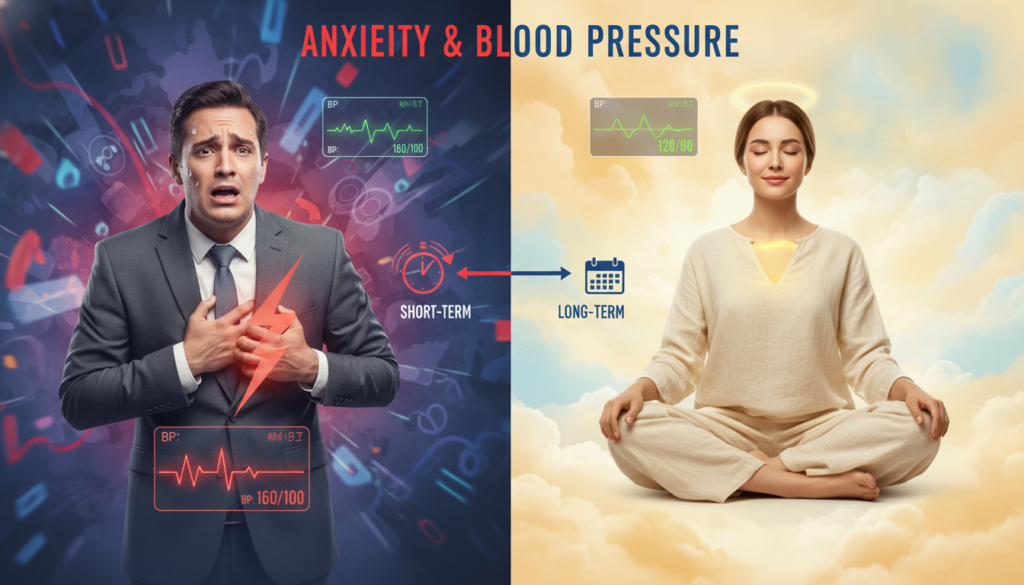
The impact of mental tension on your circulatory system operates on two distinct timelines: immediate and gradual.
Recognizing this difference is crucial for effective health management.
Acute Stress and Temporary Blood Pressure Spikes
A sudden scare or tight deadline triggers a normal, brief reaction. Your heart pumps faster, and vessels constrict.
This causes a temporary spike in your readings. It’s a harmless, natural response to a single event.
Once the moment passes, your body calms down. Hormones dissipate, and your numbers return to normal.
Chronic Anxiety as a Risk Factor for Hypertension
When worry is constant, your alarm system never fully shuts off. This prevents adequate recovery.
Over time, repeated stress responses can create a sustained pattern of higher readings.
Indirect pathways also play a major role. People may adopt poor coping habits like smoking or unhealthy eating.
These behaviors exacerbate cardiovascular strain over years. Research demonstrates this cumulative effect.
“The transition from acute stress reactions to chronic hypertension involves both persistent physiological activation and behavioral mediators.”
| Aspect | Short-Term Effect | Long-Term Effect |
|---|---|---|
| Duration | Minutes to Hours | Months to Years |
| Physiological Response | Acute fight-or-flight activation | Persistent sympathetic nervous system tone |
| Impact on Blood Pressure | Temporary, reversible spike | Sustained high blood pressure (hypertension) |
| Key Risks | Minimal if occasional | Increased risk for heart disease and stroke |
Understanding this distinction helps tailor strategies for both conditions.
Lifestyle Strategies for Reducing Stress and Lowering Blood Pressure
Evidence shows that targeted lifestyle adjustments work synergistically to improve mental and physical well-being. We outline practical steps that address both areas simultaneously.
Effective Exercise and Diet Modifications
Regular physical activity is a powerful intervention. It improves mood through endorphin release and reduces muscle tension.
For some, this activity works as well as medication for managing symptoms. Even a short daily walk provides control and a change of scenery.
Practical options include a 15- to 30-minute walk, at-home aerobics, or biking. Aim for most days of the week.
Dietary choices are equally crucial. The DASH eating plan emphasizes vegetables, fruits, and whole grains.
It includes low-fat dairy and lean proteins. This approach limits saturated fats and sugars.
These modifications support overall health and energy levels. They contribute directly to better cardiovascular readings.
Improving Sleep and Relaxation Techniques
Quality sleep is fundamental for healthy blood vessels. Not getting enough rest increases the risk for heart disease and stroke.
Poor sleep can fuel feelings of frustration. This creates a cycle that worsens stress responses.
Prioritizing seven to nine hours nightly is a key lifestyle change. Combining this with daily relaxation breaks enhances results.
| Lifestyle Area | Primary Benefit | Practical Tip |
|---|---|---|
| Physical Activity | Reduces stress, improves mood | Daily 20-minute brisk walk |
| Nutrition | Lowers cardiovascular strain | Follow DASH plan principles |
| Sleep & Relaxation | Repairs vessels, calms the mind | Set a consistent bedtime routine |
View these changes as interconnected. They build a strong foundation for lasting health.
Managing Anxiety Elevated Blood Pressure: Treatment and Self-Care Options
Navigating the path to wellness with both mental stress and cardiovascular concerns means exploring a spectrum of proven interventions. A successful plan often blends professional guidance with personal daily practices.
Professional Therapies: Psychotherapy and Medications
Psychotherapy, like cognitive behavioral therapy (CBT), teaches individuals to identify and change unhelpful thought patterns. A therapist may use exposure therapy to help patients face fears in a safe setting.
Medications can also play a key role. Beta blockers may address certain symptoms and high readings. Antidepressants and anti-anxiety drugs target mental health concerns directly.
It’s crucial to remember medications alone cannot cure an anxiety disorder. They work best alongside talk therapy and lifestyle changes.
| Treatment Type | Primary Goal | Key Consideration |
|---|---|---|
| Psychotherapy (e.g., CBT) | Reframe thoughts, develop coping strategies | Requires active participation and time |
| Medications | Control symptoms and physiological responses | Often part of a combined treatment plan |
| Regular Provider Monitoring | Assess progress and adjust care | Essential for managing both conditions long-term |
Self-Monitoring and Home-Based Practices
Both hypertension and anxiety require regular check-ins with your healthcare provider. This ongoing monitoring helps tailor your treatment.
Home practices are equally important. Tracking your readings and symptoms provides valuable data. Sharing this with your provider leads to more informed decisions.
Finding a psychologist or therapist is a powerful step. These specialists help you develop practical strategies for daily life.
Open communication about all your symptoms ensures coordinated, comprehensive care. A multimodal approach yields the best results.
Practical Daily Techniques for Managing Stress and Anxiety
Daily life offers simple, powerful tools to calm your mind and protect your heart. These evidence-based practices break the cycle of worry that can strain your cardiovascular system.
Even a few minutes spent consistently can create a significant positive impact.
Mindfulness, Meditation, and Breathing Exercises
Mindfulness teaches you to be present. It helps you observe thoughts without judgment. This awareness reduces automatic stress reactions.
Meditation activates your body’s relaxation response. It counters the fight-or-flight system. Regular practice lowers overall tension.
Deep breathing is an immediate tool. Slow, deliberate breaths signal safety to your nervous system. This can relax blood vessels and ease pressure.
Progressive muscle relaxation identifies and releases physical tightness. Pair it with brief body scans throughout your day.
Strong social connections also buffer against stress. Spending time with supportive people improves mental health.
Movement, like a short walk, lifts your mood. It provides a dual benefit for stress and anxiety.
Experiment to find what works for you. Consistency matters more than duration. These techniques complement professional care for a holistic approach to managing stress to control high blood.
The Long-Term Benefits of Addressing Anxiety and High Blood Pressure
Investing in your mental well-being today can yield powerful dividends for your heart’s health tomorrow. We examine the substantial rewards of managing both psychological stress and cardiovascular strain together.
This proactive approach creates a positive cycle. Better control often leads to corresponding improvements in the other area.
Preventing Heart Disease and Stroke
Effectively addressing these interconnected issues significantly lowers your risk for serious events. This includes heart attack and stroke, two leading causes of disability.
Chronic stress contributes to both mental strain and heart disease through inflammation. By taking control, you protect your vessels, kidneys, and brain from cumulative damage.
The American Heart Association notes that constant stress raises cardiovascular risk. Proactive management is a key defensive strategy.
Patients experience major quality of life improvements when both conditions are well-managed. Benefits include better sleep, relationships, and overall satisfaction.
Early intervention prevents complications later. It reduces future medication needs and healthcare costs for many people.
View this management as an investment in long-term wellness. The returns include reduced disease risk and greater vitality for years to come.
Conclusion
Understanding the interplay between stress responses and heart health empowers you to make informed choices. We’ve seen how chronic worry can contribute to sustained hypertension through multiple pathways. Strong evidence shows that mental stress is an independent risk factor.
Effective management requires a comprehensive plan. This combines professional treatment with daily lifestyle modifications. Regular exercise, a balanced diet, and quality sleep form a solid foundation.
Taking charge of both aspects together yields the best outcomes. If you’re experiencing symptoms, seek evaluation from a healthcare provider. Early intervention can prevent serious complications. For more on managing work-related stress, explore additional resources.