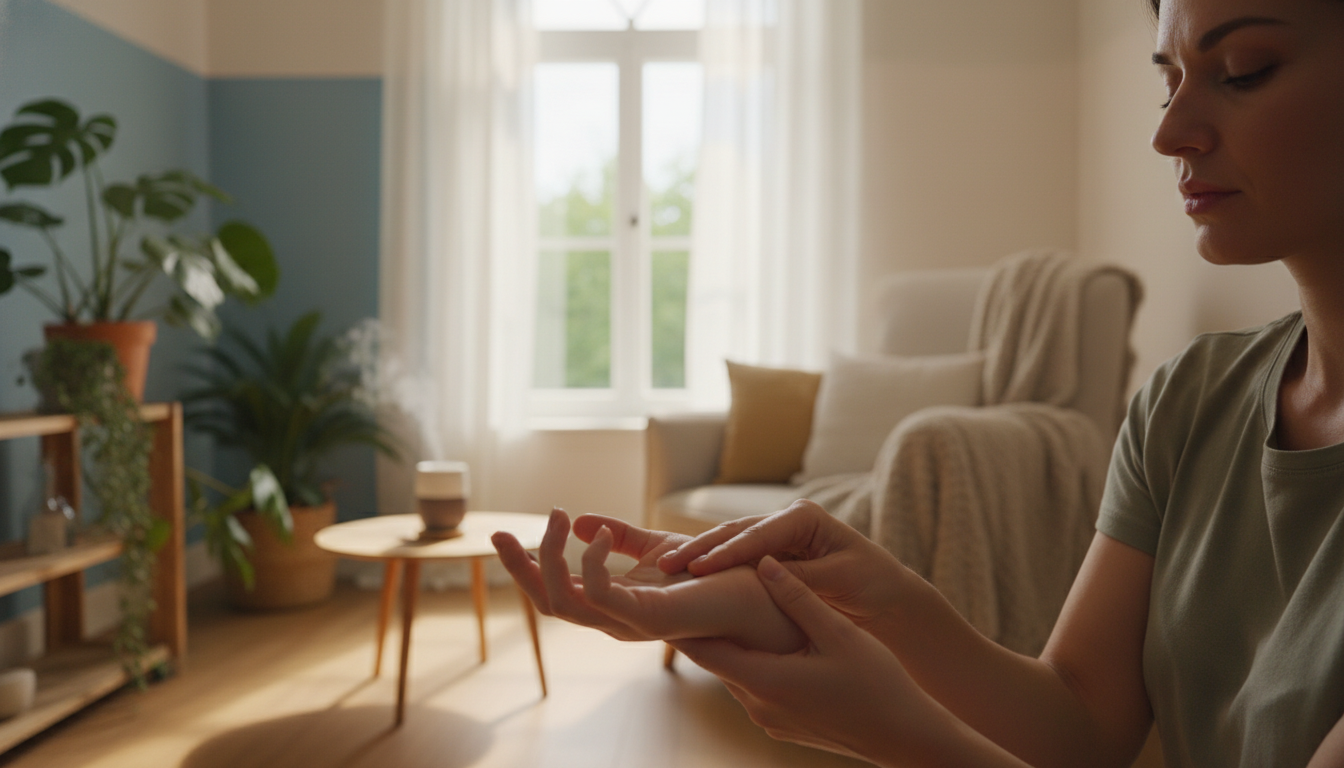
Have you ever wondered if your own fingertips could calm a racing mind? We often look for outside help when our thoughts are too much.
But, ancient wisdom says we can find holistic stress relief inside ourselves. This way helps us relax when our day gets too busy.
This old method uses firm pressure on certain body spots. It makes us relax and heal naturally.
It’s a natural wellness treatment for those seeking a calm way to stay grounded. We don’t need special tools to feel better right away.
By trying acupressure for anxiety, we learn a valuable skill. It’s a strong therapy that fits well into our busy lives.
Let’s see how these easy movements can bring us the comfort we need.
Key Takeaways
- Originates from ancient Chinese healing traditions.
- Uses finger pressure on specific body points.
- Provides a drug-free way to reduce stress.
- Works well alongside other medical treatments.
- Offers immediate, self-guided relaxation.
- Helps balance the body’s energy flow.
Understanding Acupressure and Its Benefits
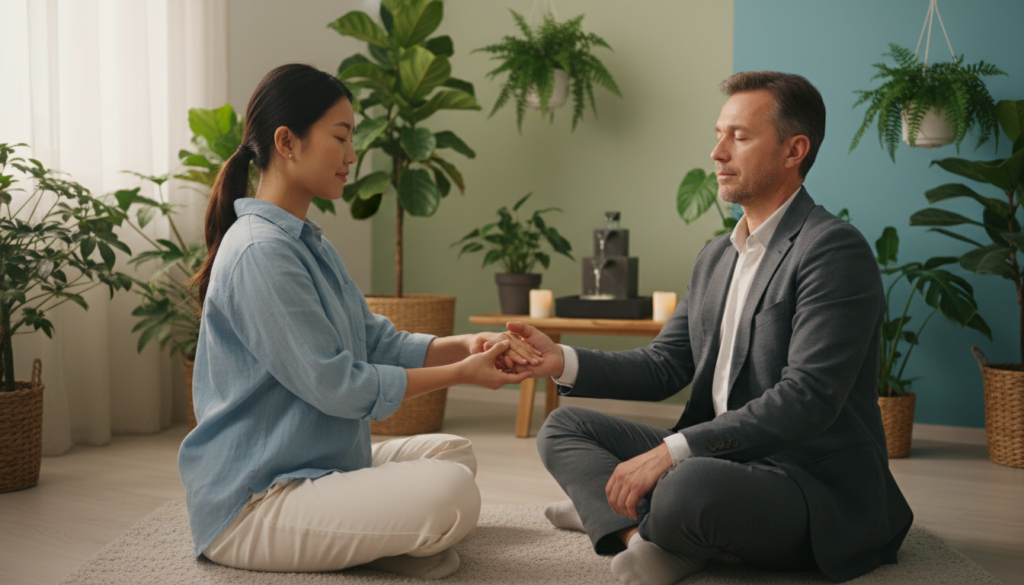
Acupressure is a great way to feel better without needles. It’s like acupuncture but uses hands instead. It helps relax and feel good by pressing special points on the body.
What is Acupressure?
Acupressure comes from ancient Chinese medicine. It believes in qi, or life energy, flowing through the body. By pressing certain points, it helps balance qi and makes us feel better.
How Does It Work?
Acupressure works by pressing special points on the body. These points help organs and systems work better. It’s good for anxiety because it calms the mind and reduces stress.
- Relaxation of tense muscles
- Improved blood circulation
- Stimulation of the body’s natural healing processes
For more info on using acupressure for stress and anxiety, check out MSKCC’s patient education on acupressure. It has lots of helpful tips.
Benefits Beyond Anxiety
Acupressure is great for more than just anxiety. It can also help with sleep, pain, and overall health. Adding it to your routine can make you feel better in many ways.
- Enhanced relaxation and reduced stress levels
- Improved sleep quality
- Pain relief
Learning about acupressure shows it’s a good way to help with anxiety and improve health.
The Connection Between Acupressure and Anxiety
Acupressure and anxiety are linked through traditional Chinese medicine. Anxiety affects our body and mind. Acupressure offers a way to manage its symptoms.
How Stress Affects Us
Stress makes us anxious. It hurts our body and mind. Chronic stress makes anxiety worse, creating a hard cycle to break.
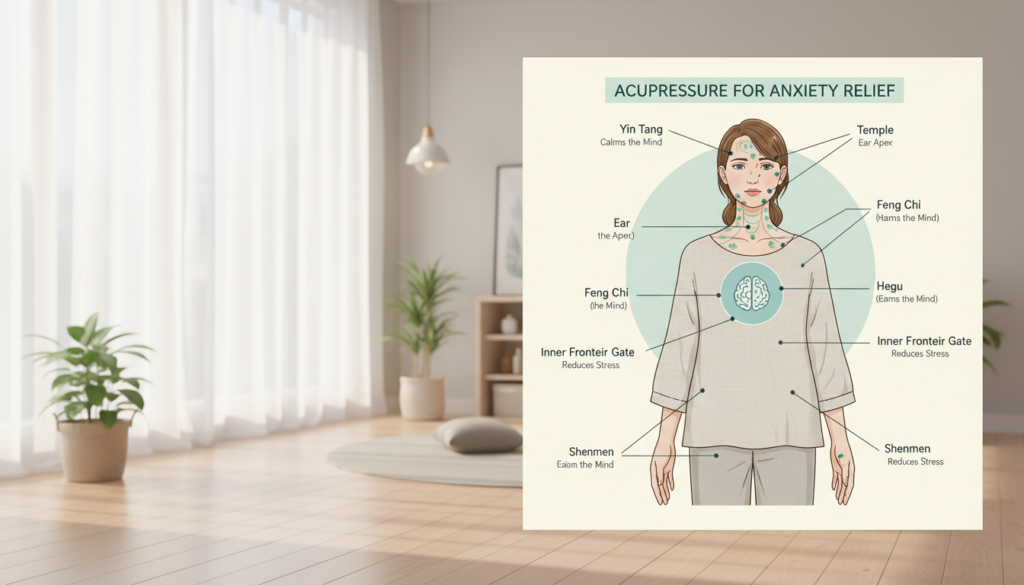
Acupressure helps by pressing on certain body points. Points like the Hall of Impression and Heavenly Gate help with anxiety and stress. They also ease insomnia and muscle tension.
The Role of Energy Flow in Anxiety
In traditional Chinese medicine, anxiety is linked to energy imbalance. This imbalance shows as anxiety, stress, or other health problems. Understanding qi is key to seeing how acupressure eases anxiety.
By pressing on specific points, we can balance our energy. This brings calm and well-being.
How Acupressure Helps Calm the Mind
Acupressure calms the mind by releasing relaxing chemicals. Regular acupressure can greatly reduce anxiety symptoms. It boosts our mental health and happiness.
Self-acupressure and using tools are easy to add to our daily lives. They help us manage anxiety.
By learning about acupressure and anxiety, we can use this ancient practice to better our mental health. With regular practice and the right methods, acupressure is a great tool for anxiety relief and wellness.
Key Acupressure Points for Anxiety Relief
Some acupressure points help ease anxiety. Pressing these spots can make you feel calmer.
Pericardium 6 (P6)
The Pericardium 6 point is on your inner forearm. It’s about 1.5 inches below your wrist crease. To use it, put your thumb on it and press down with your fingers.
Press gently in a circle for a few minutes. This can ease anxiety and nausea.
Large Intestine 4 (LI4)
Large Intestine 4 is between your thumb and index finger. Find it by bringing your thumb and index finger together. It’s at the highest spot of the muscle.
Pressing this area can lessen stress and help you relax. Use your opposite hand to press it, with your thumb down.
Governing Vessel 20 (GV20)
Governing Vessel 20 is at the top of your head. It’s along the midline. It’s thought to calm your mind and spirit.
To use GV20, sit comfortably. Use your fingertips to press gently in a circle. This can reduce anxiety and make you feel better.
Using these acupressure points daily can help with anxiety. Be consistent and patient. Everyone reacts differently to acupressure.
Techniques for Practicing Acupressure
Acupressure is easy to add to your daily life to help with anxiety. It works by pressing on special points on your body. This helps your body heal and relax.
Knowing the different ways and tools of acupressure is key. It lets you make your practice fit your needs and likes.
Self-Acupressure Techniques
Self-acupressure is a simple way to start. You can use your fingers or thumbs on your body. For example, the Pericardium 6 (P6) point on your wrist helps with nausea and anxiety.
To do self-acupressure, find the acupoint you want to work on. Then, press with your fingers or thumbs firmly but gently. Hold for a few minutes, breathe deeply, and then release. Do it again if you need to.
Using Tools for Acupressure
There are tools to help with acupressure too. You can use mats, rollers, or special shoes for your feet. These tools are great for those who find it hard to press points themselves.
Tools like acupressure mats are especially good. They let you relax while working on many points at once. It’s easy and calming.
Creating a Relaxing Environment
A calm place is important for acupressure to work best. A peaceful setting helps your body relax and get ready for the treatment.
To make a relaxing space, try dimming the lights and playing soft music. Keep the room at a comfy temperature. Deep breathing or meditation can also make acupressure even more relaxing.
Integrating Acupressure into Our Routine
Adding acupressure to our daily life can help us feel less anxious. It’s a simple way to feel better and live healthier.
Daily Practices for Anxiety Management
To manage anxiety with acupressure, we need to be consistent. We suggest taking a few minutes each day for acupressure. Here are some daily practices to try:
- Start the day with a short acupressure session to set a positive tone.
- Use acupressure during breaks at work or school to reduce stress.
- Practice acupressure before bed to promote relaxation and improve sleep quality.
By doing these practices every day, we can help our anxiety and feel better overall.
Combining Acupressure with Other Techniques
Acupressure works best when we use it with other ways to manage anxiety. Some complementary practices include:
- Meditation and deep breathing exercises.
- Yoga and tai chi.
- Aromatherapy and essential oils.
Using these methods together helps us manage anxiety better. It’s a natural way to feel better.
Listening to Our Bodies
We need to listen to our bodies when using acupressure. If it hurts, stop and talk to a doctor. Acupressure is meant to help, not hurt.
As we learn more about acupressure, remember it’s just one part of managing anxiety. Acupressure can help us feel better for a while. But it’s best used with other treatments for anxiety.
Research and Studies on Acupressure for Anxiety
Research shows thatacupressure can help with anxiety. It’s important to know if it really works.
Overview of Current Research Findings
Studies say thatacupressure can help right away. A study on theNational Center for Biotechnology Informationwebsite shows its positive effects. But, we need more research.
Acupressure seems to help with anxiety. It works by pressing certain points on the body. More studies are needed to know how well it works for everyone.
Insights from Mental Health Professionals
Mental health experts think acupressure is good for anxiety. They say it can make people feel better. Using acupressure with other treatments can help more.
Experts say the research on acupressure for anxiety is growing. But, what we know so far shows it can help. As more research comes out, we’ll learn more about how it works.
Case Studies and Testimonials
Many people have shared how acupressure helped them with anxiety. These stories show how it can be used every day. It helps people feel better and live better lives.
Even though everyone’s experience is different, the stories all point to the same thing. Acupressure can help with anxiety. As we keep learning, it’s good to hear from those who have tried it.
Getting Started with Acupressure for Anxiety
We’ve talked about how acupressure helps with anxiety. Now, it’s time to start using it for yourself. By adding acupressure to your daily life, you can feel better.
Professional Help
Getting help from a pro is a good idea. A therapist or acupressure expert can give you special advice. They can help you make a plan to manage your anxiety.
Learning Resources
There are many ways to learn about acupressure. You can find online tutorials, books, and workshops. These can teach you new techniques and help you get better at acupressure.
Consistent Practice
Doing acupressure often is important. Regular practice lets you see its full benefits. Make it a daily habit to get the best results.