

Driving in heavy traffic makes us very tense. Many feel disturbing jitters or a heavy stomach before driving. This shows a strong connection between our minds and our digestion.
The brain and gut talk to each other fast when we’re stressed. We might feel a sharp knot in our belly on busy roads. Learning anxiety in stomach how to get rid of it helps us feel better on every drive.
Understanding these feelings helps us stay calm. When our belly feels tight, we focus less on driving. We should take care of ourselves while driving.
Knowing these patterns helps us deal with discomfort better. Let’s learn about the science behind these feelings. Our aim is to teach drivers about these common body responses.
Spotting these signs early helps us think clearer. With the right knowledge, we can drive with more confidence and peace.
Key Takeaways
- The brain and gut maintain a constant biological dialogue.
- Physical jitters often signal underlying driving stress levels.
- Identifying early signs helps manage bodily discomfort effectively.
- Simple breathing methods provide quick relief during trips.
- Education transforms how we perceive and handle travel unease.
- Prioritizing mental health ensures safer journeys for everyone.
What is Driving Anxiety?
Feeling anxious while driving is more common than you might think. It can really affect how well you live your life. Driving anxiety can start from many things, like stress or feeling threatened on the road.
Definition of Driving Anxiety
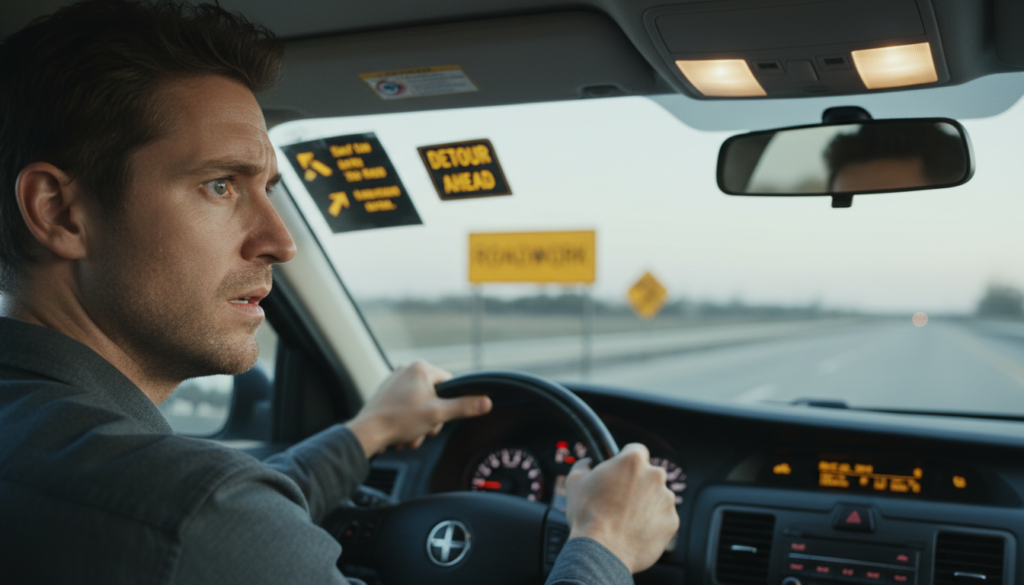
Driving anxiety is feeling scared or worried when you drive or even think about driving. It can happen in certain situations, like driving on highways or in places you don’t know. This anxiety can make it hard for you to move around freely.
Common Triggers
Many things can make you feel anxious while driving. These include:
- Past traumatic experiences, like being in a car accident.
- Fear of losing control while driving.
- Driving in heavy traffic or construction zones.
- Unfamiliarity with the driving route or environment.
Knowing what triggers your anxiety is key to dealing with it.
Difference Between Anxiety and Fear
Anxiety and fear are not the same, even though people often mix them up. Fear is a quick reaction to a clear danger. Anxiety is a feeling of worry about possible dangers in the future. When driving, fear might come from a close call, while anxiety is constant worry about accidents.
For more tips on managing anxiety, check out Work Shift Anxiety. Using natural remedies for stomach anxiety can also help. Things like deep breathing, muscle relaxation, and meditation can reduce anxiety. They can also help with physical symptoms of driving anxiety.
Recognizing Symptoms of Driving Anxiety
Driving anxiety shows up in different ways. It’s important to know its signs. These signs can affect how you drive and how you feel.
Physical Symptoms
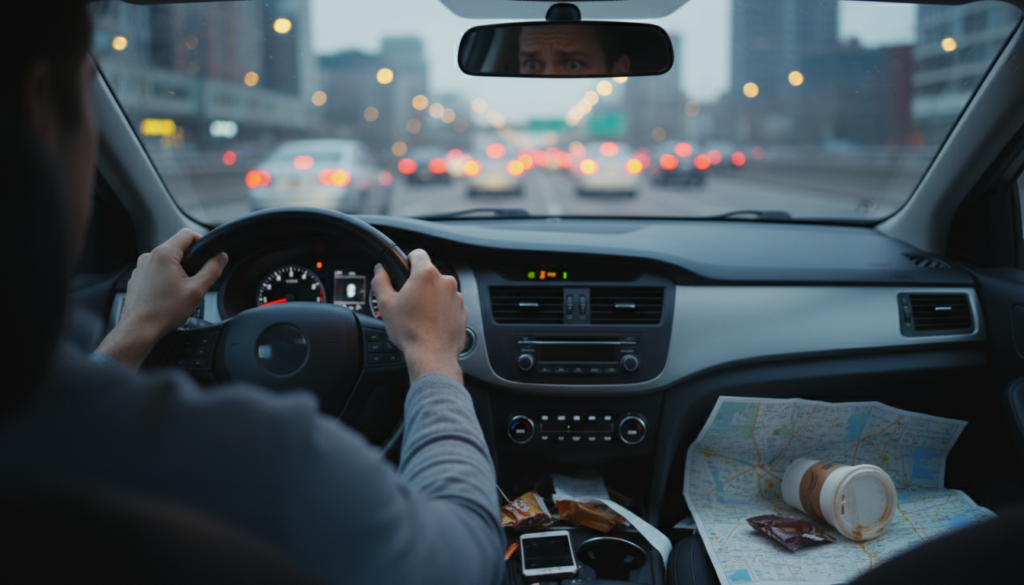
Physical signs of driving anxiety are easy to spot. You might feel a nervous stomach, your heart beats fast, you sweat, or shake. Using calming techniques for stomach anxiety can help. For example, learning about driving anxiety can help manage these feelings.
- Nervous stomach or nausea
- Rapid heartbeat or palpitations
- Sweating or trembling
- Tension headaches or muscle strain
Emotional Symptoms
Emotional signs of driving anxiety are just as tough. You might feel anxious or scared when driving. Mindfulness for stomach anxiety can help. It teaches you to stay in the moment.
- Feeling anxious or fearful when driving
- Anticipatory anxiety about driving
- Irritability or mood swings
- Feelings of panic or dread
Behavioral Symptoms
Behavioral changes can also show driving anxiety. You might avoid driving or certain situations. You might drive too carefully or even aggressively. Spotting these signs is key to fixing the problem.
- Avoiding driving or certain routes
- Excessive caution while driving
- Aggressive driving behaviors
- Reluctance to drive in new or unfamiliar areas
Impact of Driving Anxiety on Daily Life
Driving anxiety affects more than just driving. It can change our daily routines, how we interact with others, and our mental health. Knowing this helps us tackle driving anxiety better.
Limitations on Travel
Driving anxiety can limit where we go and how we get there. It can make simple trips hard. Even going to the store or visiting family can feel scary.
Social Impacts
Driving anxiety can make us feel isolated. We might stay home instead of going out. This can make us feel more anxious and lonely. Helping friends with driving anxiety can help us too.
Effects on Mental Health
Driving anxiety can hurt our mental health. It can make us stressed, depressed, and lower our quality of life. To fight this, we can try exercises for stomach anxiety and diet tips for stomach anxiety.
Changing our lifestyle can help with driving anxiety. Exercise and healthy eating can reduce anxiety. These changes can make us feel better.
| Exercise/Diet Tip | Description | Benefit |
|---|---|---|
| Deep Breathing Exercises | Focus on slow, deliberate breaths | Reduces immediate anxiety symptoms |
| Yoga | Combines physical movement with deep breathing | Enhances relaxation and reduces stress |
| Avoiding Caffeine | Limit or avoid caffeinated beverages | Reduces anxiety triggers |
Understanding driving anxiety’s wide effects helps us manage it. We can improve our daily lives by tackling it.
Strategies to Manage Driving Anxiety
Driving anxiety is a big problem for many. But, the right techniques can help manage it. This way, people can drive more confidently.
Driving anxiety shows up in different ways. You might feel your heart racing or get a stomach ache. You might even feel scared or avoid driving.
Breathing Techniques
Breathing techniques are very helpful. Deep, slow breaths can calm your body. This can make your heart slow down and your stomach feel better.
Deep breathing means taking slow breaths in and out. You focus on how the air feels. It helps you forget anxious thoughts and relax.
“The key to managing driving anxiety is not to avoid it, but to face it head-on with the right strategies.”
Gradual Exposure Therapy
Gradual exposure therapy is another good strategy. It’s about slowly getting used to driving in scary situations. This makes driving feel less scary over time.
Seeking Professional Help
For some, seeking professional help is key. Therapists can give you special plans and support. They help you find out why you’re anxious and how to deal with it.
Handling stomach anxiety or “anxiety in stomach how to get rid of it” needs a mix of strategies. Understanding and tackling the reasons for driving anxiety helps. This way, you can manage your symptoms and feel better while driving.
Resources for Overcoming Driving Anxiety
Beating driving anxiety needs many steps. This includes getting help from experts, having a support group, and finding ways to help yourself. We talked about how therapies like Cognitive Behavioural Therapy (CBT) and Exposure Therapy can help. There are also many other resources out there.
Support and Community
Being part of a support group can feel like you’re not alone. It’s great to share stories with others who understand. Some therapists even have group sessions. These can be a big help for finding relief from stomach anxiety.
Digital Tools and Resources
Online tools and apps can also help with driving anxiety. They offer things like relaxation tips and exercises to help you get used to driving again. You can find natural ways to ease stomach anxiety, like mindfulness and breathing exercises, in these digital tools.
Recommended Literature
If you like to learn by reading, there are books and articles on managing anxiety and driving fears. They offer more tips and ideas for dealing with driving anxiety. For more info on driving anxiety and therapy, check out Virtual CBT’s therapy blog. It has lots of helpful information and support.