

Have you ever felt your heart racing during a stressful moment? You might wonder if your body is paying a hidden price. Many of us experience intense stress, but the link between our mental state and physical readings often remains a mystery.
We know that hypertension is the medical term for elevated numbers. While nervous tension does not cause chronic issues, it certainly triggers sharp, sudden spikes. These temporary rises happen fast during difficult events.
Understanding the link between anxiety and blood pressure is vital for us. If these spikes occur every day, they can hurt the heart, vessels, or kidneys. These events affect our health, so we must manage them well.
Key Takeaways
- Frequent spikes in numbers may hurt the heart and kidneys.
- We formally call high readings hypertension.
- Nervous tension triggers temporary physical changes.
- Mental health impacts cardiovascular wellness.
- Constant stress harms vessels over time.
- Protecting our internal organs requires managing stress.
Understanding Anxiety and Its Symptoms
Anxiety disorders are common in adults, making them a big health issue. We need to know more about their symptoms and how to diagnose them. These disorders cause too much fear, anxiety, and other problems that make daily life hard.
To understand how anxiety affects blood pressure, we must first know what anxiety is. Anxiety is more than just feeling stressed or worried; it’s a lasting condition that can harm health.
Common Symptoms of Anxiety
Anxiety symptoms include constant worry, fear, or anxiety that gets in the way of daily life. Other signs are feeling restless, being easily irritated, having trouble focusing, and not sleeping well. It’s important to recognize these symptoms early to manage them.
- Persistent and excessive worry about various things
- Restlessness or feeling on edge
- Difficulty concentrating or making decisions
- Irritability
- Sleep disturbances, such as insomnia or difficulty falling/staying asleep

How Anxiety is Diagnosed
Doctors use the Diagnostic and Statistical Manual of Mental Disorders (DSM) to diagnose anxiety disorders. They check for symptoms to find the right diagnosis. A detailed check is needed to tell anxiety disorders apart from other mental health issues.
The DSM helps doctors figure out the exact type of anxiety disorder, like generalized anxiety disorder or social anxiety disorder. Knowing the exact diagnosis is key to creating a good treatment plan.
The Connection Between Anxiety and Blood Pressure
It’s important to understand how anxiety affects our blood pressure. Anxiety isn’t just a mental issue; it also impacts our physical health, especially our heart.
What Happens to Blood Pressure During Anxiety
Anxiety triggers our body’s “fight or flight” response. This prepares us to face or run from danger. Several changes happen:
- Our heart rate increases.
- Our blood vessels constrict or narrow.
- Our blood pressure temporarily rises.
These changes are usually short-lived. But, ongoing anxiety can harm our blood pressure more.
The Role of Stress Hormones
Stress hormones like adrenaline and cortisol play a big role in anxiety. They’re released when we feel threatened. They make our heart beat faster and our blood vessels narrower, raising blood pressure.
Key effects of stress hormones include:
- Increased heart rate
- Blood vessel constriction
- Temporary rise in blood pressure
Knowing how stress hormones work helps us see how anxiety affects our blood pressure. By managing anxiety, we can protect our heart health.
Short-term vs. Long-term Effects
It’s important to know how anxiety affects blood pressure in the short and long term. Anxiety can raise blood pressure right away and also over time. Understanding these effects helps us find better ways to manage our heart health.
Immediate Impact of Anxiety on Blood Pressure
Anxiety can quickly raise blood pressure. This happens because of the body’s “fight or flight” response. Stress hormones like adrenaline play a big role in this.
A study on the National Center for Biotechnology Information shows that stress and anxiety can make blood pressure go up right away.
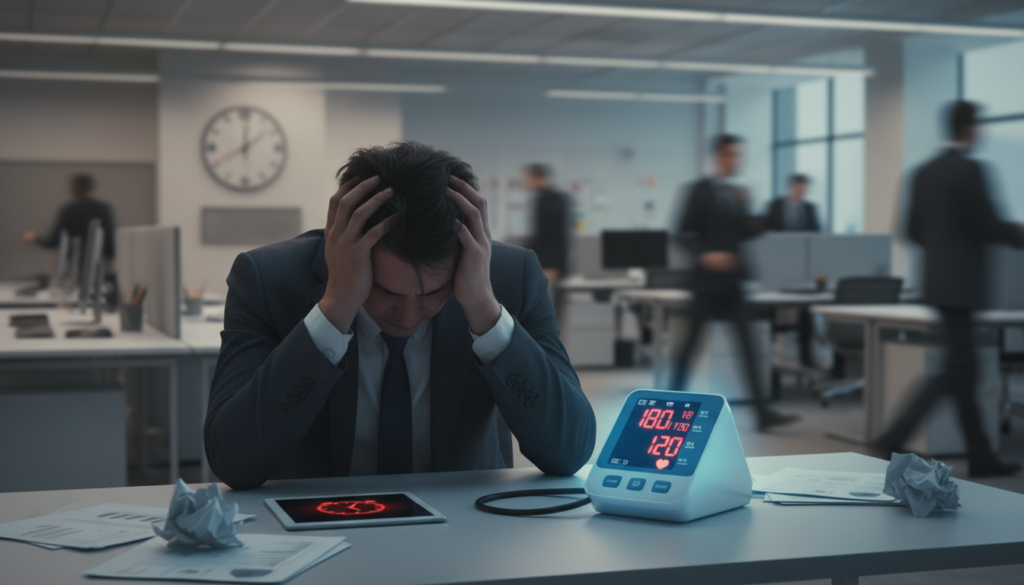
Chronic Anxiety and Blood Pressure Risks
Anxiety itself doesn’t directly cause high blood pressure over time. But, frequent anxiety can harm blood vessels, the heart, and kidneys. It can also lead to unhealthy behaviors like smoking or eating too much.
So, it’s key to handle anxiety well to avoid these risks.
| Effects | Short-term | Long-term |
|---|---|---|
| Blood Pressure Impact | Temporary increase | Potential damage to cardiovascular health |
| Associated Behaviors | Stress response | Unhealthy coping mechanisms (e.g., smoking, overeating) |
Managing anxiety is not just about reducing immediate stress; it’s also about preventing long-term cardiovascular risks.
Managing Anxiety to Maintain Healthy Blood Pressure
Anxiety management is key to keeping blood pressure healthy. Anxiety triggers our body’s stress response, raising heart rate and blood pressure. By managing anxiety well, we can protect our heart health.
Lifestyle Changes for Anxiety Management
Changing our lifestyle can greatly help manage anxiety. These changes not only lower anxiety but also boost our overall health. Some effective changes include:
- Regular Exercise: Regular physical activity releases “feel-good” hormones, reducing anxiety.
- Balanced Diet: Eating fruits, veggies, whole grains, and lean proteins stabilizes mood and lowers anxiety.
- Stress Management Techniques: Meditation, deep breathing, and yoga help manage stress and anxiety.
- Adequate Sleep: Getting enough sleep is vital for mental and physical health, helping to control anxiety.
When to Seek Professional Help
While lifestyle changes are powerful, some may need more support. Recognizing when to seek professional help is crucial. If anxiety hinders daily life, it’s time to get help from a mental health expert.
Professional help can take many forms, including:
- Therapy: Cognitive-behavioral therapy (CBT) and other talk therapies are effective in managing anxiety.
- Medication: In some cases, medication is prescribed to control anxiety symptoms.
- Combination Therapy: Some may need a mix of therapy and medication.
Seeking professional help is a sign of strength. It provides the tools and support needed to manage anxiety and keep blood pressure healthy.
Monitoring and Addressing Blood Pressure
It’s important to regularly check your blood pressure. This is especially true if you often feel anxious. By tracking your blood pressure, you can spot any changes quickly. Then, you can take steps to manage them.
Regular Checks for Better Health
The American Heart Association suggests using an upper arm cuff for blood pressure checks. They recommend taking several readings to get accurate results. This simple habit helps us understand how stress affects our blood pressure. It also helps us make better health choices.
Tips for Healthy Blood Pressure
To keep your blood pressure healthy, live a balanced lifestyle. Eat well, exercise regularly, and find ways to manage stress. Monitoring and managing your blood pressure is a continuous effort. It requires paying attention to your overall health and seeking help when needed.