

Do you ever feel like your mind could be a safe place from stress? We often feel tight from daily life. But, we have a natural way to find peace inside.
Using an anxiety relief visualization helps us see things differently. We pick a quiet spot and start with deep breaths. This helps our body relax.
We build a mental picture using all our senses. This makes the experience feel tangible. A calming guided imagery lets us enter a peaceful world without moving.
Our body responds well to these happy thoughts. Our heart rate goes down and our muscles relax. We can find calm whenever we need it.
Key Takeaways
- Practice deep breathing in a quiet setting to begin the process.
- Use mental pictures to ease physical tension and relax the body.
- Incorporate all senses to enhance the authentic feel of the experience.
- Maintain regular sessions to improve long-term mental results.
- Create a personal mental sanctuary to find peace at any moment.
Understanding Guided Imagery and Its Benefits
Guided imagery uses pictures in your mind to relax. It helps those who feel anxious. It works by making your mind focus on calm pictures instead of worries.
What is Guided Imagery?
Guided imagery is a way to use pictures in your mind. You can do it by yourself or with help from someone else. It lets you imagine peaceful places or success.
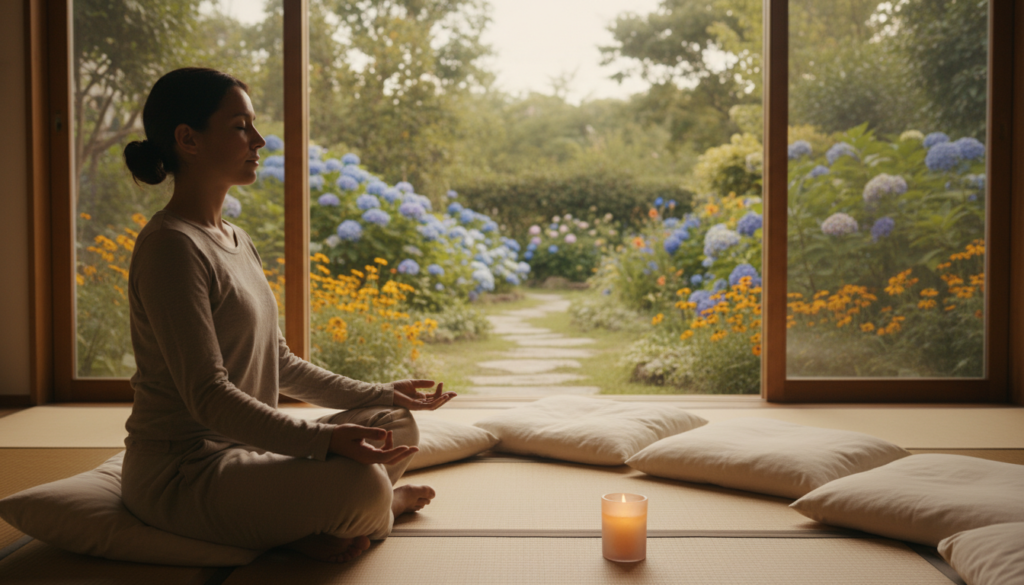
How Does It Work for Anxiety?
Guided imagery helps by taking your mind off worries. It makes you feel calm. This is good for anxiety management visualization.
For example, someone with social anxiety might imagine being confident in social situations. This can help them feel better in real life.
Benefits of Using Guided Imagery
Guided imagery has many benefits for anxiety. It can help right away and also over time. It makes you better at handling stress and anxiety.
- Reduces anxiety symptoms by promoting relaxation
- Enhances emotional regulation
- Improves resilience against anxiety triggers
- Can be used in conjunction with other anxiety management techniques
Adding guided imagery to your daily life can be a great way to manage anxiety. It can make you feel better overall.
The Science Behind Guided Imagery
Guided imagery works by mixing up our mind and body. It’s not just a way to relax. It’s a strong tool that helps our mind and body feel better.
It uses words to take us on mental trips. These trips can make us feel calm or help us deal with stress. Our brain is amazing at making these trips feel real.
Research Studies Supporting Its Effectiveness
Many studies show guided imagery helps with anxiety. For example, a study on PubMed Central found it helps with anxiety and sadness in people getting chemo.
Here are some key findings from studies on guided imagery and anxiety:
| Study | Population | Findings |
|---|---|---|
| Study on Guided Imagery in Chemotherapy Patients | Patients undergoing chemotherapy | Significant reduction in anxiety and depression |
| Guided Imagery for Anxiety Disorders | Patients with anxiety disorders | Improved quality of life and reduced anxiety symptoms |
Neurobiological Impact on Anxiety Reduction
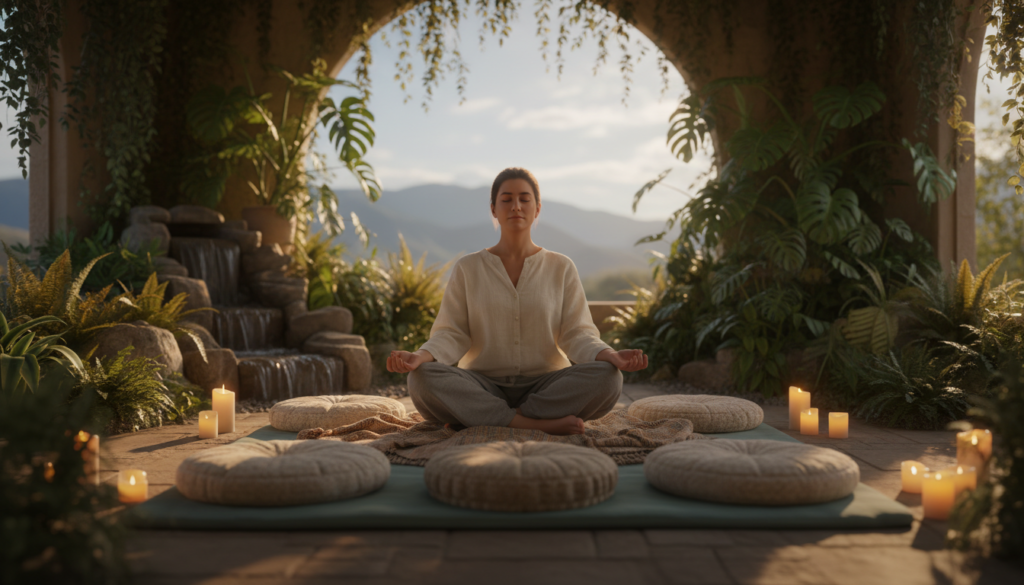 Guided imagery changes our brain and body in good ways. It makes us relax and feel less stressed. This helps us feel better.
It also helps our body’s stress system. This system is like our body’s alarm system. Guided imagery turns it down, making us feel less anxious.
Learning about guided imagery helps us see its value. It’s a great tool for our mind and body.
Techniques for Practicing Guided Imagery
To master guided imagery, find a quiet spot. It should be comfy and free from distractions. This helps you relax better.
We’ll look at ways to improve your guided imagery. This includes visualizing, breathing exercises, and making your own script. These steps help you relax deeply and feel less anxious.
Visualization Techniques
Visualization is key in guided imagery. It’s about making mental pictures that calm you down. Start by closing your eyes and breathing deeply.
Some effective visualization techniques include:
- Imagine yourself in a peaceful place, like a beach or forest.
- See a positive outcome to a tough situation.
- Picture yourself reaching a goal or getting past an obstacle.
Breathing Exercises to Enhance Imagery
Breathing exercises boost guided imagery. Deep breathing calms your mind and body. It makes focusing on your images easier.
To practice breathing exercises for guided imagery:
- Inhale slowly through your nose, counting to four.
- Hold your breath for a count of four.
- Exhale slowly through your mouth, counting to four.
- Do this cycle several times.
Creating a Personal Imagery Script
Making your own imagery script is helpful. It should be about something that relaxes or empowers you. Your script should be personal and meaningful.
A good imagery script should include:
| Element | Description |
|---|---|
| Setting | A detailed description of the environment or scenario. |
| Senses | Incorporate sensory details to make the imagery more vivid. |
| Emotions | Describe the feelings you want to experience during the imagery. |
Using these techniques can make guided imagery more effective. It helps you relax and feel less anxious.
Integrating Guided Imagery into Daily Life
Being consistent with guided imagery is important. It helps us feel better over time. To do this, we need to know how to fit it into our daily routine.
Recommended Practices for Consistency
Start by picking a time each day for guided imagery. You could do it in the morning to start the day right. Or in the evening to relax.
Begin with short sessions, like a few minutes a day. Then, you can make them longer as you get used to it.
Pairing Guided Imagery with Other Therapies
Guided imagery works better with other therapies. For example, combining it with progressive muscle relaxation can help reduce anxiety.
You can also use it with mindfulness meditation and cognitive-behavioral therapy.
| Therapy | Description | Benefits When Paired with Guided Imagery |
|---|---|---|
| Progressive Muscle Relaxation | A technique that involves tensing and relaxing different muscle groups. | Enhances physical relaxation and reduces anxiety. |
| Mindfulness Meditation | A practice that involves being present in the moment. | Improves mental clarity and reduces stress. |
| Cognitive-Behavioral Therapy | A therapy that helps in changing negative thought patterns. | Helps in managing anxiety by altering negative perceptions. |
Creating a Calm Environment for Practice
To enjoy guided imagery, we need a calm place. Dim the lights and keep the room comfy. Try to avoid distractions.
Adding calming scents like lavender can make it even better. It helps us relax more.
Resources for Guided Imagery
To learn more about guided imagery for anxiety, check out these resources. They can help you find what works best for you.
Recommended Books and Apps
There are many books and apps for guided imagery. Apps like Calm and Headspace have tools for mental health. Books like “Guided Imagery for Anxiety” by Emmett E. Miller give detailed advice.
Guided Imagery Podcasts and Courses
Podcasts and online courses are also good. They offer many guided imagery techniques. You can find them on Udemy and Coursera.
Finding Professional Guidance
For personal help, talk to a therapist or healthcare provider. They can make guided imagery fit your needs.