
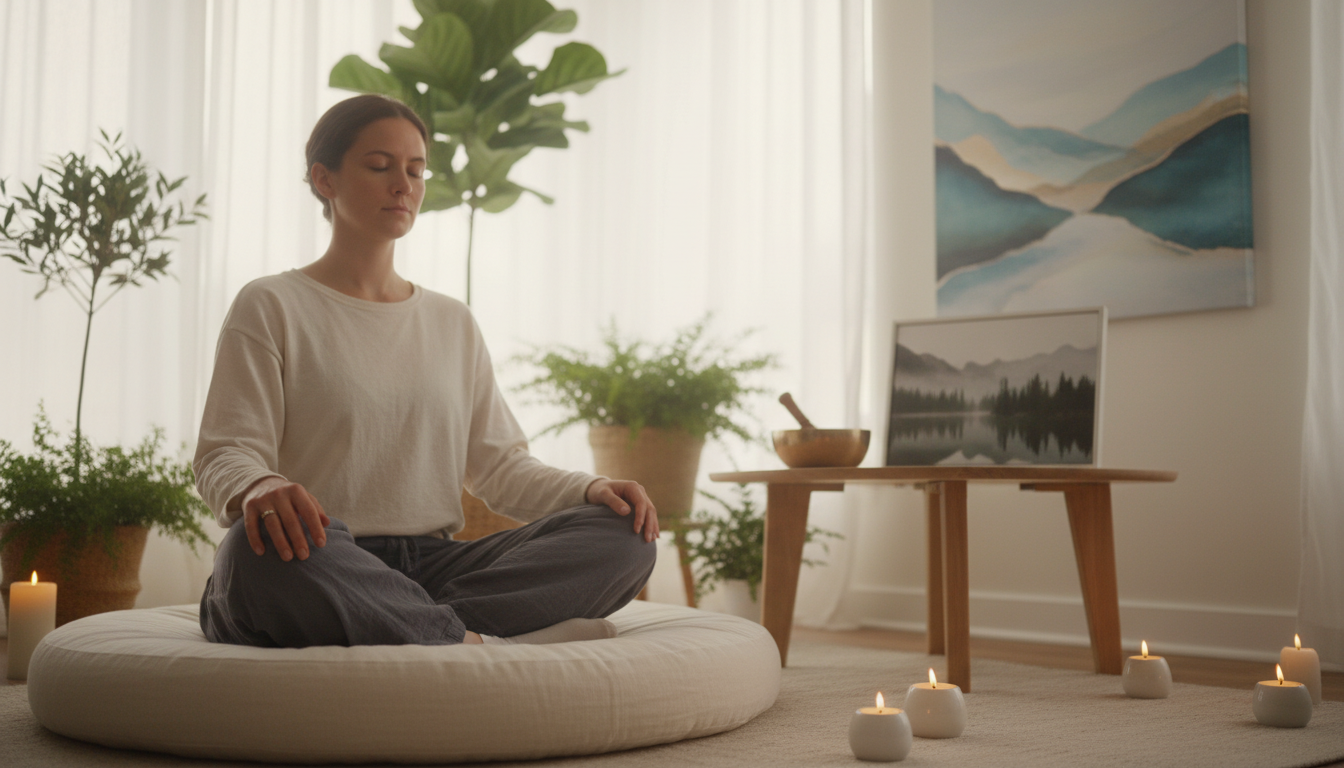
What if we could make our brain’s fear part smaller by sitting still for a few minutes each day? We often feel overwhelmed by stress in our fast world. Studies show that guided meditation for anxiety can change our brain’s paths for better mental health.
MRI shows our fear center, the amygdala, gets smaller with regular meditation. This change helps us relax better and handle daily stress. By making meditation a habit, we arm our minds to stay calm and focused.
It’s amazing how simple breathing helps us stay present. We recommend learning about anxiety relief meditation to calm our nerves and control our emotions. These structured sessions give us the confidence to find lasting peace and strength against stress.
Key Takeaways
- Brain Reshaping: Regular practice can physically shrink the amygdala to reduce fear responses.
- Stress Reduction: Mindful techniques help us lower cortisol levels and promote total body relaxation.
- Present Focus: We learn to stay in the moment rather than worrying about future events.
- Nervous System Calm: Structured breathing exercises effectively soothe the body’s fight-or-flight triggers.
- Consistency Wins: Even short daily sessions of five minutes build significant long-term mental resilience.
- Supportive Tool: These practices serve as a perfect complement to traditional therapy and medical care.
Understanding Anxiety and Its Effects
Anxiety is big in today’s world. Stress and pressure can really get to our minds. It’s more than just feeling stressed or worried. It’s a complex feeling that can really mess up our lives if we don’t handle it right.
What is Anxiety?
Anxiety is our body’s way of reacting to stress. It makes us feel scared or worried about the future. It’s okay to feel this way sometimes. But if it gets in the way of our daily life, it’s a problem.
Common Symptoms of Anxiety
People with anxiety feel worried or scared a lot. They might also feel restless, on edge, or have trouble focusing. They might also have trouble sleeping.
How Anxiety Affects Daily Life
Anxiety can really mess up our lives. It can hurt our relationships, work, and how we feel overall. People with anxiety might avoid things that make them feel scared or worried.
Mindfulness and meditation can help with anxiety. Anxiety meditation techniques and mindfulness for anxiety can make us feel better and less stressed.
To understand anxiety better, let’s look at how it affects our lives in the table below:
| Aspect of Life | Effects of Anxiety |
|---|---|
| Work/School Performance | It’s hard to focus, make decisions, or finish tasks because of worry or fear. |
| Social Relationships | People with anxiety might avoid social situations because they’re scared of being judged or rejected. |
| Physical Health | Chronic stress can cause sleep problems, stomach issues, or other health issues. |
Understanding anxiety helps us see why practices like guided meditation are important. They can help lessen anxiety’s effects and make our lives better.
The Role of Meditation in Reducing Anxiety
Meditation is a great way to fight anxiety. Guided meditation is especially good at this. It makes people feel calm and helps them deal with scary thoughts.
“Guided meditation is a way to meditate with help from someone else,” it says. This makes it easier to relax and focus.
What is Guided Meditation?
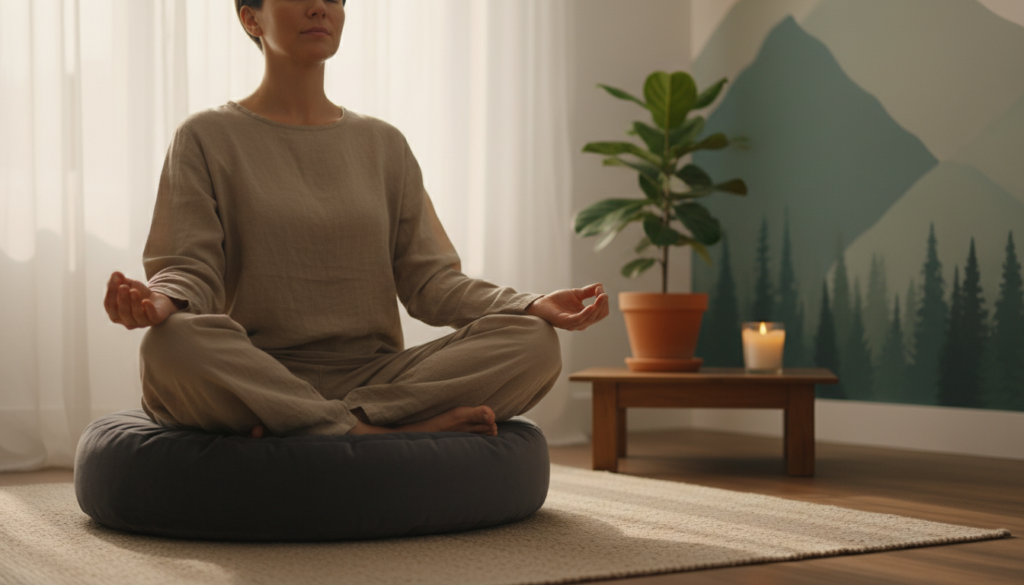
Guided meditation means following someone who guides you. They use guided imagery for anxiety and other ways to relax. You can listen to them on audio or watch videos.
How Guided Meditation Works
It uses your imagination to make you feel calm. The guide takes you on a journey of calm thoughts and breathing. This helps you forget about worries.
A person said, “Guided meditation changed my life. It makes me calm and present.” Stories like this show how it helps.
Benefits of Guided Meditation for Anxiety Relief
Guided meditation has many good effects. It makes you feel less stressed and anxious. It also makes you happier and more focused.
- Reduced stress and anxiety levels
- Improved mood and emotional regulation
- Enhanced focus and concentration
- Better sleep quality
Adding guided meditation to your day can really help. It’s a strong tool against anxiety.
How to Practice Guided Meditation for Anxiety
Practicing guided meditation for anxiety has several steps. These steps can really help. By following them, we can make our meditation better and handle anxiety better.
Finding the Right Guided Meditation Resources
To start, we need to find good resources. This includes:
- Mobile apps like Headspace and Calm that offer guided meditation sessions
- Online platforms and websites dedicated to mindfulness and meditation
- YouTube channels and podcasts featuring guided meditations
- Local meditation classes or workshops in our community
When picking resources, look at the guide’s qualifications. Also, check the variety of themes and user reviews. This helps us find quality content that we like.
Setting the Ideal Environment
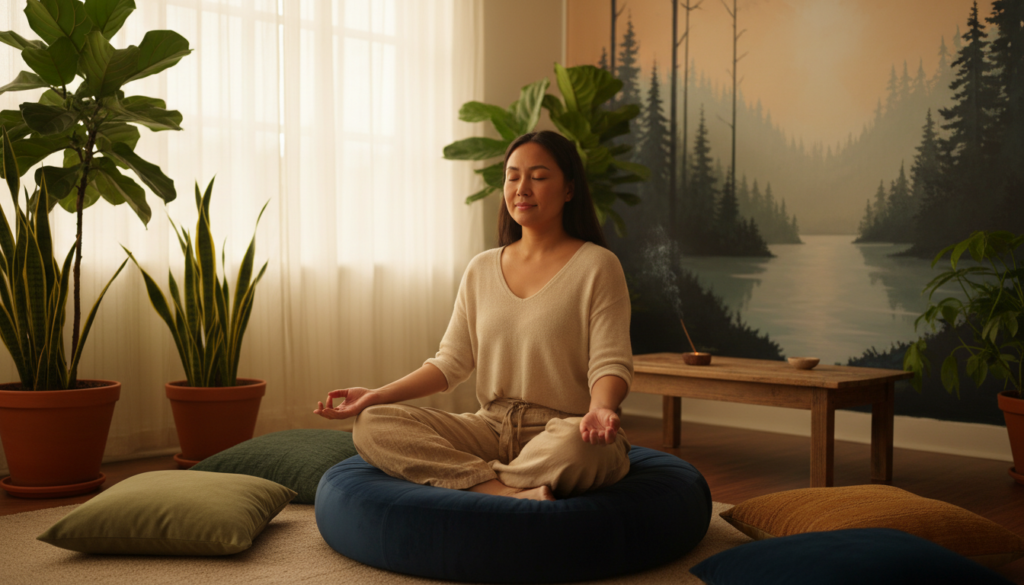
Creating a good environment is key for meditation. We should:
- Choose a quiet, comfortable, and clutter-free space
- Ensure the room is at a comfortable temperature
- Consider using dim or soft lighting to promote relaxation
- Minimize distractions by turning off notifications on our devices
By setting the right environment, we can focus better. This helps us relax deeper during meditation.
Techniques for Effective Meditation
To get the most from guided meditation, use these techniques:
- Focus on the guide’s voice: Let the guide’s voice lead you. Gently bring your attention back when your mind wanders.
- Use visualization: Use the visualizations or imagery suggested by the guide. This can make the meditation better.
- Practice deep breathing: Deep, controlled breathing can calm your mind and body.
- Be consistent: Regular practice is important. It helps us see the benefits of guided meditation for anxiety.
By using these techniques, we can better handle anxiety. We can also improve our overall well-being.
Personalizing Our Guided Meditation Journey
To really use guided meditation for anxiety, we need to make it our own. This means knowing what makes us anxious, picking a meditation style we like, and meditating at the same time every day. By doing this, we can get the most out of anxiety relief meditation and live more mindfully.
Identifying Specific Triggers
It’s important to know what makes us anxious. This helps us focus our meditation on those things. We can think about our day, feelings, and body to find what worries us.
Common things that make us anxious include work stress, being around people, and our personal lives. Knowing what triggers us lets us use meditation to handle it better.
Choosing the Right Meditation Style
There are many kinds of guided meditation, each with its own benefits. Some help us relax, while others focus on being present or using our imagination. Trying different kinds helps us find what works best for us.
If our anxiety is about being tense, a meditation on relaxing muscles might help. If our anxiety is about thinking too much, a mindfulness meditation could be better.
Creating a Consistent Practice Schedule
Being regular with meditation is important. Making it a habit means we keep getting its benefits. We should pick a time that fits our life and stick to it.
Start with a short time, like 10-15 minutes, to get into the habit. As we get better, we can meditate longer to get even more benefits.
Incorporating Guided Meditation into Our Lives
Guided meditation helps with anxiety. It’s good to practice every day. Even a few minutes can help.
We need a quiet place for mindfulness meditation. Start small and grow as you get better.
Daily Practice Tips
Make meditation a daily habit. Try it after waking up or before bed. Guided apps or videos can keep you on track.
Combining Techniques for Enhanced Benefits
Try meditation with deep breathing or yoga. This mix can help manage stress better. It makes us feel better mentally.
Tracking Progress
Keep track of how you feel over time. Being patient and regular helps. Guided meditation can really improve your mental health.