
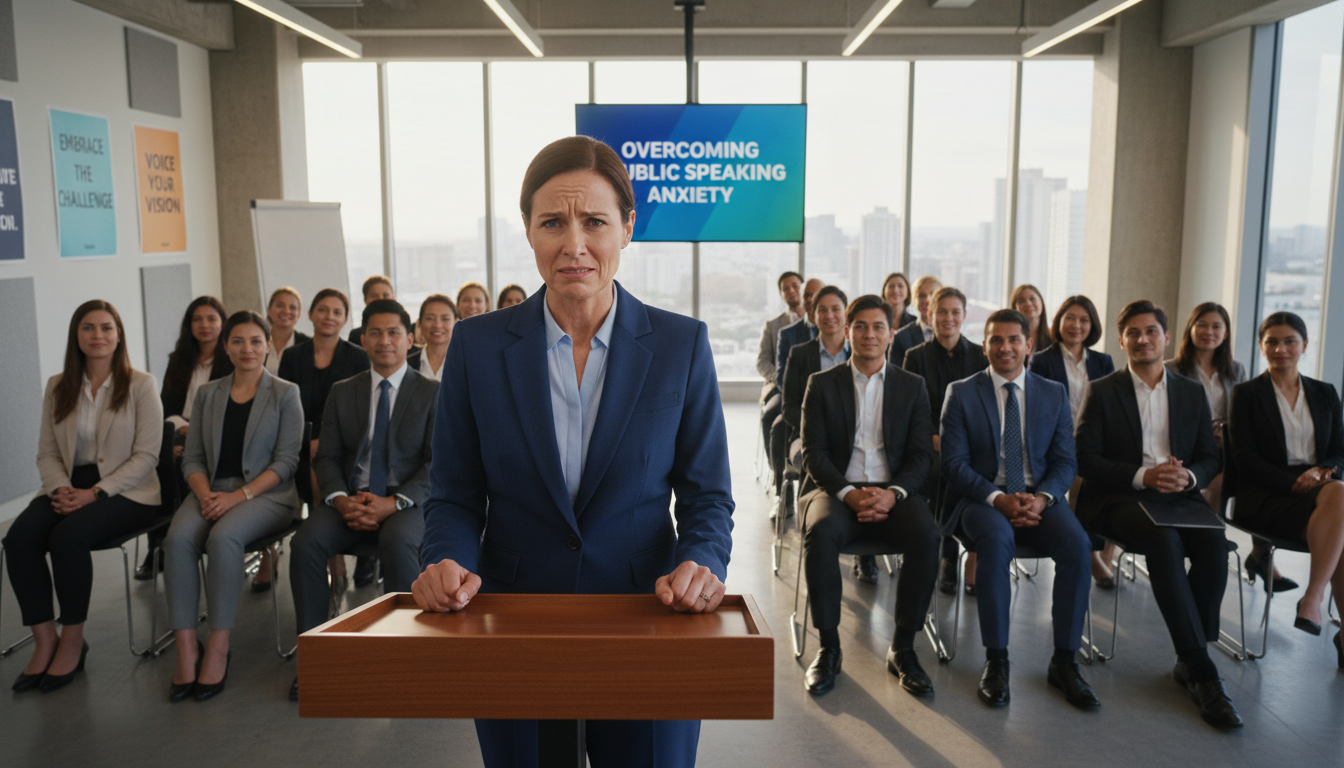
Ever felt your heart racing so fast it seemed like everyone could hear it? We often freeze under the spotlight, even with great ideas to share. This fear, known as fear of public speaking, affects nearly 40% of adults, says the National Institute of Mental Health.
Anxiety can be just a little nervous or a big panic that stops us. It affects us all differently but has the same effect: it keeps us from reaching our full potential. We can overcome career anxiety by naming our feelings to lessen their control over us.
Many of us face these intense feelings because we fear being judged or making mistakes. But recognizing these feelings is the first step to building lasting confidence. In this guide, we’ll share ways to manage these moments and find our voice again.
Key Takeaways
- Nearly 40% of the population experiences this performance anxiety.
- Symptoms range from mild jitters to overwhelming panic.
- Naming your emotions helps us process stress more effectively.
- Root causes often involve a worry about being judged or failing.
- Accepting physical sensations like a racing heart aids behavioral change.
- Self-awareness acts as a gateway to improved self-confidence.
What is Public Speaking Fear?
Many of us feel scared or nervous when we have to speak in public. This feeling is more than just a little worry. It’s a common problem that many people face.
Definition and Overview
Public speaking fear, or public speaking anxiety, is a type of social anxiety. It’s the fear of speaking in front of others, big or small groups. This fear is about what others might think or say.
This fear makes people very anxious about speaking. It can make them feel really scared and stop them from speaking well. It’s not just being a little nervous. It’s a strong fear that can make it hard to talk.
Common Symptoms We Experience
Public speaking anxiety can make you feel both physically and emotionally scared. You might feel shaking, sweating, butterflies in your stomach, dry mouth, rapid heartbeat, and a squeaky voice. You might also feel very scared or anxious when you have to speak.
But, it’s good to know that most people can’t see these signs. With practice and getting ready, you can handle these feelings better.
Causes of Public Speaking Fear
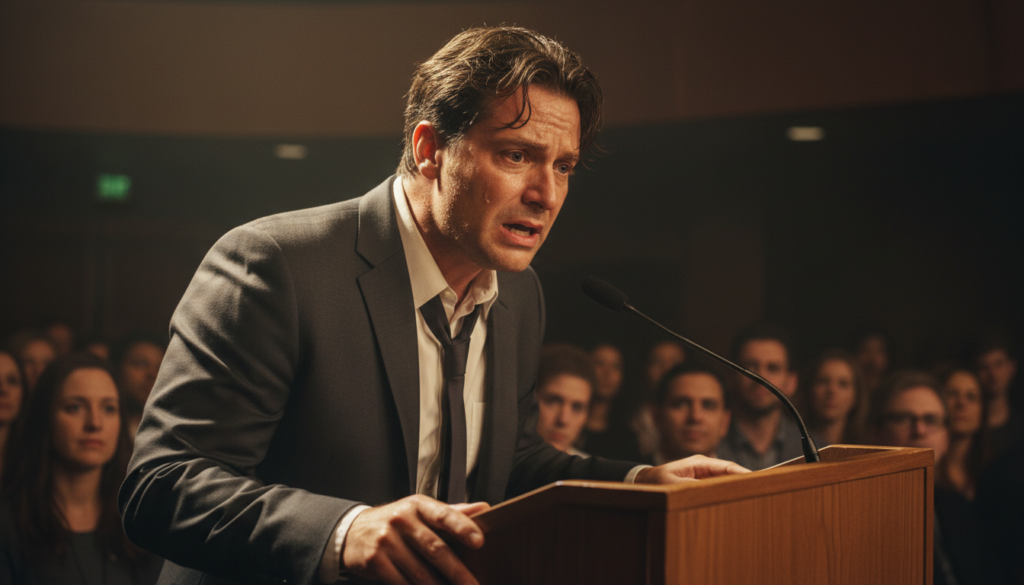
It’s important to know why we fear public speaking. This fear, called glossophobia, is complex. It comes from our mind, social life, and even our past.
Psychological Factors at Play
The fear of public speaking is rooted in our mind. We fear being judged or rejected. This fear is evolutionarily ingrained. It helped our ancestors survive by avoiding being left out.
Our brain also worries about how well we’ll do in front of people. If we doubt our skills or fear mistakes, we get anxious. Past bad experiences can make this fear worse.
Social Anxiety and Performance Anxiety
Public speaking fear is linked to social anxiety disorder and performance anxiety. People with social anxiety fear being judged in social situations. Performance anxiety is the fear of doing poorly in front of an audience.
The table below shows the differences and similarities between social anxiety and performance anxiety in public speaking:
| Characteristics | Social Anxiety | Performance Anxiety |
|---|---|---|
| Primary Fear | Fear of being judged or evaluated in social interactions | Fear of performing poorly in front of an audience |
| Context | General social interactions, including public speaking | Specific performance situations, such as public speaking |
| Impact on Public Speaking | Can cause significant distress in all social interactions, including public speaking | Primarily affects performance in specific situations like public speaking |

Understanding these causes helps us tackle public speaking fear better. Seeing it as a mix of psychological and social factors helps us find better ways to overcome it.
Recognizing the Impact of Public Speaking Fear
It’s key to understand how public speaking fear affects us. This fear, known as glossophobia, can change our lives in many ways.
Effects on Our Personal and Professional Lives
Public speaking fear can really change our lives. It can stop us from speaking up in social situations or taking on leadership roles. At work, it can hold us back from getting promotions or finding new jobs.
For example, someone afraid of public speaking might not share ideas in meetings. This fear can also make it hard to meet new people at work.
| Aspect of Life | Impact of Public Speaking Fear |
|---|---|
| Personal Growth | Limiting self-expression and social participation |
| Career Advancement | Hindering promotions and job opportunities |
| Professional Networking | Reducing ability to establish meaningful connections |
Relationship with Self-Esteem
Public speaking fear is tied to how we feel about ourselves. Struggling with speaking in public can make us feel not good enough. This can make the fear worse, creating a cycle.
To break this cycle, we need to face our fear. By doing so, we can build our confidence and improve how we see ourselves.
Strategies to Overcome Public Speaking Fear
We can beat our fear of speaking in public by using smart methods. To do this, we need to know why we’re scared, see how it affects us, and use good ways to handle it.
Preparation Techniques We Can Use
Getting ready well is a top way to fight public speaking fear. This means doing lots of research, arranging our words in a clear way, and practicing a lot.
Rehearsal helps us feel braver and more in charge. We can practice by looking in a mirror, recording ourselves, or speaking to a few friends or family.
- Research your topic thoroughly
- Organize your content logically
- Practice your delivery several times
Visualization and Breathing Exercises
Using our imagination can also help a lot. By picturing ourselves giving a great talk and getting good feedback, we can feel more confident and less worried.
As Dale Carnegie said, “Most people fail in advance by deciding they’re going to fail.” Thinking about success can fight this feeling.
“The way to gain a good reputation is to endeavor to be what you desire to appear.”
Deep breathing is another great tool for fighting public speaking fear. It helps calm us down and lessen the signs of being anxious.
Seeking Professional Support
For some, getting help from experts is key to beating public speaking fear. This might mean working with a coach or therapist who knows about public speaking. Or joining a group like Toastmasters International.
These places offer personal advice, help, and support. They help us find what we need to get better and grow our skills in a safe place.
Building Confidence in Public Speaking
Building confidence in public speaking is easy with practice and positive feedback. We need to think about where we practice and who we talk to.
Practicing in Safe Environments
It’s important to practice in a safe place. This could be a classroom, community center, or online. We need a place where we feel supported and can get good feedback.
Here are some ways to practice safely:
- Record yourself speaking and watch it to see what you can do better.
- Practice in front of a mirror to get used to how you look and act.
- Join small group talks to get better at speaking with others.
Joining Public Speaking Groups or Clubs
Joining groups or clubs for public speaking is also great. Places like Toastmasters offer a place to practice, get feedback, and learn from others.
Being in these groups helps a lot:
- You get to speak often and see how you improve.
- You get feedback from people who know a lot about speaking.
- You’re part of a group that helps you be brave and try new things.
By practicing in safe places and joining groups, we can really boost our public speaking confidence. These steps help us feel more at ease when we speak and make us better at sharing our thoughts.
Resources for Overcoming Public Speaking Fear
Getting over public speaking fear needs the right tools and support. There are many ways to become more confident when speaking in public.
Learning through Books and Courses
Books on public speaking share great tips and strategies. Online courses let us learn at our own speed. They help us get better at speaking.
For more help with fear, check out resources for fear of public speaking.
Personalized Coaching and Workshops
Coaching and workshops offer personal help and feedback. They help us improve our speaking skills in a safe place. For more tips, visit the Mayo Clinic’s expert advice on public speaking fear.