
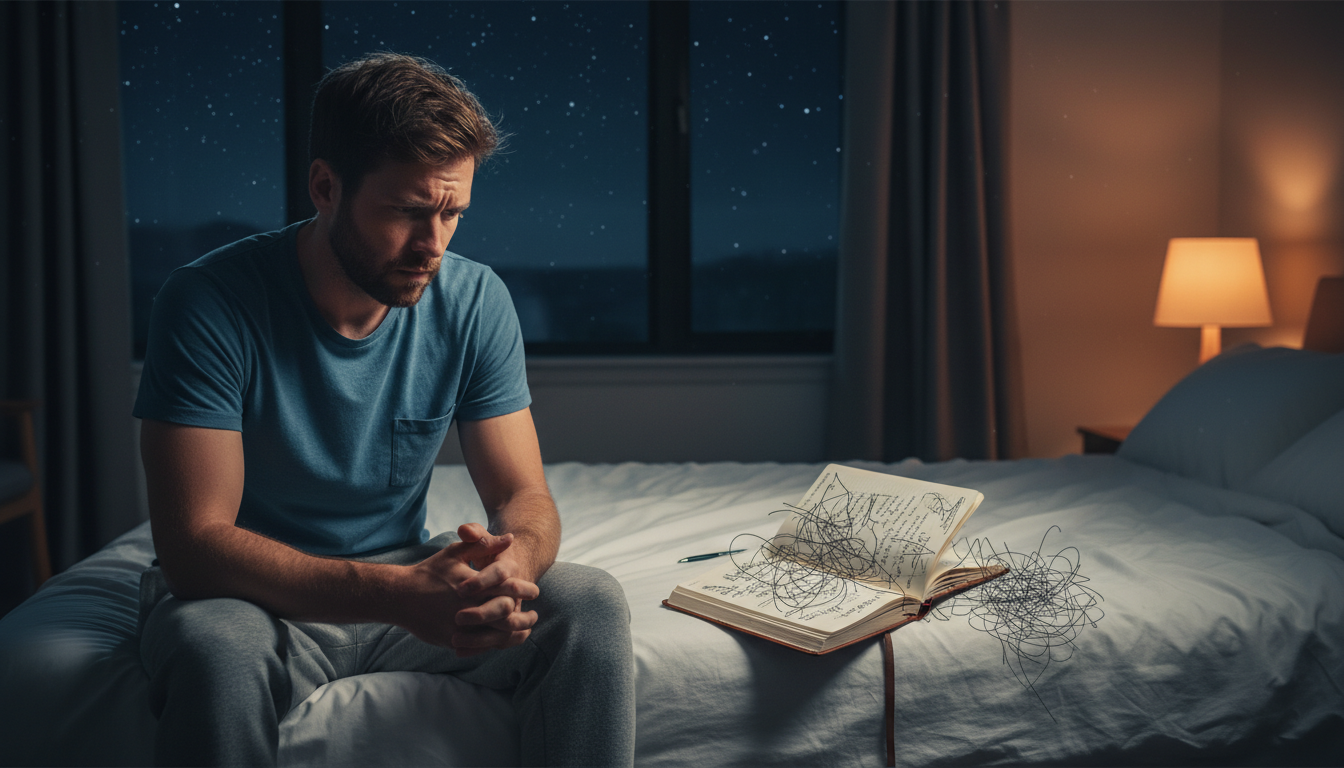
If you’ve ever been wide awake at night, you know it’s not fun. This stress makes us tired. It’s a big problem many of us face today.
Many things can keep us awake, like work stress. We lie awake, our minds racing. This guide will help you understand why and how to sleep better.
We’ll share ways to calm our nerves. If anxiety keeps you awake, these strategies can help. Let’s find ways to quiet our minds and sleep better.
Key Takeaways
- Recognize how nighttime worry disrupts natural rest cycles.
- Comprehend why complex cardiovascular symptoms like a racing heart occur.
- Explore proven techniques for stabilizing the nervous system before bed.
- Learn to break the cycle of uncontrollable spiraling thoughts.
- Implement a consistent evening routine signaling safety for your brain.
- Discover comprehensive practical tools for regaining control over slumber.
- Evaluate the impact of professional pressures on your mental well-being.
Understanding the Anxiety-Sleep Connection
It’s important to know how anxiety affects our sleep. Anxiety disorders are common, affecting about 20% of American adults. This shows why we need to tackle the link between anxiety and sleep.
How Anxiety Affects Our Sleep Cycles
Anxiety can mess up our sleep, especially rapid eye movement (REM) sleep. REM sleep helps our minds process emotions and memories. Anxiety can cause bad dreams, making sleep worse. For more info, check the Sleep Foundation’s page on anxiety.
Anxiety’s impact on sleep includes:
- Harder to fall asleep because of worries
- Waking up a lot during the night
- Less deep sleep
- Strange dreams or nightmares in REM sleep
The Physical Response to Nighttime Worry
Anxiety makes our body ready to fight or run away. It releases stress hormones like cortisol and adrenaline. These hormones make it hard to relax and sleep.
Managing anxiety for better sleep means calming the body and mind. Techniques like progressive muscle relaxation and deep breathing can help.
Why Bedtime Triggers Anxious Thoughts
Bedtime can make us think about worries more. Without daytime distractions, our worries seem bigger. The pressure to sleep can also make us anxious.
Understanding anxiety and sleep helps us tackle anxiety-induced sleep problems. We can use relaxation techniques, therapy, and make our sleep space better.
Why We Get More Anxious at Night
The quiet of night can make us feel more anxious. It turns a calm night into a hard time to sleep. When we’re in bed, we can’t ignore our worries as much as we do during the day.
The Absence of Daytime Distractions
Daytime is full of work, friends, and fun. These things keep our minds busy. But at night, they’re gone, and our worries grow bigger.
| Daytime | Nighttime |
|---|---|
| Distracted by work and activities | Focus on worries and anxious thoughts |
| Social interactions divert attention | Quiet environment amplifies anxiety |
| Busy schedule keeps mind occupied | Lack of distractions allows anxiety to surface |
Cortisol and Stress Hormone Imbalances
Cortisol and other stress hormones are key in our anxiety response. Too much of these hormones at night can make us more anxious. It’s important to keep stress down during the day.
For more info on managing work anxiety, check out https://workshiftanxiety.com/.
The Cycle of Sleep Anxiety
Anxiety and sleep problems go hand in hand. Anxiety can mess up our sleep, and not sleeping well makes anxiety worse. To break this cycle, we need to tackle our anxiety and find ways to sleep better. Things like relaxation exercises and a bedtime routine can help.
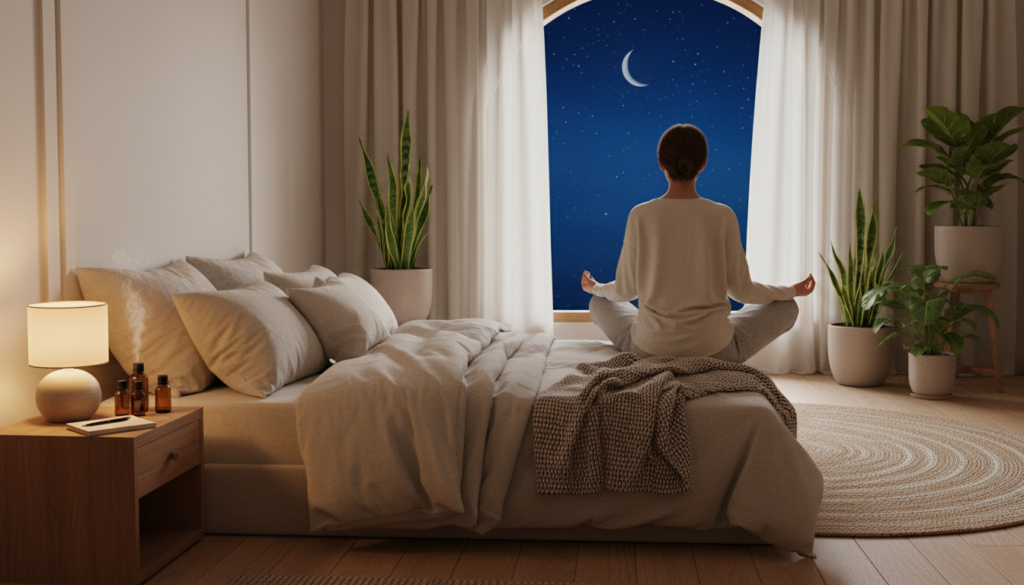
Knowing why we get anxious at night helps us fight it. We can take steps to make our nights calmer and our sleep better.
Immediate Techniques When You’re Too Anxious to Sleep
When anxiety hits at night, it’s hard to sleep. But, there are quick ways to calm your mind and body. These methods are simple, work well, and can be done even when your mind is racing.
Step 1: Practice the 4-7-8 Breathing Method
The 4-7-8 breathing method calms your nervous system. Breathe in through your nose for 4 counts, hold for 7 counts, and breathe out through your mouth for 8 counts. This slows your heart and relaxes you. Dr. Andrew Weil says it’s a natural sedative.
Start the 4-7-8 breathing method. Your mind might wander. Gently bring your focus back to your breath. Regular practice makes it a great tool for nighttime anxiety.
Step 2: Use Progressive Muscle Relaxation
Progressive muscle relaxation releases tension and relaxes you. Tense and then relax different muscle groups in your body. Start with your toes and go up to your head, holding each for a few seconds before releasing.
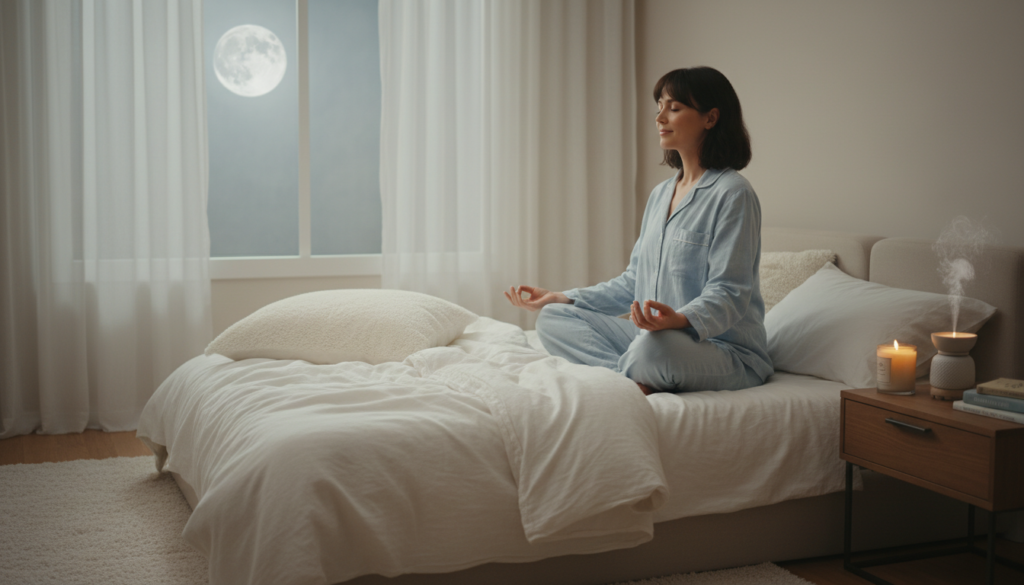
“Progressive muscle relaxation can help reduce symptoms of anxiety and depression, improve sleep quality, and enhance overall well-being.”
Regular practice helps manage stress and anxiety better.
Step 3: Try the Cognitive Shuffle Technique
The cognitive shuffle technique distracts your mind from anxious thoughts. Think of a random word and let your mind freely associate with it. For example, start with “cloud,” then think of “sky,” then “blue,” and so on.
Step 4: Get Out of Bed Strategically
If you can’t sleep for more than 20 minutes, get out of bed. This breaks the link between your bed and being awake. Choose a quiet, calming activity like reading or listening to soothing music. Avoid screens and stimulating activities.
Step 5: Use Grounding Techniques to Calm Your Mind
Grounding techniques help manage anxiety at night. They focus on the present moment through sensory experiences. For example, notice the sensation of your feet on the ground or the sounds around you. Grounding reduces anxiety and helps you sleep.
Building Long-Term Habits for Better Sleep with Anxiety
To fight anxiety sleep problems, we need many steps. We must make healthy habits. This means changing how we act during the day and at night.
Creating an Anxiety-Reducing Bedtime Routine
A calm bedtime routine tells our brain it’s time to sleep. You can read, take a warm bath, or stretch gently. A regular bedtime routine helps by making things predictable and in control.
Good things for your bedtime routine are:
- Dimming lights to show night is coming
- Doing relaxation tricks like deep breathing or meditation
- Not using screens for an hour before bed
- Writing in a journal to clear your mind
Optimizing Your Sleep Environment
Our sleep space is key for good sleep. To make it better, try these changes:
| Adjustment | Description | Benefit |
|---|---|---|
| Darkness | Use blackout curtains or blinds | Helps our body clock |
| Quiet | Use earplugs or a white noise machine | Less distractions |
| Cool Temperature | Keep it cool (around 60-67°F) | Better sleep quality |
Daytime Practices That Improve Nighttime Sleep
What we do during the day affects our sleep. Doing exercise, stress-reducing activities, and eating well helps. Exercise, especially, makes us feel good by releasing happy hormones.
Natural Remedies and Supplements to Consider
Some natural things and supplements can help with anxiety and sleep. Options include:
- Melatonin: Helps with sleep-wake cycles
- Valerian root: Calms us down
- Magnesium: Relaxes the body
- GABA: Helps with sleep and calmness
Conclusion
We looked at how anxiety and sleep are connected. Being too anxious to sleep can make it hard to break the cycle. We found ways to manage anxiety and sleep better.
Managing anxiety for better sleep is a big job. It means making a calm bedtime routine and a good sleep space. It also means relaxing during the day.
If anxiety keeps you awake at night, get help. A mental health expert or doctor can make a plan just for you. They can help you feel better and sleep well.