
What if your everyday worries weren’t just passing moods, but a fundamental part of who you are?
We begin by exploring a core personality characteristic. It’s a stable predisposition to perceive the world as threatening. This tendency shapes reactions across many situations and over time.
It’s crucial to distinguish this from a temporary emotional response. State anxiety is that short-term reaction to specific stressors. In contrast, the trait form is a more enduring part of an individual’s makeup.
Understanding this distinction is vital. It influences how people learn, process information, and adapt. Research shows it significantly impacts daily functioning and overall well-being.
This characteristic exists on a broad continuum. Everyone has some level of it. Our guide draws from decades of psychological study to explain this complex part of human experience.
Key Takeaways
- Trait anxiety is a stable personality characteristic, not a temporary mood.
- It differs from state anxiety, which is a short-term reaction to immediate stress.
- This predisposition influences how a person perceives and responds to potential threats consistently.
- It exists on a continuum, meaning everyone has varying levels of this tendency.
- Understanding it is key to grasping how individuals learn and adapt to their environment.
- It plays a significant role in daily functioning and overall quality of life.
- Our insights are based on extensive psychological research and clinical observations.
Overview of Trait Anxiety: Definition and Importance
The concept of trait anxiety provides a lens through which we can view consistent patterns of emotional response across a person’s life. It is defined as a personality trait reflecting stable individual differences. These differences predict how likely someone is to feel stressed when facing difficult circumstances.
This stands in contrast to state anxiety, which is a transitory emotional response. State anxiety involves temporary feelings of tension and worried thoughts. It’s a reaction to an immediate, specific event.
Understanding this distinction is crucial. Trait anxiety is an enduring characteristic, while state anxiety comes and goes. People with higher levels of this predisposition may react with worry in situations others find neutral.
This characteristic significantly shapes a person’s journey. It influences how relationships form and how one performs at school or work. It is a key predictor for overall psychological well-being.
Identifying these patterns helps everyone. Clinicians and researchers use this knowledge to understand vulnerability to certain conditions. For individuals, it offers insight into their own consistent stress responses and adaptation to life’s challenges.
Historical Background and Evolution of Anxiety Research
Scientific inquiry into consistent fear responses has transformed dramatically since its early days. We trace a path from introspective theories to data-driven models.
This evolution took decades. It reflects our growing need to understand persistent distress.
Early Theories and Foundational Studies
Initial explanations came from psychoanalysis. Pioneers viewed worry as a symptom of deep internal conflict.
Later, behavioral studies suggested it was a learned response. Animals and humans linked neutral cues with bad outcomes.
“The distinction between state and trait anxiety was a watershed moment. It allowed us to separate momentary fear from a lasting predisposition.”
Mid-20th century work provided the crucial framework. It showed people differ in their baseline sensitivity to threat.
Modern Developments in Anxiety Research
Recent decades brought a fusion of disciplines. Neuroscience and computer modeling joined the effort.
Brain scans now show the circuits involved. We see how a stable characteristic influences real-time learning.
Contemporary studies examine hidden-state inference. This concept explains sudden shifts in perceived danger.
Evidence over time proved no single factor was sufficient. Today’s models blend cognition, behavior, and biology.
| Era | Primary Focus | Key Methods | Major Contribution |
|---|---|---|---|
| Early (1900s-1950s) | Internal conflicts & learned behavior | Clinical observation, behavioral experiments | Established anxiety as a measurable construct |
| Foundational (1960s-1980s) | State vs. trait distinction | Psychometric inventories, longitudinal studies | Created the individual differences framework |
| Modern (1990s-Present) | Biological mechanisms & cognitive processes | Neuroimaging (fMRI), computational modeling | Revealed neural circuits and learning mechanisms |
This table summarizes the pivotal shifts in our research approach. Each era built upon the last.
Deep Dive into Trait Anxiety: Concepts and Measurement
To quantify how people consistently perceive threat, psychologists developed specific assessment instruments. These tools help separate momentary reactions from enduring patterns.
Defining Trait vs. State Anxiety
The core difference lies in timing and stability. State measures capture temporary feelings. Trait measures assess a stable predisposition.
This distinction is crucial for accurate diagnosis and research. It helps us understand why some people feel stressed more often.
Utilizing the State-Trait Anxiety Inventory
The state-trait anxiety inventory (STAI) is a widely used scale. It has two separate parts: STAI I for state and STAI II for trait.
Clinical data shows typical score ranges. This helps identify individuals with higher stress levels.
| Scale | Measures | Average Score (Clinical) | Key Characteristic |
|---|---|---|---|
| STAI I | State Anxiety | 57.4 ± 12.2 points | Temporary, situation-specific |
| STAI II | Trait Anxiety | 52.7 ± 10.2 points | Stable, personality-based |
In research, trait scores from this anxiety inventory showed a median of 39. The range was 20 to 71, highlighting large individual differences.
The state-trait anxiety inventory provides reliable data. It lets researchers compare results across many studies.
Neurobiological Insights into Anxiety Responses
Our brain’s alarm system doesn’t just react to danger—it constantly builds a model of potential threats based on past experiences. Neurobiological research revealed alterations in the brain networks responsible for detecting and processing environmental risks.
These networks use hidden-state inference to represent information and guide decisions. This mechanism helps the mind update its beliefs about safety and danger.
Brain Mechanisms Underlying Anxiety
Coordinated activity across specific regions drives these responses. The amygdala flags potential threat. The prefrontal cortex works on cognitive regulation.
Studies showed individuals with heightened sensitivity demonstrated greater neural differentiation. Their brains reacted more strongly to cues paired with a shock versus safe signals.
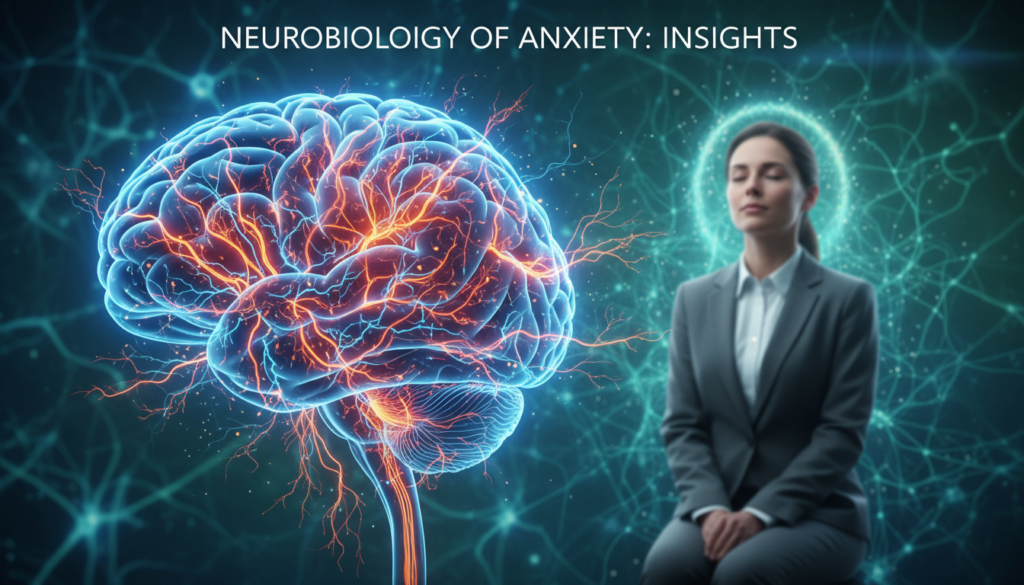
Computational models helped explain this. They illustrated how the brain implements learning mechanisms in aversive contexts.
Physiological Markers and Emotional Responses
The body’s system prepares for potential danger with clear signs. These markers include increased heart rate, skin conductance, and cortisol levels.
Fear responses are immediate reactions to present threat. In contrast, the pattern linked to a persistent predisposition involves sustained vigilance.
These neurobiological insights provided a foundation. They explain why people show different patterns of learning and memory when feeling stressed.
Psychological and Behavioral Models in Anxiety Research
Psychological science offers competing blueprints for how we learn to anticipate threats. We contrast two major theoretical frameworks that explain this process.
Gradual Learning Versus State-Dependent Learning
Classical models proposed a gradual, associative process. Here, expectations update with each new experience, overwriting old estimates.
A different model suggested a state-dependent mechanism. Individuals create mental categories, or “states,” for similar experiences. They use these classes to predict future outcomes.
| Learning Model | Core Mechanism | Prediction Pattern | Key Evidence |
|---|---|---|---|
| Gradual Learning | Trial-by-trial belief updating | Smooth, continuous transitions | Rooted in classical conditioning theory |
| State-Dependent Learning | Categorization of experiences into distinct states | Abrupt switches when context changes | Explains persistent, context-specific aversive memories |
Context-Specific Learning and Its Implications
State-dependent learning better explains certain phenomena. It accounts for why frightening memories can feel locked to specific places or situations.
Research evidence indicates this mechanism is pronounced in some individuals. Those with a higher predisposition may form stronger distinctions between safe and threatening contexts.
Understanding these models helped scientists design better experiments. They could pinpoint which learning process dominated under different conditions.
Research Findings on Anxiety: Data and Evidence
A landmark study involving 89 participants provides compelling evidence linking personality characteristics to specific cognitive patterns. This research examined how a stable predisposition influences learning when threats and safety signals suddenly switch.
Key Experimental Outcomes
We first report the data on individual differences. Participant scores on a standard questionnaire showed a median of 39, with a range from 20 to 71. This highlights considerable variability in this enduring characteristic among people.
One of the key findings was about expectation switches. Individuals with higher scores detected changes in threat-safety relationships more rapidly. They showed steeper behavioral shifts after a rule reversal.
The study also revealed reduced oddball learning. People with this predisposition were less swayed by single, unexpected outcomes. Their focus was on detecting broader pattern changes in the environment.
Finally, the evidence strongly supported a state inference model. When contingency changes were large, this cognitive framework fit the data better than a gradual learning model. This suggests a tendency to represent the world in distinct hidden states.
Examining the Role of Hidden-State Inference in Anxiety
How does the human mind decide when the rules of safety have fundamentally changed? We explore a cognitive mechanism called hidden-state inference. Here, the brain organizes experiences into distinct mental categories, or “states,” like ‘safe’ or ‘threatening,’ rather than seeing a smooth continuum.
This state-dependent learning leads to abrupt jumps in expectations. When a person detects a shift in their environment, they can immediately switch their predictive model. This is called a state switch.
Mechanisms Behind Abrupt State Switches
The mechanisms involve complex interactions. Perceptual systems scan for changes in cues linked to threat. Decision-making systems then determine when to abandon one internal model and activate another.
Research indicates individuals with higher trait anxiety scores rely more on this framework. In learning tasks, they create sharper distinctions between threat contexts. This leads to more pronounced state switches.
This reliance helps explain persistent fear responses. Even after successful therapy, the threat-associated mental state can remain accessible. This is a key insight for understanding anxiety persistence.
The Impact of Trait Anxiety on Learning and Performance
Experimental tasks measuring reversal learning uncover distinct advantages and costs. We examine how this predisposition shapes adaptation when threat relationships change.

Effects on Reversal Learning Tasks
In studies, people observed cues predicting electrical shocks. They gave expectancy ratings as probabilities changed.
The difference between high- and low-probability cue ratings grew with higher scores. Those with elevated predisposition showed enhanced discrimination. They gave higher ratings for stable-high threat and lower for stable-low threat.
| Performance Metric | High Predisposition Group | Low Predisposition Group | Key Implication |
|---|---|---|---|
| Threat-Safety Discrimination | Sharper distinction | Milder distinction | Better signal detection |
| Reversal Learning Speed | Steeper curves after change | Gradual adjustment | Faster state detection |
| Flexibility in Gradual Change | Reduced | Higher | Context-dependent learning |
| Clinical Relevance | Higher fear return post-treatment | Lower fear return | Treatment resistance factor |
Performance Variations in High-Anxious Individuals
These individuals demonstrated steeper learning curves following reversals. They detected state changes more readily.
The effect manifested as both advantage and disadvantage. Better threat discrimination came with reduced flexibility in gradually changing environments.
This pattern reflects organizing experiences into distinct categories. Understanding these variations explains why this characteristic influences threat information processing.
Anxiety Measurements and Inventories: Tools and Scales
A robust study involving over a thousand patients provides concrete data on how we quantify stress levels. To move from subjective feeling to objective understanding, clinicians use validated psychological scales. The State-Trait Anxiety Inventory represents the most widely used and thoroughly validated instrument for this purpose.
Interpreting Anxiety and Trait Scores
We examined a large-scale study of 1,112 patients. Investigators and patients completed multiple assessments, including the Spielberger questionnaire, the Covi scale, and the Raskin depression scale.
| Assessment Tool | Baseline Score (Mean ± SD) | What It Measures |
|---|---|---|
| Covi Anxiety Scale | 5.3 ± 2.3 points | General anxiety symptoms |
| STAI I (State-Anxiety) | 57.4 ± 12.2 points | Temporary emotional state |
| STAI II (Trait-Anxiety) | 52.7 ± 10.2 points | Enduring personality characteristic |
Interpreting these scores requires looking at both absolute levels and population norms. Higher STAI II scores indicate a greater proneness to perceive threat across situations.
Comparative Analysis of Measurement Models
The state trait distinction captured by the anxiety inventory is crucial. It allows professionals to separate fleeting emotional reactions from stable predispositions.
Different measurement models and scales converge on similar constructs. Each offers unique advantages for specific clinical or research needs. Their reliability, validity, and sensitivity make them suitable for everything from screening to tracking treatment progress.
Factors Influencing Trait Anxiety and Its Expression
A person’s tendency to perceive the world as threatening is shaped by a tapestry of genetic and environmental threads. This enduring characteristic, often called trait anxiety, results from complex interactions.
No single cause explains individual differences in stress sensitivity. Multiple influences work together over time.
Genetic and Environmental Contributions
Research shows genetic factors account for 30-50% of the variation in this predisposition. Specific genes related to neurotransmitter systems are relevant.
Environmental experiences are equally powerful. Early childhood events, parenting styles, and chronic stress play major roles.
| Factor Type | Specific Influence | Estimated Contribution | Key Evidence |
|---|---|---|---|
| Genetic | Neurotransmitter system genes | 30-50% of variance | Twin and family studies |
| Environmental | Early trauma, chronic stress | Significant moderator | Longitudinal cohort data |
| Gene-Environment | Vulnerability activated by stress | Crucial interaction effect | Diathesis-stress models |
Personality factors like neuroticism show substantial overlap. They influence how this proneness is expressed across situations.
Developmental periods in brain maturation are critical. Social learning experiences shape differences that persist into adulthood.
Understanding these influences provides insight for prevention. It helps explain why stress sensitivity levels vary so widely between people.
Comorbid Conditions: Exploring Anxiety, Depression, and Stress
The co-occurrence of different forms of psychological distress is a rule rather than an exception in mental health. We examine how a predisposition to worry often clusters with other internalizing conditions, particularly major depression and stress-related disorders.
These conditions share substantial overlap in symptoms, risk factors, and underlying mechanisms. Many individuals experience both simultaneously, a state often termed anxiety depression.
Interplay Between Anxiety and Depression
The anxiety depression relationship manifests in shared features like negative affect and rumination. Yet, they show distinct patterns in arousal and motivation.
Stress plays a crucial role in expression and exacerbation. Chronic exposure increases vulnerability to both disorders.
Clinical studies reveal significant comorbidity. In one involving 1,112 patients with anxious complaints, investigators used the Covi and Raskin scales.
| Assessment Scale | Baseline Score (Mean ± SD) | Condition Measured |
|---|---|---|
| Covi Anxiety Scale | 5.3 ± 2.3 points | General Anxiety Symptoms |
| Raskin Depression Scale | Data Integrated | Depressive Symptoms |
Sixty-nine percent of patients received benzodiazepine treatment. After three months, all symptom levels decreased.
Eighty-five percent were considered ameliorated. This shows treatment can help, though comorbid conditions often influence the response.
Understanding this interplay is essential. It guides comprehensive approaches that address the full spectrum of a person’s difficulties.
The trait for heightened sensitivity often forms the bedrock upon which these disorders build. Effective care must consider the entire anxiety depression profile.
Experimental Designs: Reversal Learning Tasks in Anxiety Research
How do we measure someone’s ability to adapt when danger signals suddenly become safe? Researchers use a method called probabilistic aversive learning.
This task creates a controlled lab environment to test learning mechanisms.
Probabilistic Aversive Learning Paradigms
In a Pavlovian study, participants viewed visual cues predicting an electrical shock. The shock probability changed repeatedly.
Three session types varied in outcome uncertainty. Each used different probability ratios.
| Session Type | Stable-High Cue Shock Rate | Stable-Low Cue Shock Rate | Uncertainty Level |
|---|---|---|---|
| 90/10 | 90% of trials | 10% of trials | High Certainty |
| 75/25 | 75% of trials | 25% of trials | Moderate Certainty |
| 60/40 | 60% of trials | 40% of trials | High Uncertainty |
Interpreting Reversal Cues and Phase Changes
Two cues kept fixed probabilities. A third ‘reversal’ cue switched its probability 6-10 times per session.
This design generated rich data. It showed how people detect true environmental shifts versus random oddballs.
The paradigm powerfully tests learning models. It distinguishes gradual belief updating from abrupt state inference.
Findings reveal how a predisposition influences the fundamental computational mechanisms of threat learning.
Clinical Implications and Treatment Considerations
Effective treatment for chronic worry requires more than just confronting fears. It demands an understanding of how those fears are learned and remembered.
Insights for Exposure Therapy
Exposure therapy presents a feared situation without a bad outcome. The goal is to achieve extinction of the fear response.
This reduction can remain specific to the therapeutic context. It often fails to generalize to the outside world.
Such deficits in updating aversive beliefs are linked to anxiety disorders. Clinical worry is tied to poor discrimination between threat and safety cues.
Heightened trait anxiety can lead to overly context-specific learning. This makes generalization harder.
The Role of Cognitive Behavioral Therapy
Research shows lower success rates for cognitive behavioral therapy in high trait anxiety individuals. Their learning style can hinder progress.
Data reveals a pattern. Patients who successfully stopped benzodiazepine treatment had lower STAI II scores at the start. This predisposition appeared as a good predictor of efficacy.
Higher levels of sensitivity often necessitate longer treatment time. Personalized treatment planning is crucial. It may include extended sessions and strategies targeting context-dependent fear memories.
Advancements in Cognitive and Experimental Models of Anxiety
Advancements in modeling the mind reveal that proneness to distress alters fundamental algorithms for predicting danger. We review major progress in cognitive and experimental models that explain how this predisposition influences learning and memory.
Theoretical frameworks evolved significantly. Early models proposed gradual, trial-by-trial updating of expectations.
Newer, context-dependent models suggested people create distinct mental representations, or states, for different threat environments. This is called hidden-state inference.
Our findings show this predisposition links to steeper expectation switches after rule reversals. It also relates to reduced learning from single oddball events.
These patterns fit a state inference model better than a gradual one, especially when contingency changes are large. This evidence supports hidden-state inference as a key mechanism behind fear relapse.
People with elevated scores who represent the world as multiple states show higher rates of spontaneous recovery. Computational models with state inference now predict behavior in high trait anxiety more accurately.
These advancements transformed our view. It shifted from seeing a simple personality characteristic to understanding a factor that fundamentally changes cognitive computations.
Future Directions and Emerging Research in Anxiety Studies
The next frontier in understanding persistent worry lies in weaving together insights from disparate scientific fields. This integrated approach will combine cognitive neuroscience, computational modeling, clinical psychology, and genetics.
Such fusion allows for a more complete picture. It links brain mechanisms with behavioral outcomes and therapeutic strategies.
Integrating Multidisciplinary Approaches
Future studies must bridge these disciplines. They will examine how a predisposition affects reward learning and social cognition.
Longitudinal designs tracking people over time are crucial. They show how sensitivity develops and influences life paths.
Sophisticated computational models can capture individual differences. These models may predict personalized treatment responses.
We must investigate how different types of environmental uncertainty interact with this characteristic. This will reveal varied learning patterns.
Translational research is promising. It tests whether insights about state inference in individuals high in this predisposition improve therapy.
Real-time neuroimaging will show dynamic threat processing. Comprehensive reviews will synthesize findings across diverse studies.
| Research Focus | Key Methods | Expected Outcome |
|---|---|---|
| Multidisciplinary Integration | Combined fMRI, computational modeling, genetic analysis | Unified theory linking brain, behavior, and treatment |
| Longitudinal Studies | Tracking cohorts over decades, life outcome measures | Understanding developmental trajectories and risk factors |
| Advanced Computational Models | State inference algorithms, personalized prediction | Tailored interventions based on individual learning profiles |
| Translational Research | Clinical trials testing lab-derived insights | Improved therapeutic outcomes for anxiety disorders |
These directions aim to resolve inconsistencies. They will build a robust, actionable science of distress and threat response.
Conclusion
Our journey through the science of stress sensitivity concludes with a clear picture of its lasting impact.
This review reaffirms a relatively stable predisposition. It shapes how we process information about potential threats and learn from negative events.
We see its fundamental role in cognition. Individuals with higher sensitivity often rely on state-dependent learning, creating distinct mental categories for safety and danger.
Understanding this requires integrating knowledge. We must connect genetic factors, brain systems, cognitive models, and real-world behavior.
The distinction from temporary emotional states remains crucial. It helps explain why some fear responses persist and can be hard to treat.
Computational models and careful experiments have been powerful. They reveal the specific mechanisms through which this predisposition shapes our actions.
Future research that blends disciplines holds great promise. It will lead to more effective support for those navigating these challenges.